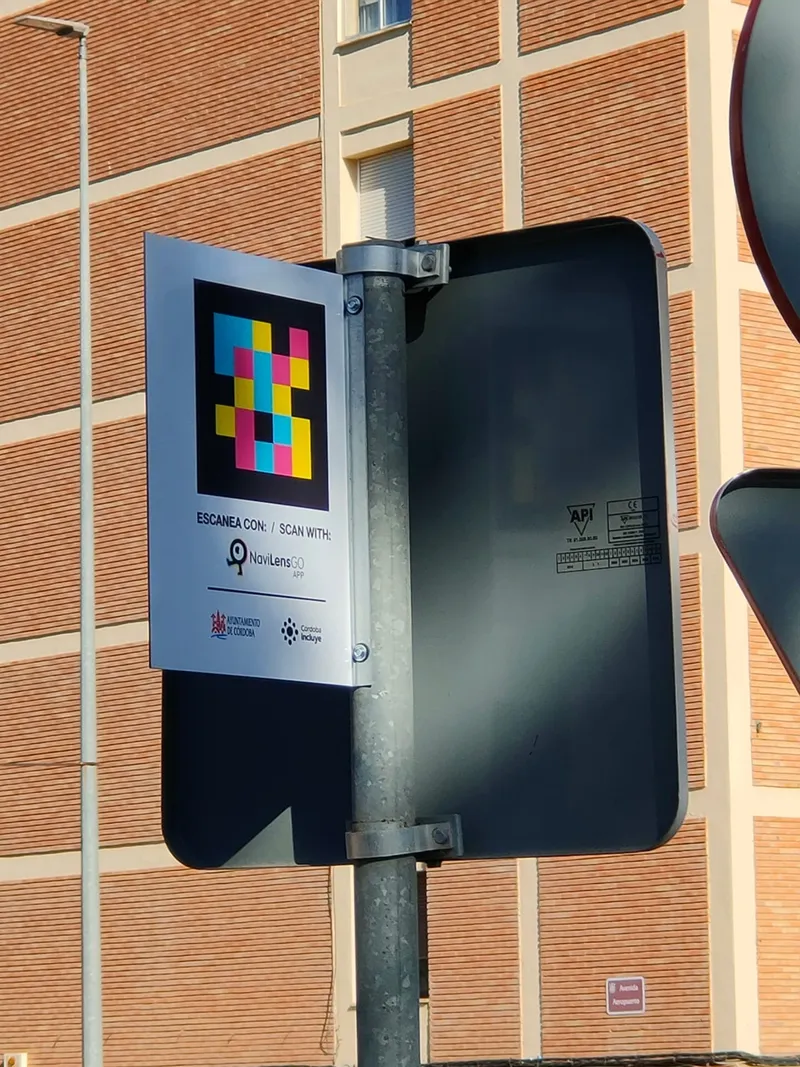
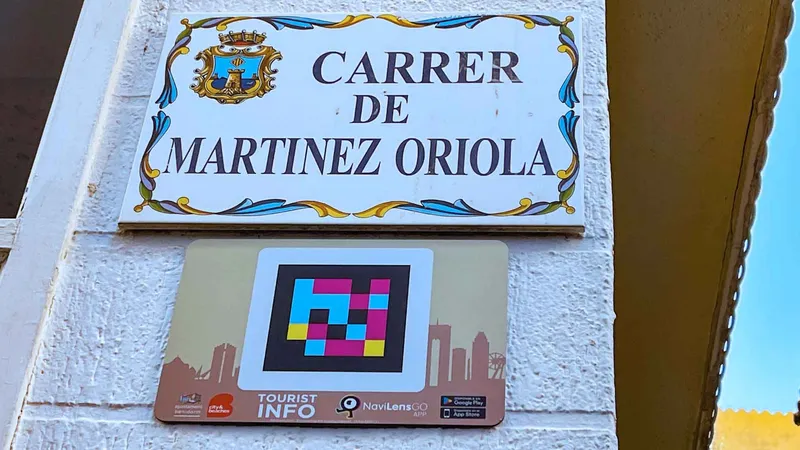
Case study · Taxi Benidorm · Benidorm, Spain
The fare board you can finally listen to.
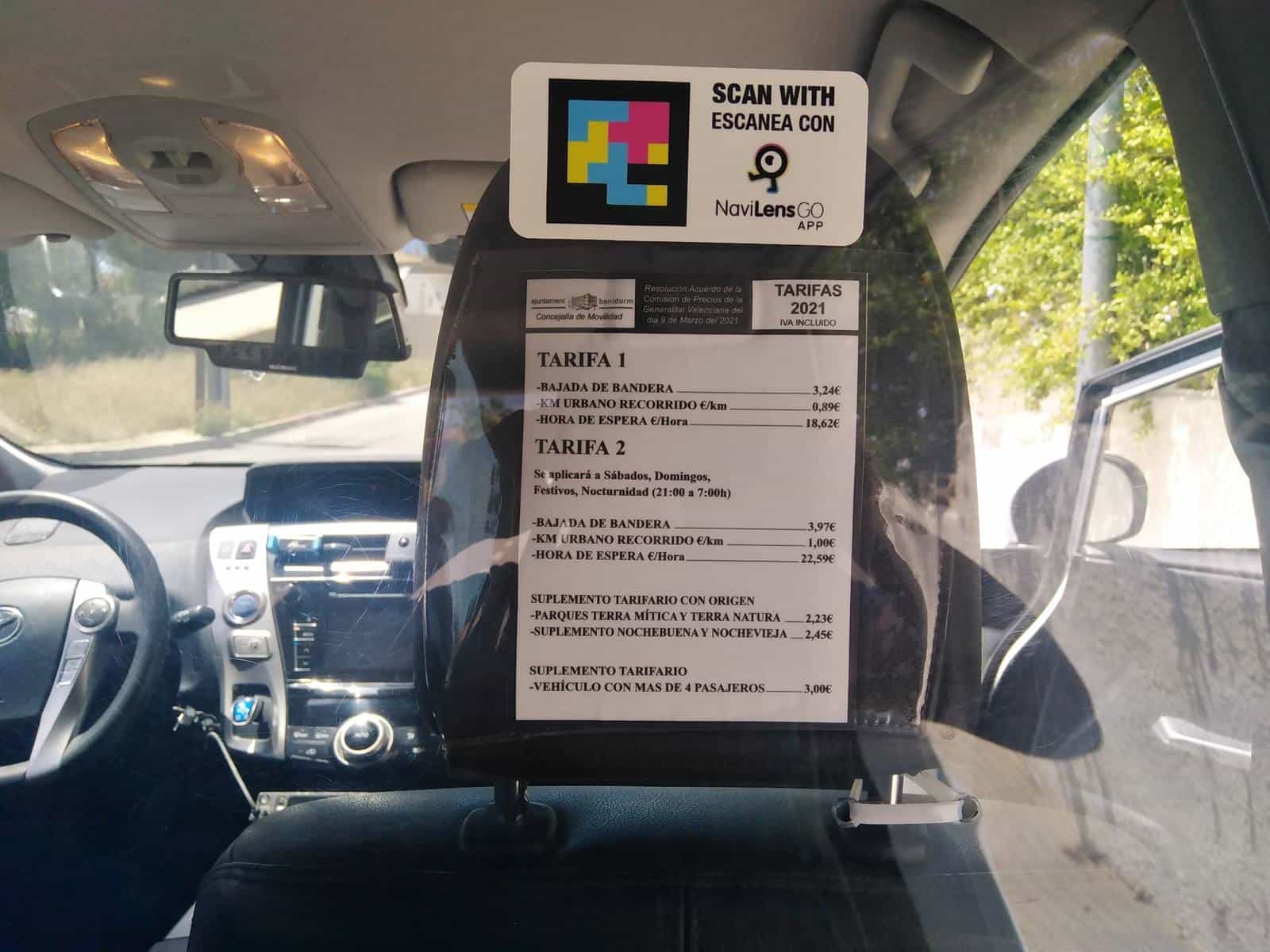
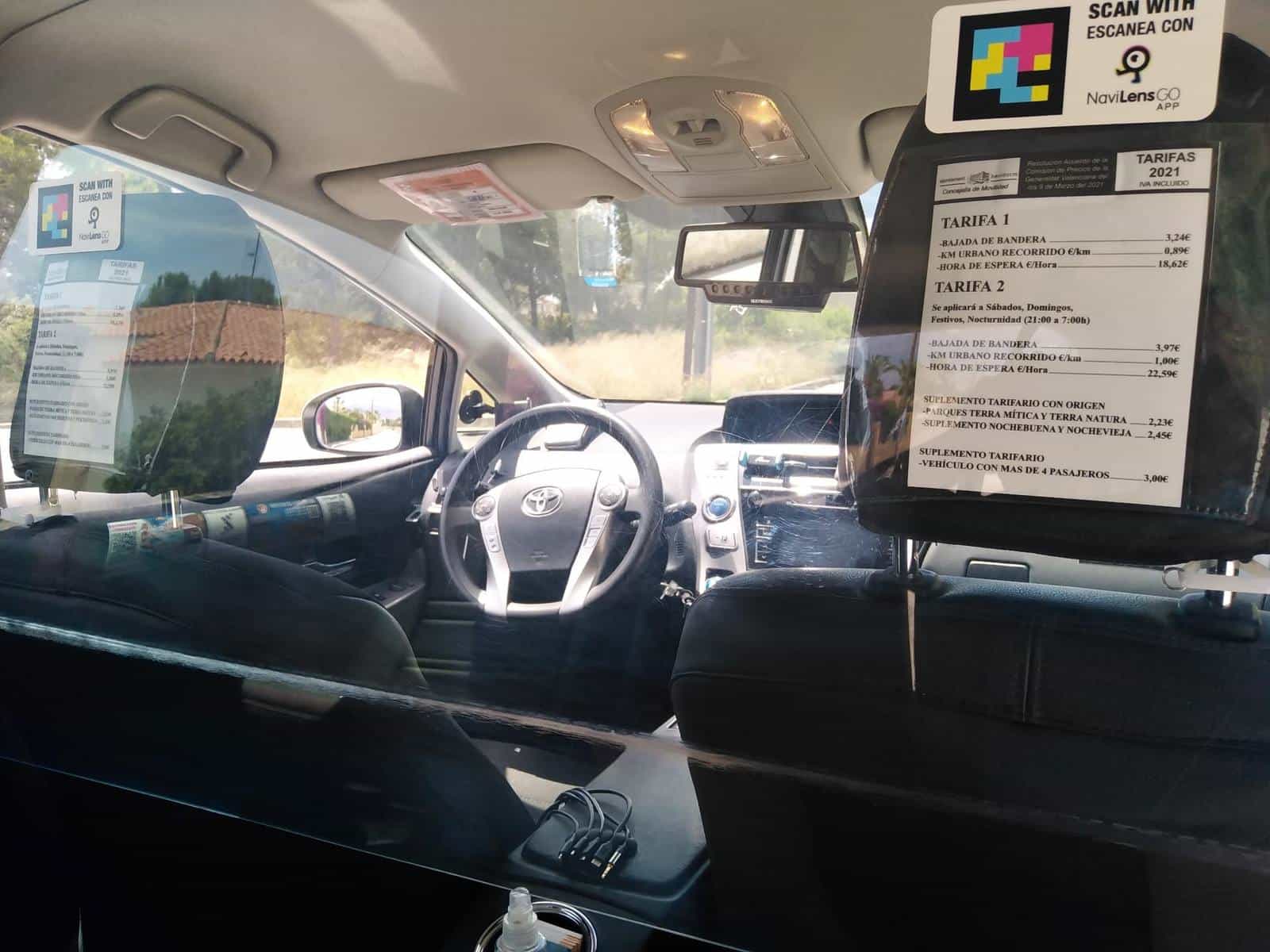
These images document a pioneering rollout at Taxi Benidorm: a NaviLens GO code fixed on the interior partition of the vehicle so any passenger—especially blind or low-vision—can hear the official fares read out loud without depending on the driver or on residual sight.
2021
Photos of the initial rollout in Benidorm taxis
First
Taxi documented as the world's first with a NaviLens code in cabin
NaviLens GO
Voice reading of the fare board inside the vehicle
Benidorm
Municipal ecosystem of accessibility in mobility and tourism
The client
Taxi Benidorm · Mobility Department
Benidorm · Alicante · Spain
In 2021 Benidorm began a wide NaviLens rollout in tourism, public space and mobility. Local press and the City Council itself presented the system as a technology that can be read at a distance, on the move and without focusing—useful for blind people and visitors alike.
Within that ecosystem comes this specific case: a taxi with the code installed inside the cabin, on the partition and right above the official 2021 fare board of the Ajuntament de Benidorm. The location decision matters: it turns a visual, small, hard-to-read document into voice-accessible information from the back seat.
The pictures show a different use from street poles or stops: here NaviLens is not so much about finding the vehicle as about understanding the service once inside—which fares apply, which surcharges exist, what regulatory frame rules the ride—without having to ask.
§ The solution
A code inside the taxi, where before there was only small print.
The white sign “SCAN WITH / ESCANEA CON NaviLens GO APP” sits above the fare board. The passenger can point their phone from the seat and the app delivers the information as audio, instead of forcing them to lean towards the partition or ask someone to read it out.
It is a small but very precise rollout: it solves a real friction of taxi service—fare and surcharge transparency—and does so inside the exact context of use, the moment the passenger is already seated and needs to understand what they are paying for.
§ Walk-through
Get in, scan and understand the service without an intermediary.
Access · Back seat
First glance already finds the code
The code is placed high, centred and with enough contrast to be detected from the back seat. No need to look for a hidden sticker or to touch the physical board.
Cabin · Full context
Accessible information without altering the vehicle setup
The system fits into the existing partition. It does not change the taxi flow nor the driver's routine: it simply makes audible information that was purely visual before.
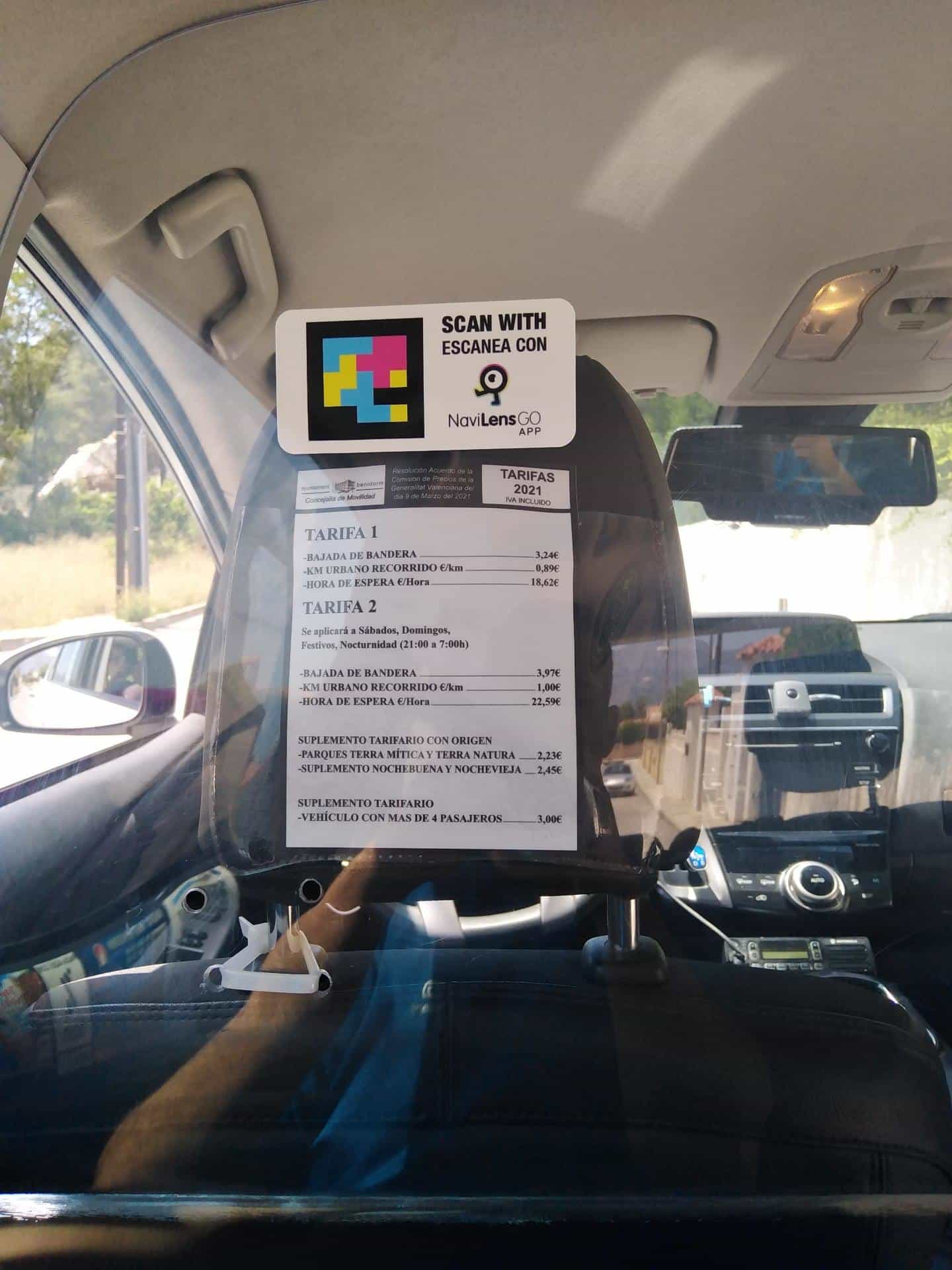
Fares · Voice readout
Surcharges, hours and prices without small print
The board includes flag drop, per-km price, waiting time and surcharges. With NaviLens GO that data no longer depends on font size or cabin lighting.
Most of Benidorm's public messaging on NaviLens focused on the old town, beaches and urban wayfinding—but these photos prove a very valuable extension into the taxi interior: accessible information inside the service itself, not only in public space.
§ What they said
“Benidorm contará con un sistema de marcadores de guiado que se podrán leer con smartphones a larga distancia, en movimiento y sin necesidad de enfoque. El sistema se aplicará en playas, casco antiguo, dependencias municipales y transporte.”
“Benidorm will have a highly innovative marker system for guiding people. NaviLens tags can be read from a long distance, on the move and without focusing, providing useful information to blind people and also to tourists.”
“Benidorm: primer taxi del mundo con códigos Navilens. El código se coloca en el interior del vehículo para que el viajero pueda escanear con NaviLens GO y escuchar la información del servicio y las tarifas.”
§ And your network?
Your next station can also speak.
Tell us about your network, your pain points and the KPIs you want to move. We’ll show you how NaviLens would fit—with comparable cases.