Case study · Community of Madrid · Interurban bus
A whole region of bus stops that talk.
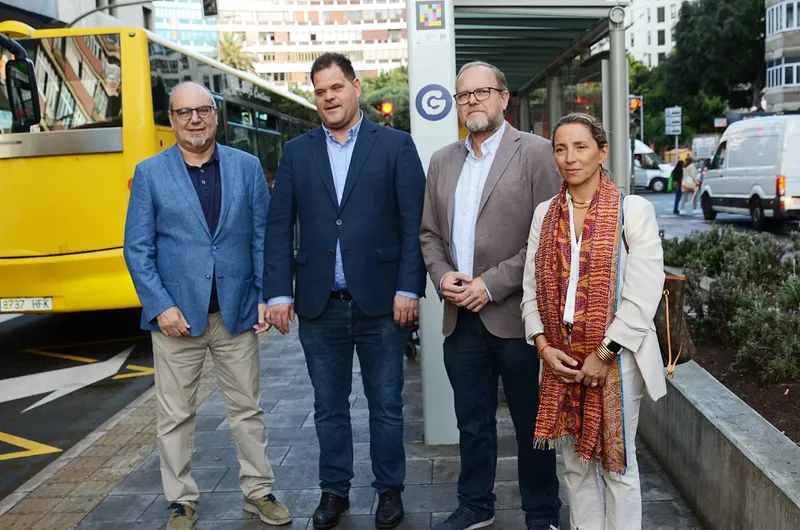
The Madrid Regional Transport Consortium and Clear Channel, the shelter concessionaire, are rolling out NaviLens codes at scale on interurban bus stops: from lit shelters in Alcobendas or Alcalá to simple posts in El Molar.
Community of Madrid
CRTM interurban bus network (179 municipalities)
Mass rollout
Started in November 2021
Shelters and posts
Enthoven II, Renovated and interurban posts
Concession to 2030
Clear Channel, physical support of the stops
The client
CRTM
· Clear Channel
The Madrid Regional Transport Consortium (CRTM) coordinates the public transport modes of the Community’s 179 municipalities: Metro, Cercanías, Light Metro, EMT and especially the interurban bus network connecting Madrid with its periphery.
Clear Channel operates and maintains those shelters until 2030 after winning in 2021 one of Spain’s largest outdoor advertising concessions.
In July 2021 the Community of Madrid unveiled NaviLens as the new accessible signage system and, that November, started its mass rollout on existing shelters—Enthoven II and Renovated—and on the posts of the simplest stops.
§ The challenge
The same information a passenger sees, available to the ear.
- 01
179 municipalities, thousands of stops
The CRTM manages the interurban bus network connecting Madrid to the whole region: from Alcobendas and Alcalá to Navalcarnero or El Molar. Accessibility that only works in the capital falls short at that scale.
- 02
Different support types
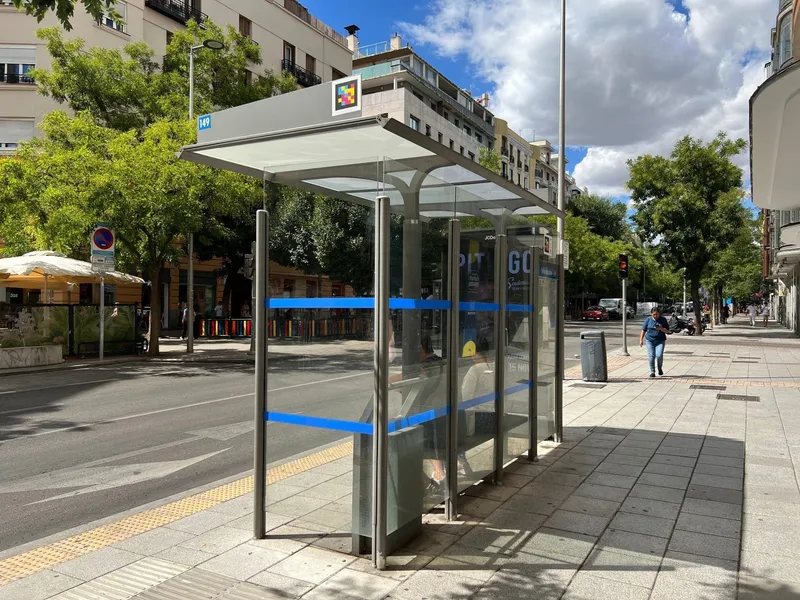
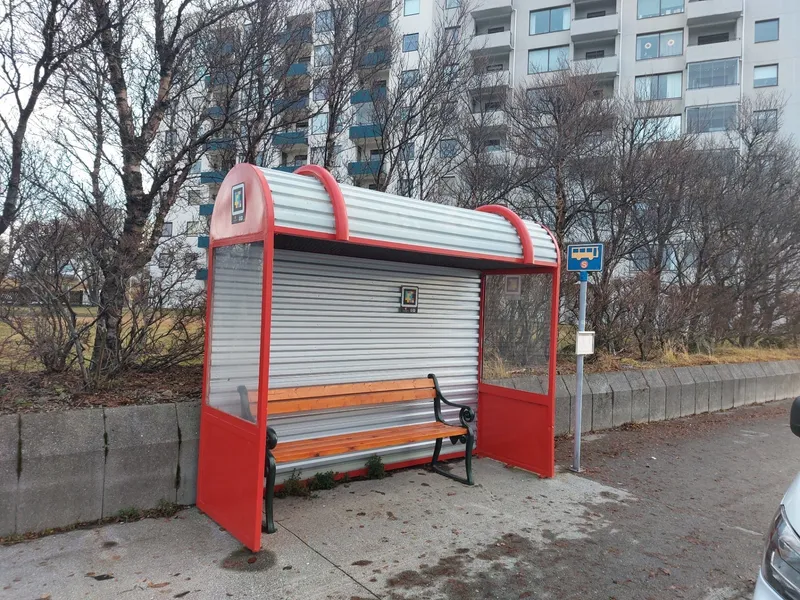
The network mixes shelters with lit advertising (Enthoven II), lighter renovated shelters and simple vertical posts in small towns. The accessible signal had to work on all of them without construction.
- 03
Consistent official information
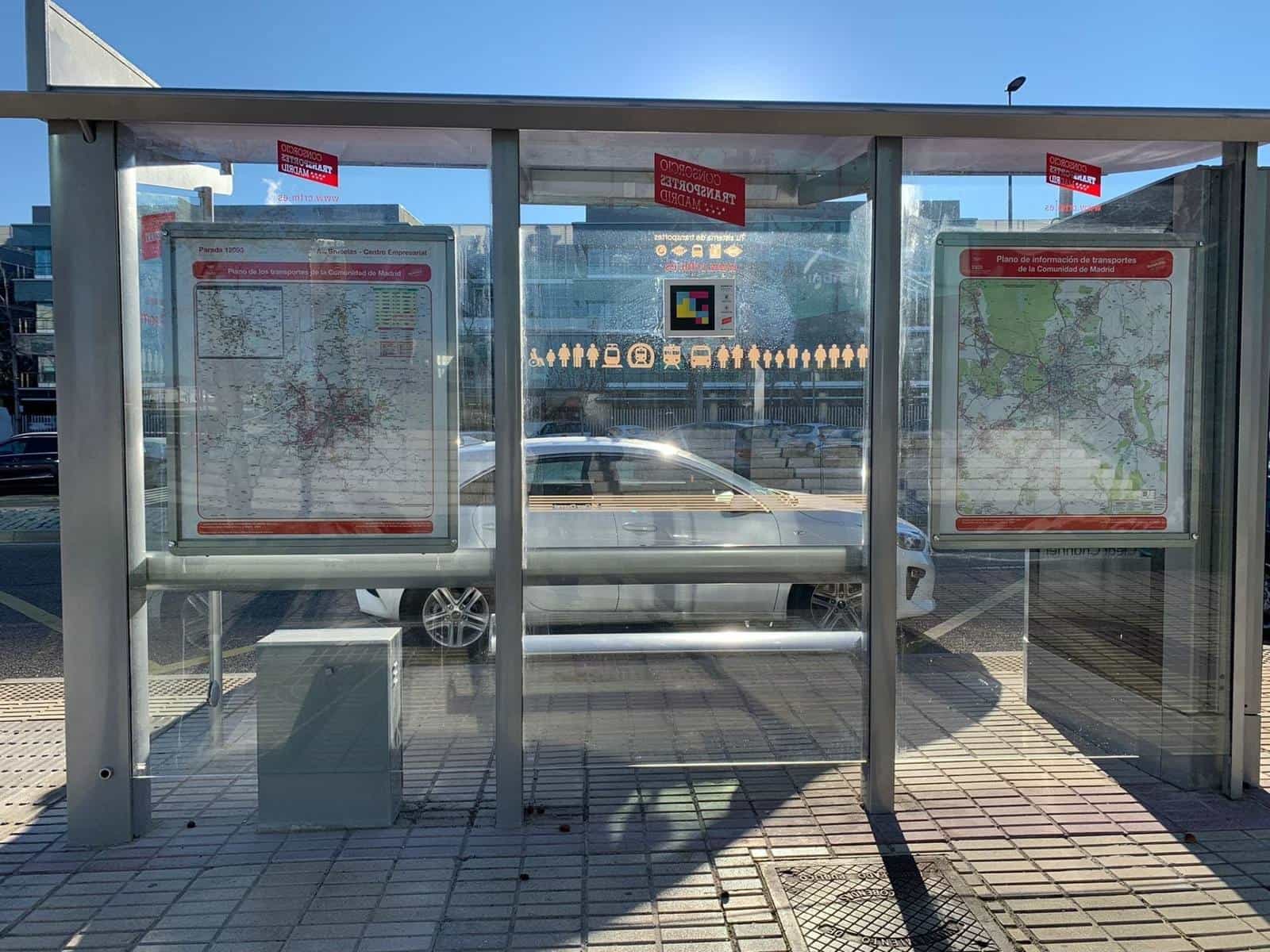
Each stop has its number (08950, 12093, 18356, 20928…), lines and zone map. That same information also needed to be available by voice for blind and low-vision people and visitors in other languages.
§ The solution
A co-branded sign, stuck on the glass.
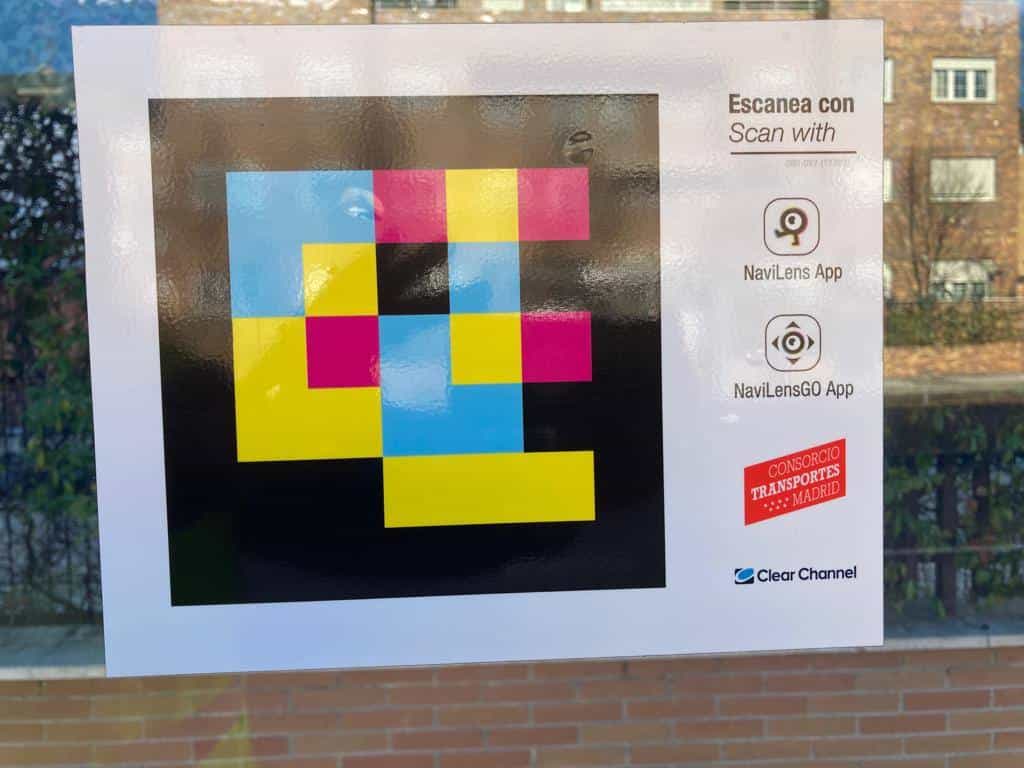
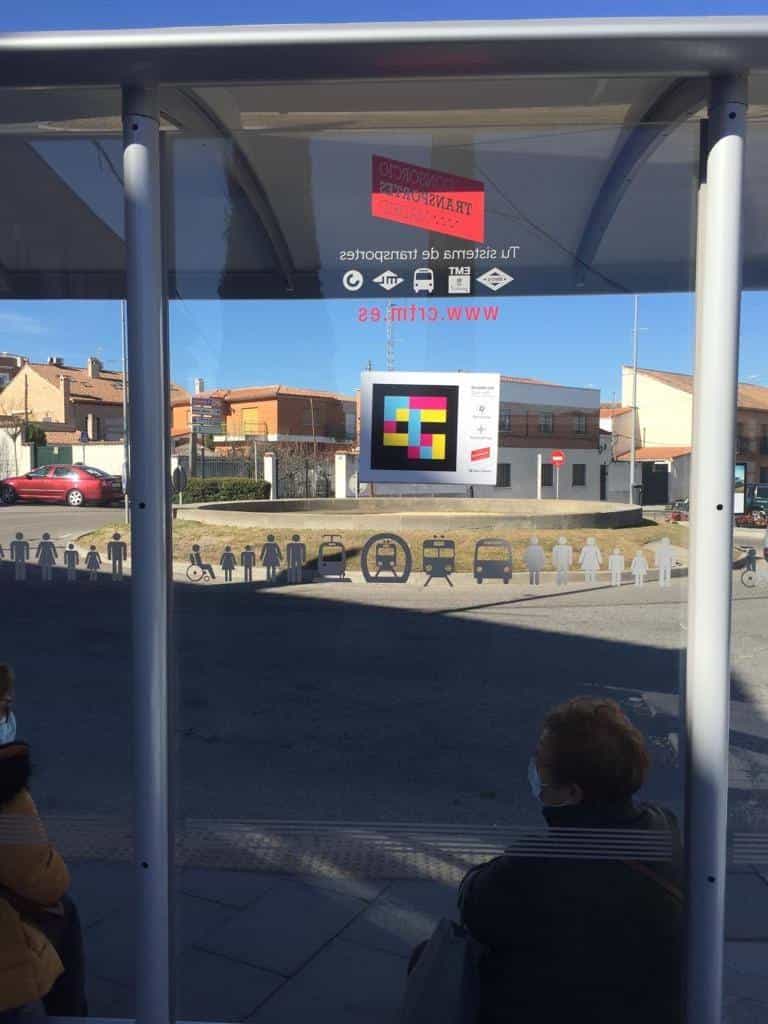
The accessibility sign combines the NaviLens code, the icons of the two free apps (NaviLens and NaviLens GO) and the logos of the Madrid Regional Transport Consortium and Clear Channel: an official sign, replicable on any asset of the network.
Each code is detected from more than 33 feet away, without focusing and even while the user is moving. The phone delivers aloud—and in the passenger’s language—the stop number, the lines that call there and the operational information.
Same signal for a blind person arriving in Alcobendas, an older passenger catching the bus at Príncipe de Asturias and a foreign visitor leaving an interchange in Alcalá de Henares.
§ The network inside
The same code on shelters, posts and interchanges.
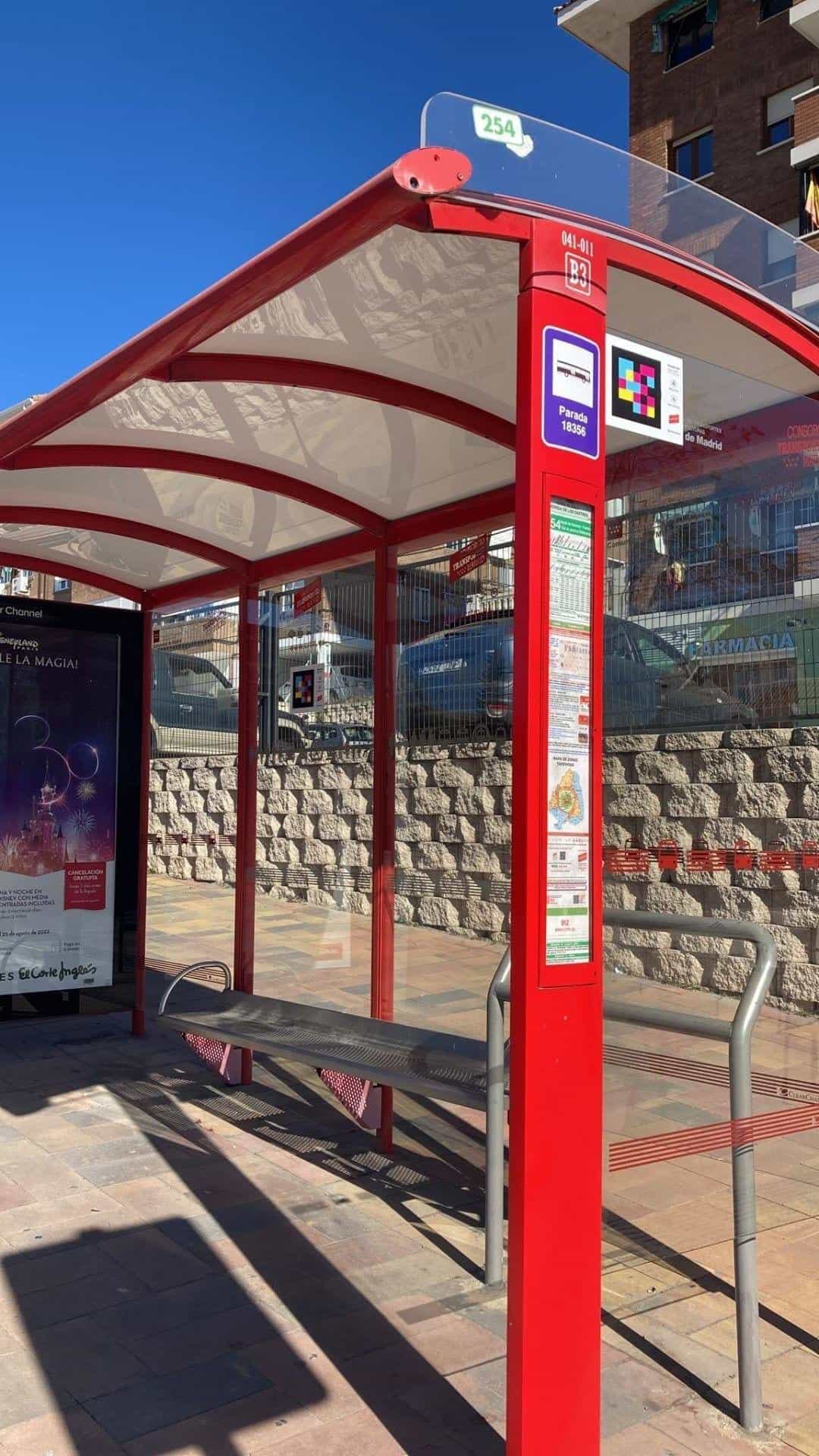
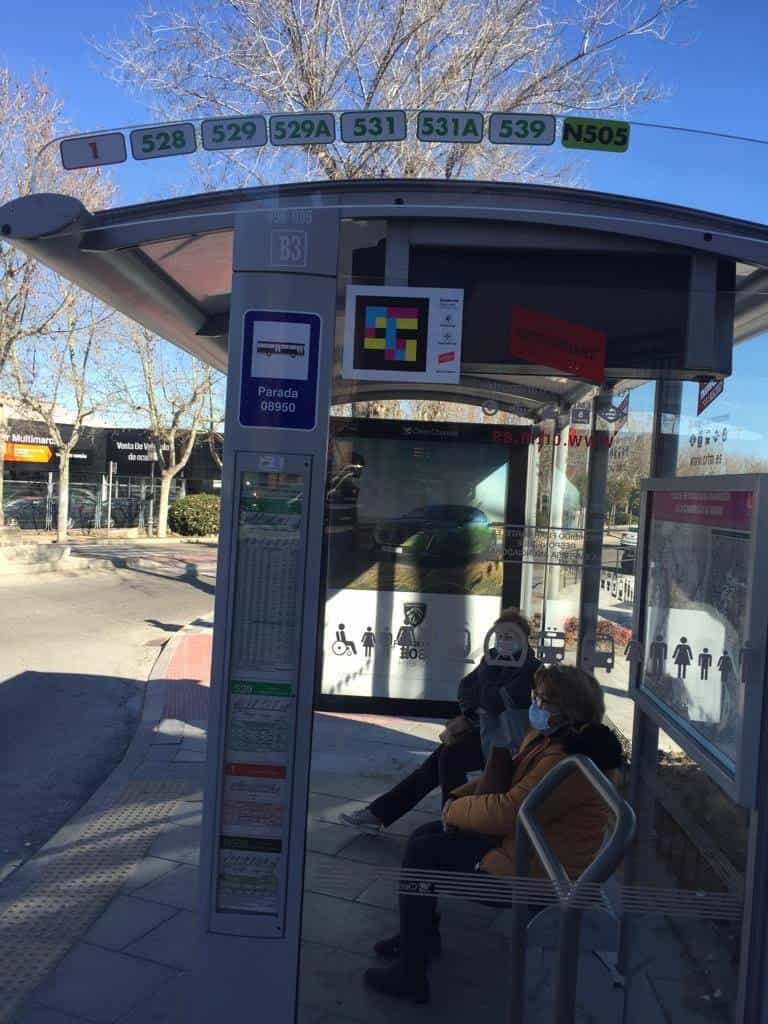
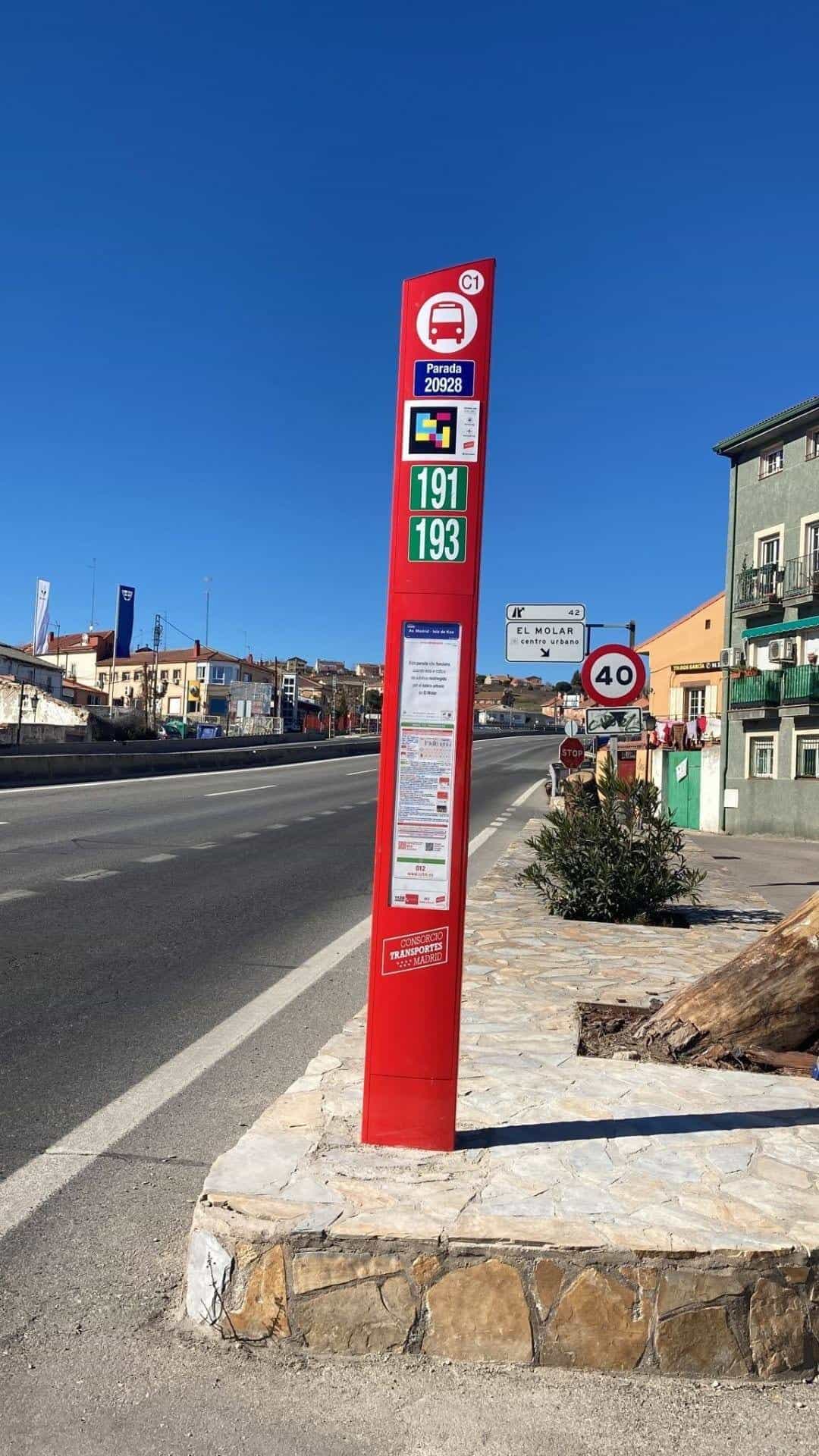
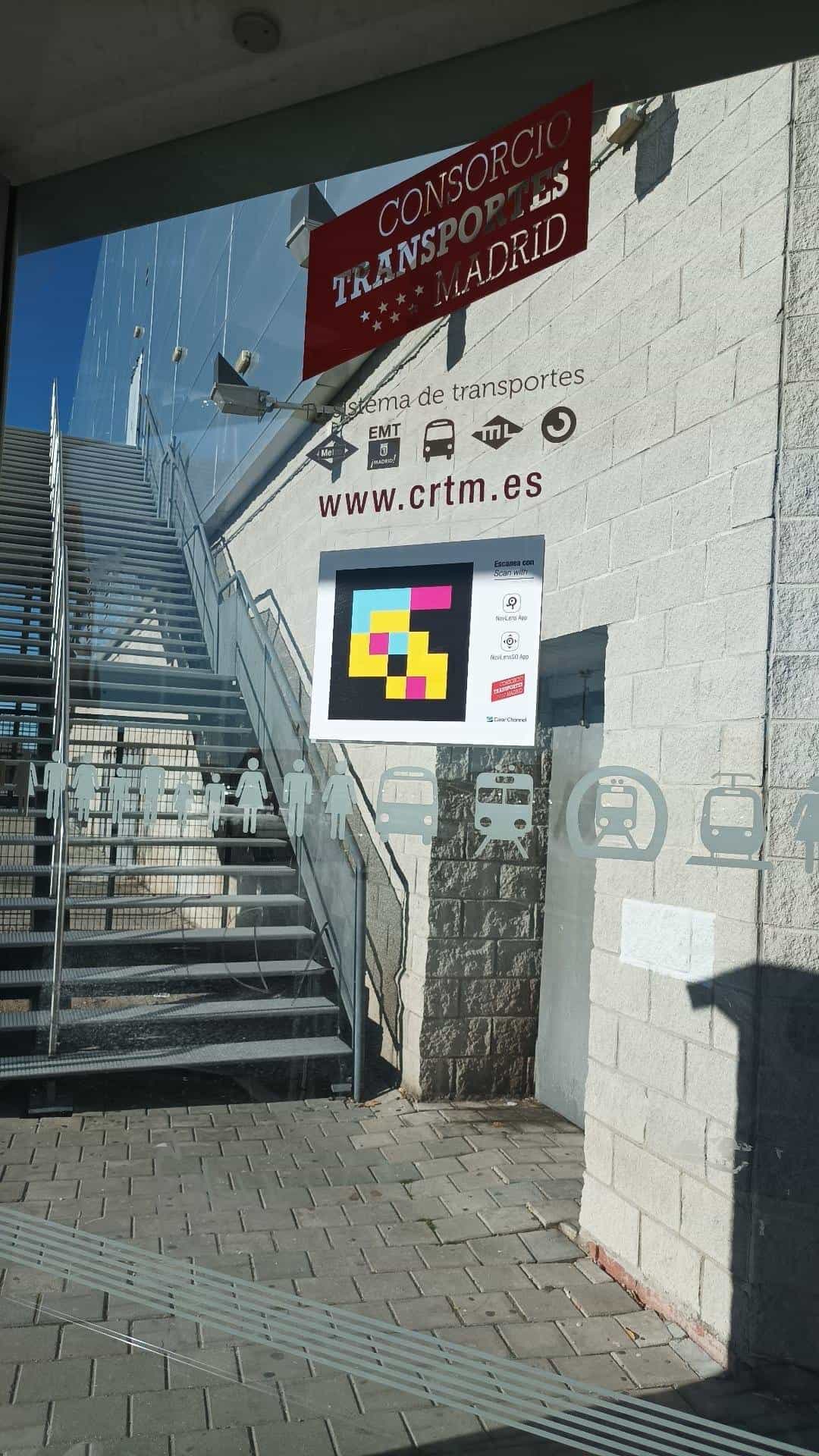
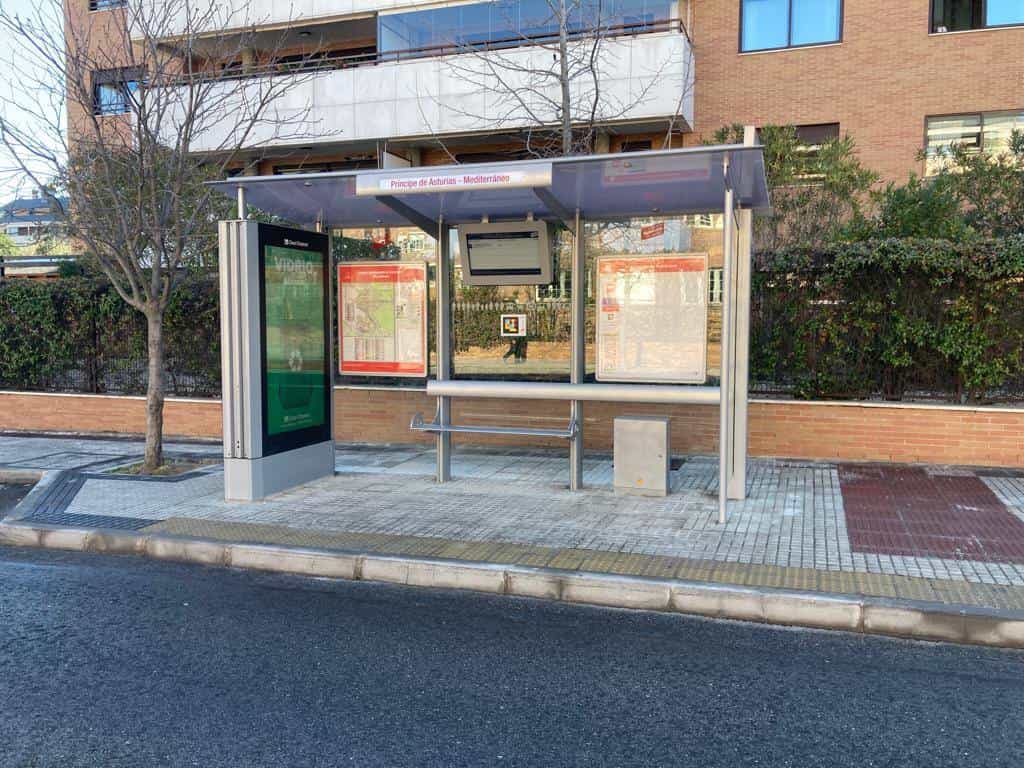
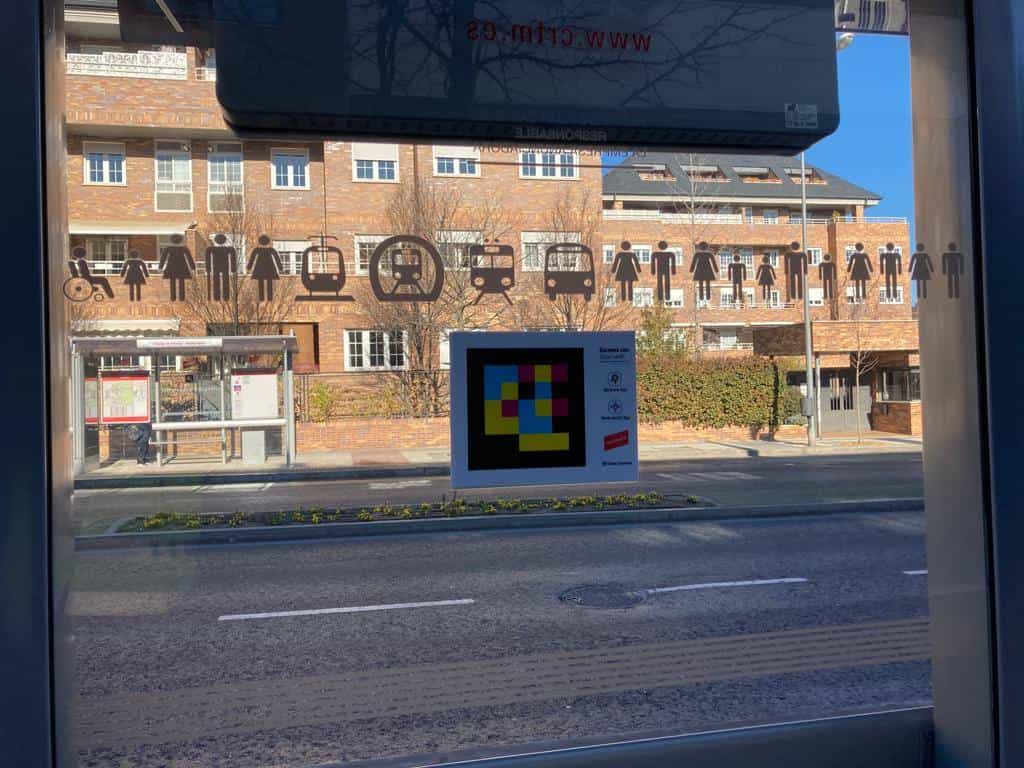
The label works the same on the glass of a lit shelter in Alcobendas, on the schedule panel of a post in El Molar or on the wall of an interchange in Alcalá de Henares. Same height, same layout, same readout for anyone walking with the app open.
§ Why it matters
Accessibility at regional scale, without touching the street furniture.
179 municipalities
The rollout covers the entire Community of Madrid: capital, metropolitan area and small towns connected by CRTM interurban bus.
No construction
It is a printed label stuck onto the existing support—shelter glass, schedule panel or post—without replacing furniture or wiring anything.
One signal
There is no separate sign “for blind people” and another “for everyone else”: the code lives with CRTM signage and is only activated by those who need it.
§ Project figures
- · Announcement: July 2021 (Community of Madrid).
- · Mass rollout: November 2021 →.
- · Clear Channel concession for CRTM: to 2030.
- · Models covered: Enthoven II, Renovated and posts.
- · Apps: NaviLens and NaviLens GO (free).
§ And your network?
Your next station can also speak.
Tell us about your network, your pain points and the KPIs you want to move. We’ll show you how NaviLens would fit—with comparable cases.