Case study · Madrid
Every EMT stop, also read aloud.
All 5,540 shelters and stops of Madrid's Empresa Municipal de Transportes carry a NaviLens code: blind and low-vision riders find the stop from several yards away and hear lines, destination and waiting time with the free NaviLens GO app.
5,540
Shelters and posts with NaviLens citywide
March · May 2023
Announcement and citywide rollout
EMT + City Council
Madrid's public bus operator
ONCE · CERMI
Co-designed with the blind community
The client
EMT Madrid
Public bus operator
EMT Madrid is the capital's public bus operator, owned by the City Council. It moves over 400 million riders a year across a network connecting the 21 city districts and key regional interchanges.
On 21 March 2023, EMT unveiled its new digital, smart and universal signage with NaviLens codes, announcing that by May 2023 all 5,540 shelters and stops citywide would be tagged. The project is part of the city's inclusive mobility strategy and was developed with ONCE and the CERMI Madrid organizations.
With this rollout, Madrid joined the list of capitals—alongside New York, Barcelona, Murcia or Las Palmas—that have adopted NaviLens as the accessible signage standard in public transport.
§ The challenge
Making 5,540 stops audible without touching street electronics.
- 01
A huge urban network to read aloud
EMT runs over 200 lines in Madrid. Stop information—line number, destination, next arrivals, alerts—was designed to be read: panels, mupis and screens. For a blind or low-vision rider, finding the right shelter and confirming the arriving bus depended on asking another person.
- 02
Find the stop before being able to use it
The first challenge isn't reading the info: it's locating the post or shelter on complex sidewalks full of street furniture, terraces and works. Without a sign detectable at distance, a cane user can walk right past their stop.
- 03
One solution for 5,540 points
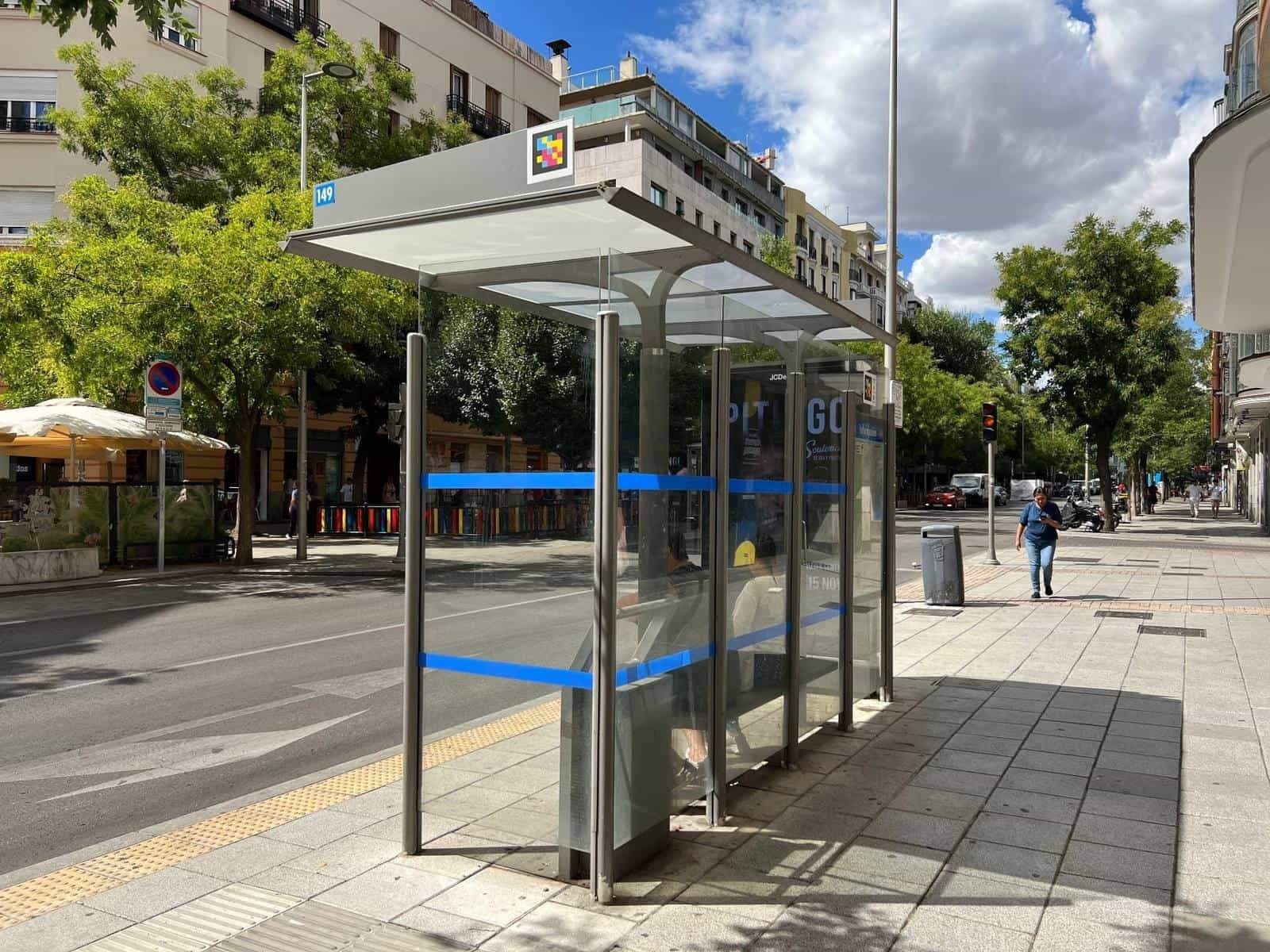
JCDecaux shelters, municipal posts, interchanges, double and triple bays at Cibeles or Atocha: the system had to work the same everywhere, with a single gesture and without installing new electronics. The NaviLens label meets that bar — it's printed signage, with no battery or maintenance.
§ The solution
One code per stop, read from meters away with a phone.
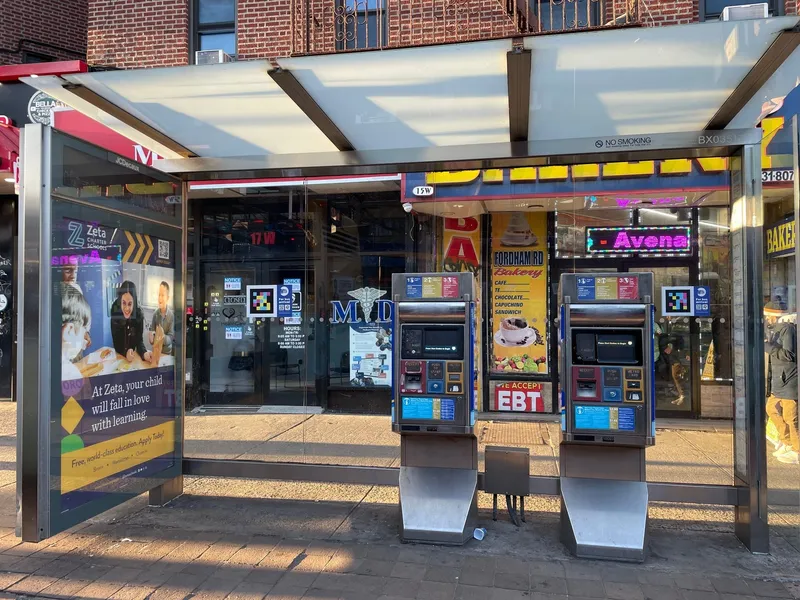
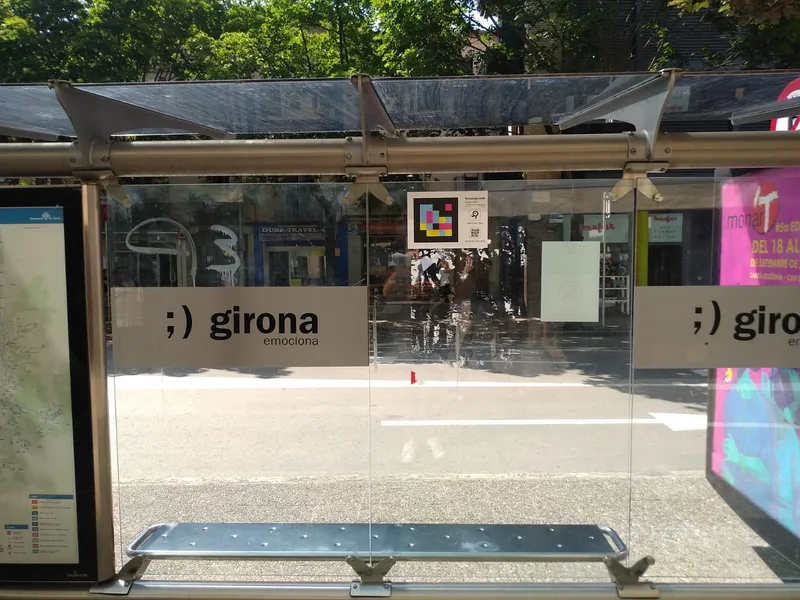
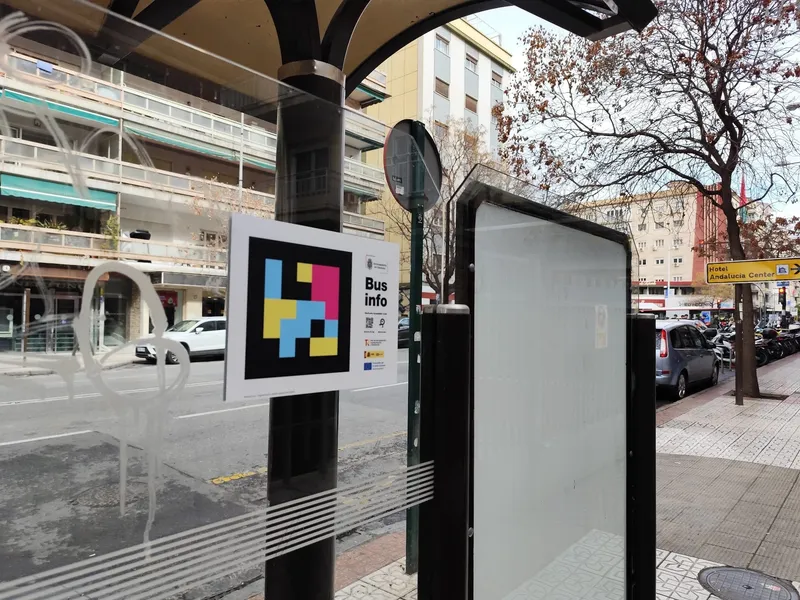
Every EMT shelter and post carries a NaviLens label in a standard position (front of the roof on shelters, top of the post otherwise) so it can be detected from the opposite sidewalk, on the move and without aiming.
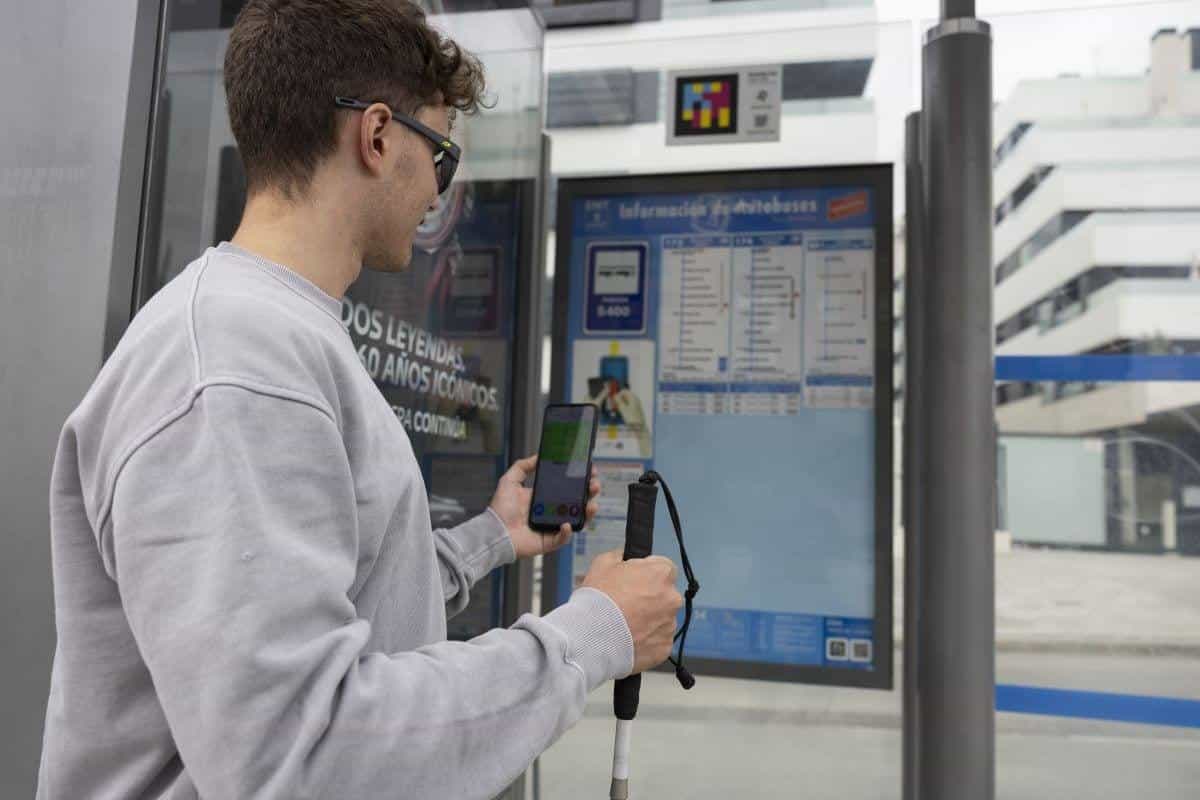
Read with the free NaviLens GO app, the rider hears the stop number, lines, destinations and real-time waiting times, plus alerts about incidents or diversions.
The signage coexists with the rest of the panels—pictograms, contrast, large numbers—without taking their place: NaviLens adds a layer of information without subtracting from those who already read the stop fine.
§ On the street
From Cibeles to Banco de España: the same sign at every stop.
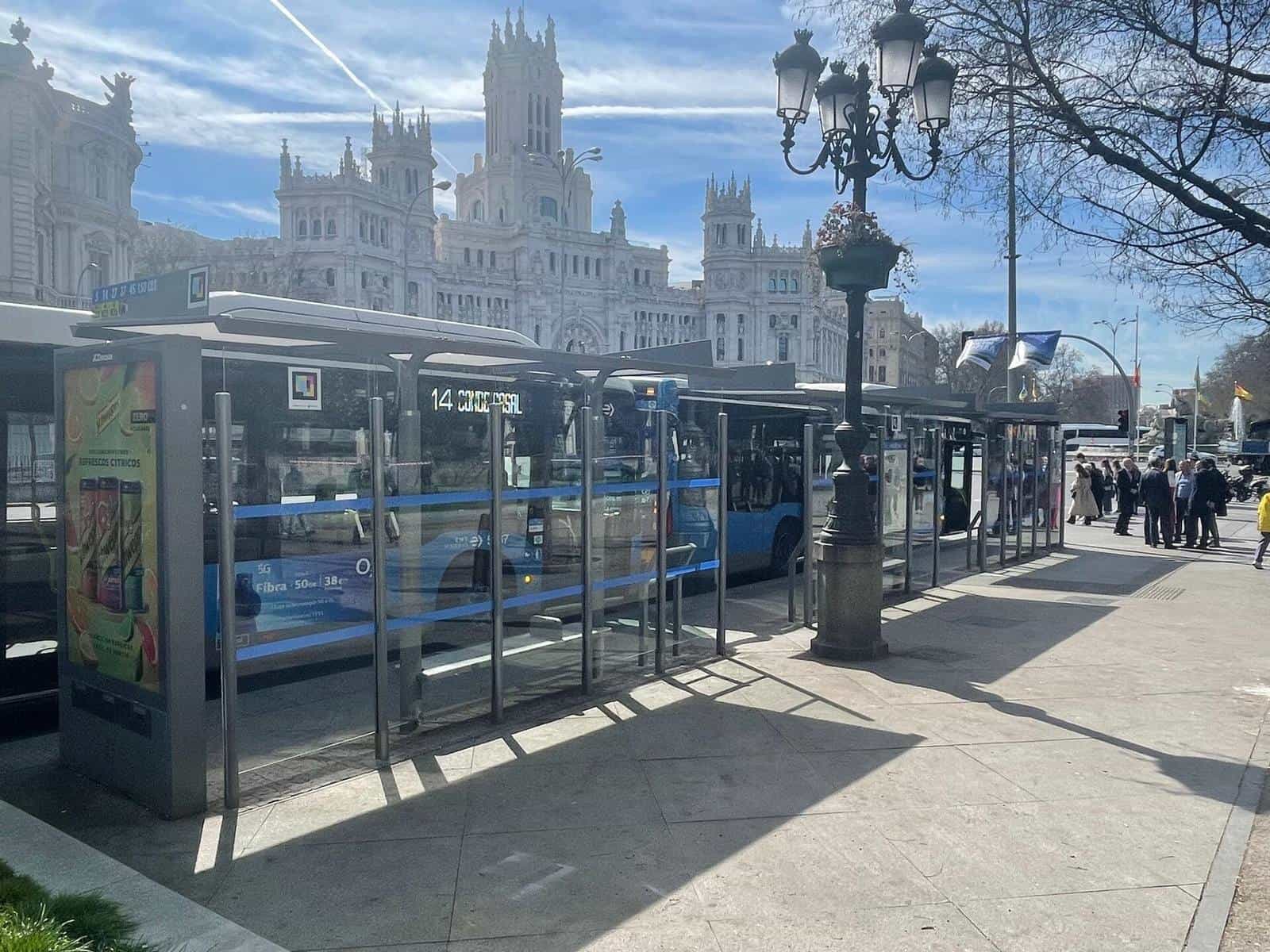
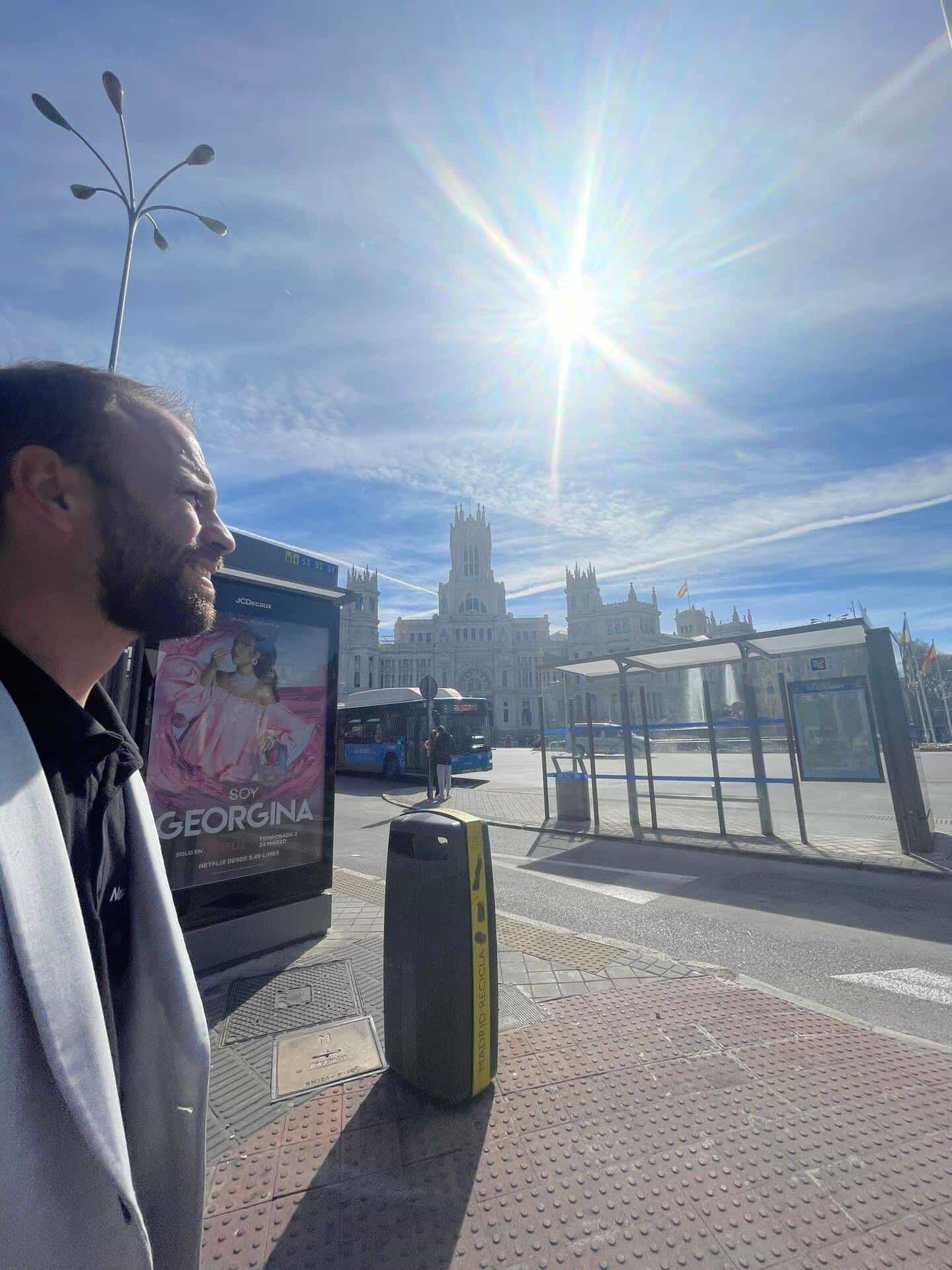
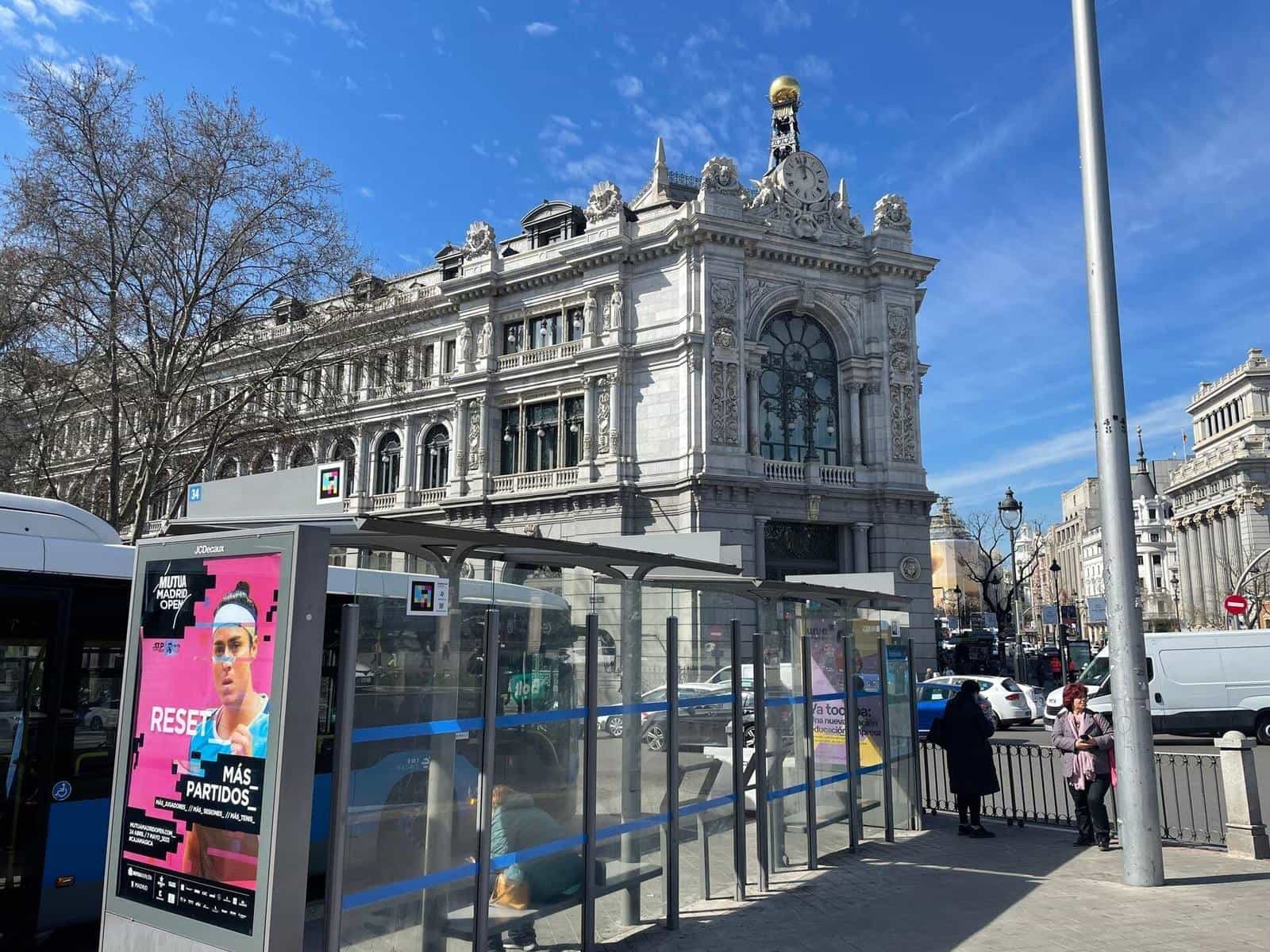
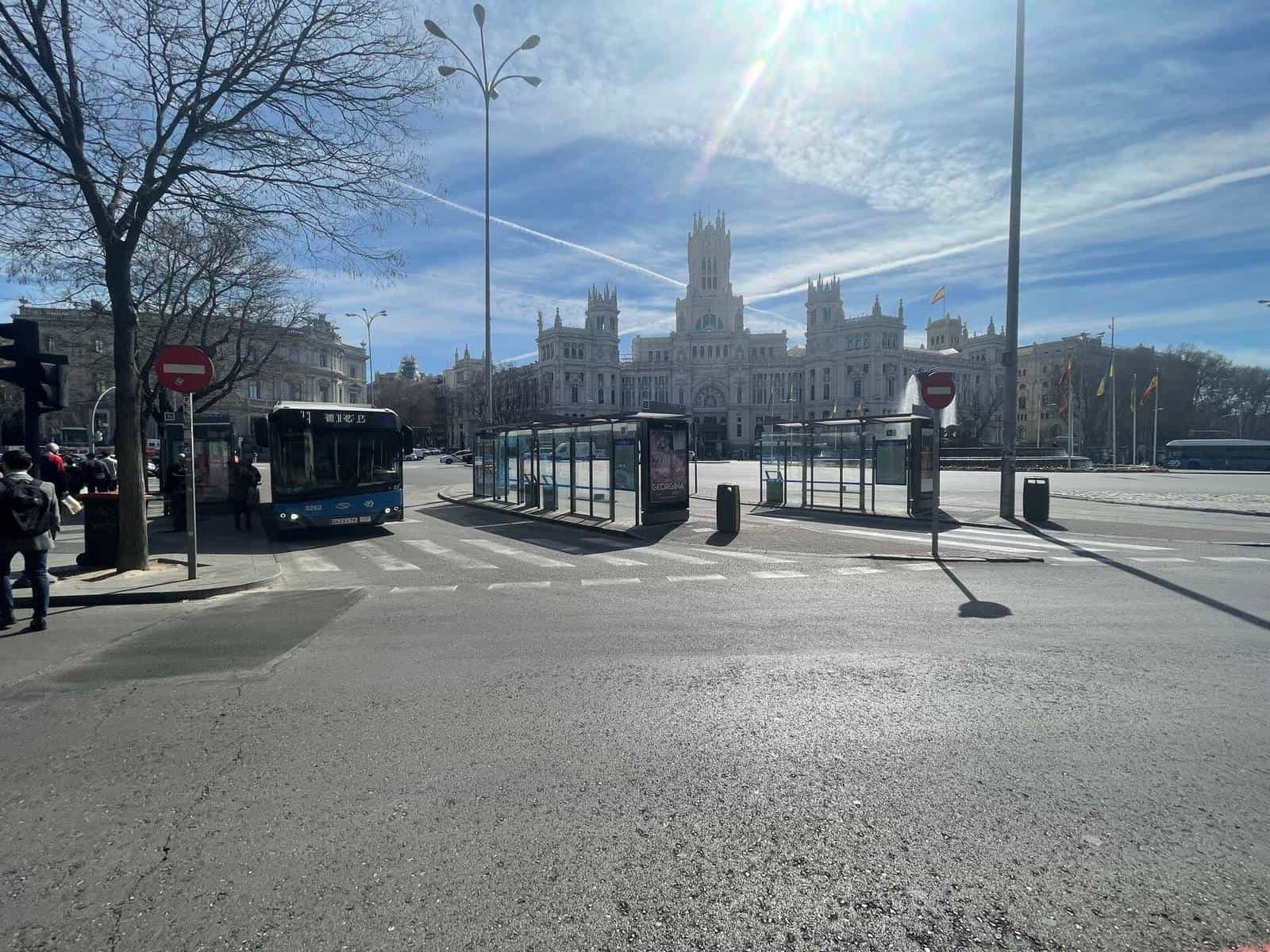
All stops in the EMT network—simple posts in neighborhoods, glass shelters on main avenues or interchanges with multiple bays like Cibeles or Atocha—share the same gesture: raise the phone with NaviLens GO, hear the lines and times, and board.
§ Why it matters
An entire capital, accessible by default.
100%
of the EMT network covered: Madrid's 5,540 shelters and posts run the same system, regardless of neighborhood, district or stop type.
Voice
lines, destinations and waiting times read aloud by the phone in the user's language, with no need to aim or get close to the panel.
Free
the NaviLens GO app is free and the codes need no electronics or technical maintenance: it's printed signage designed to last.
§ And your network?
Your next station can also speak.
Tell us about your network, your pain points and the KPIs you want to move. We’ll show you how NaviLens would fit—with comparable cases.