Case study · Córdoba, Spain
AUCORSA in Córdoba — the stop that announces itself.
How AUCORSA and Córdoba City Council, within the Córdoba Incluye program, made urban bus shelters—Ronda de los Tejares, Gran Capitán, Fátima—accessible with NaviLens in 42 languages.
AUCORSA
Urban bus operator of Córdoba City Council
Córdoba Incluye
Municipal accessibility program (1st Andalusian capital with NaviLens)
5,000+
Recorded interactions at AUCORSA bus stops
200+
Stops with NaviLens after the 2025 expansion
The client
AUCORSA · Córdoba
City Council
AUCORSA (Autobuses de Córdoba S.A.) is the municipal company operating the urban transport of Córdoba City Council, with lines connecting the old town, the Health City, the University and the neighborhoods.
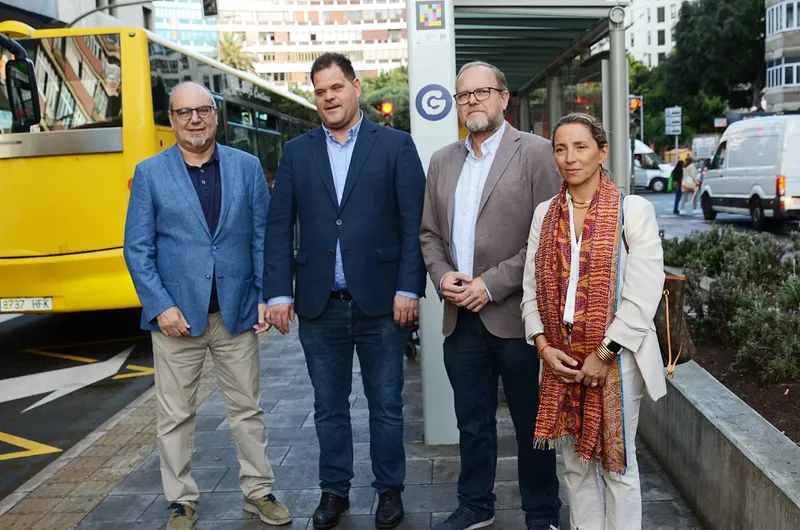
Within the Córdoba Incluye strategy, led by the Inclusion and Accessibility department of councillor Bernardo Jordano and backed by ONCE in Córdoba, the Council has rolled out NaviLens on AUCORSA shelters, posts and line panels so that anyone—blind, older or tourist—can hear stop information in their own language. Córdoba was the first Andalusian capital to deploy this system on its urban transport.
Press-verified milestones: 3 Mar 2021 launch on line 2 with 20 pilot stops; 31 Mar 2022 first-year balance of more than 2,000 interactions; and 1 Apr 2025 expansion with 300 new NaviLens codes on AUCORSA shelters and Córdoba streets—added to the 220 already installed.
§ The challenge
So no one is left off their bus.
- 01
An urban network anyone can use alone
AUCORSA operates Córdoba’s urban bus network with lines such as 2 (Fátima—Tejares—Health City) or 5. Signage and maps stuck to shelter glass are a barrier for blind, low-vision, older passengers and tourists who don’t read Spanish.
- 02
Spotting the shelter without seeing it
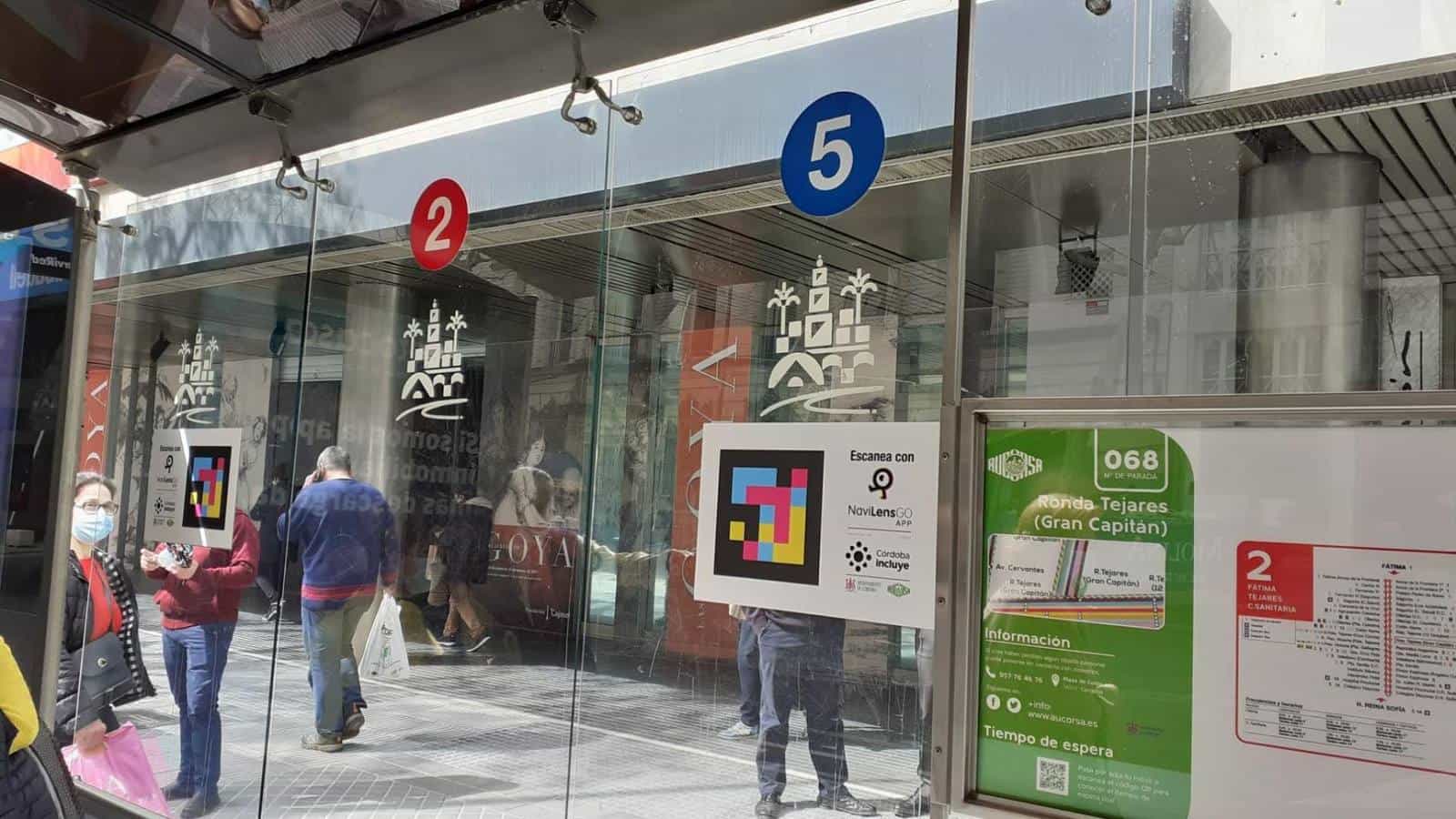
Finding the stop sign and line panels on Ronda de los Tejares or Gran Capitán is not trivial with low vision. NaviLens is detected from several yards away, while moving and without focusing.
- 03
One language for the whole city
Within the Córdoba Incluye program, the Council wanted a single standard to identify every AUCORSA stop—Ronda de los Tejares, Gran Capitán, Fátima, Health City, Plaza de Colón—with the same brand and the same experience.
§ The solution
A code on every
shelter.
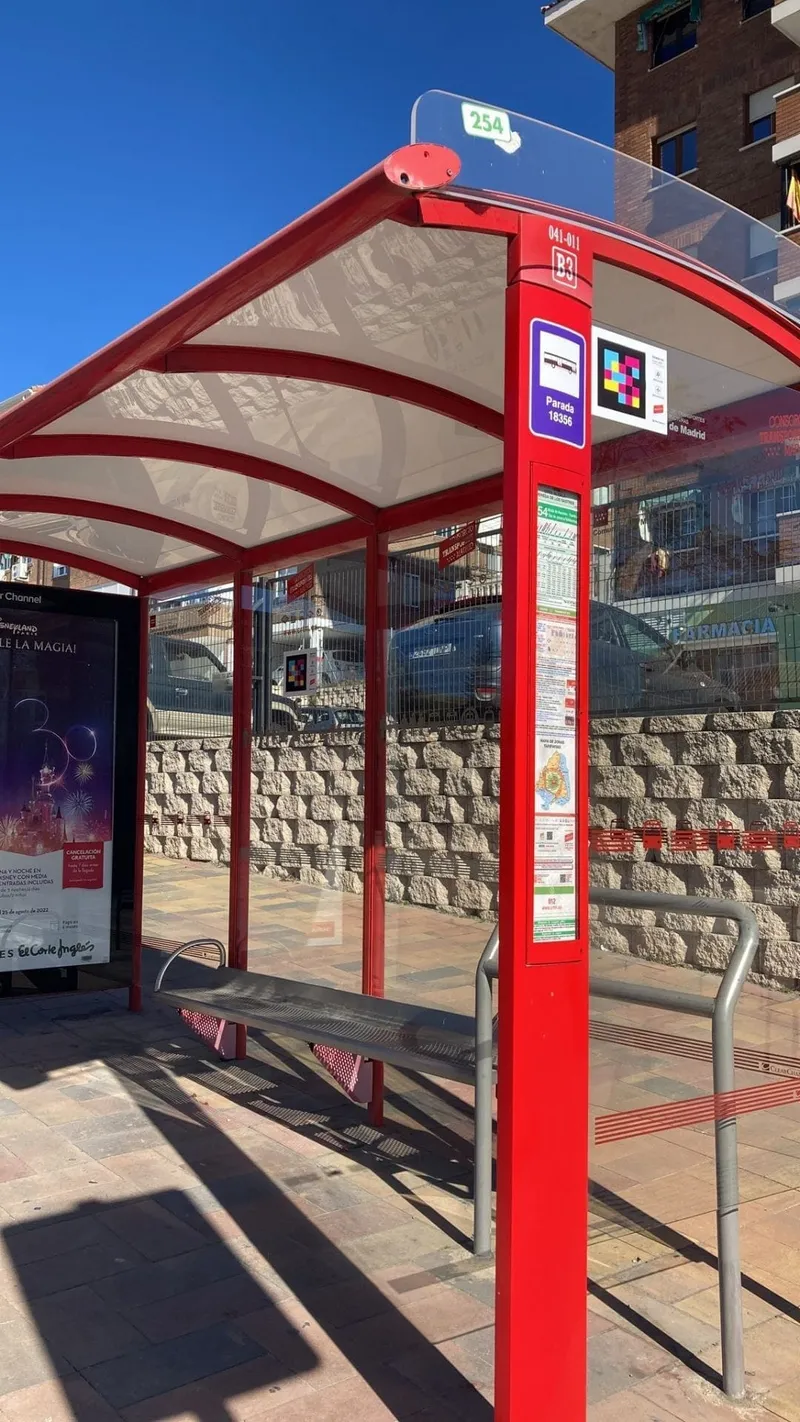
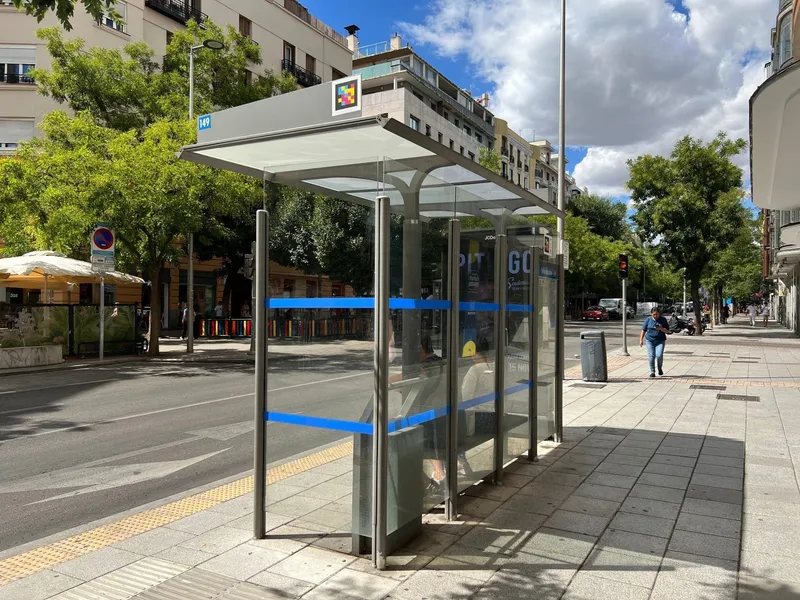
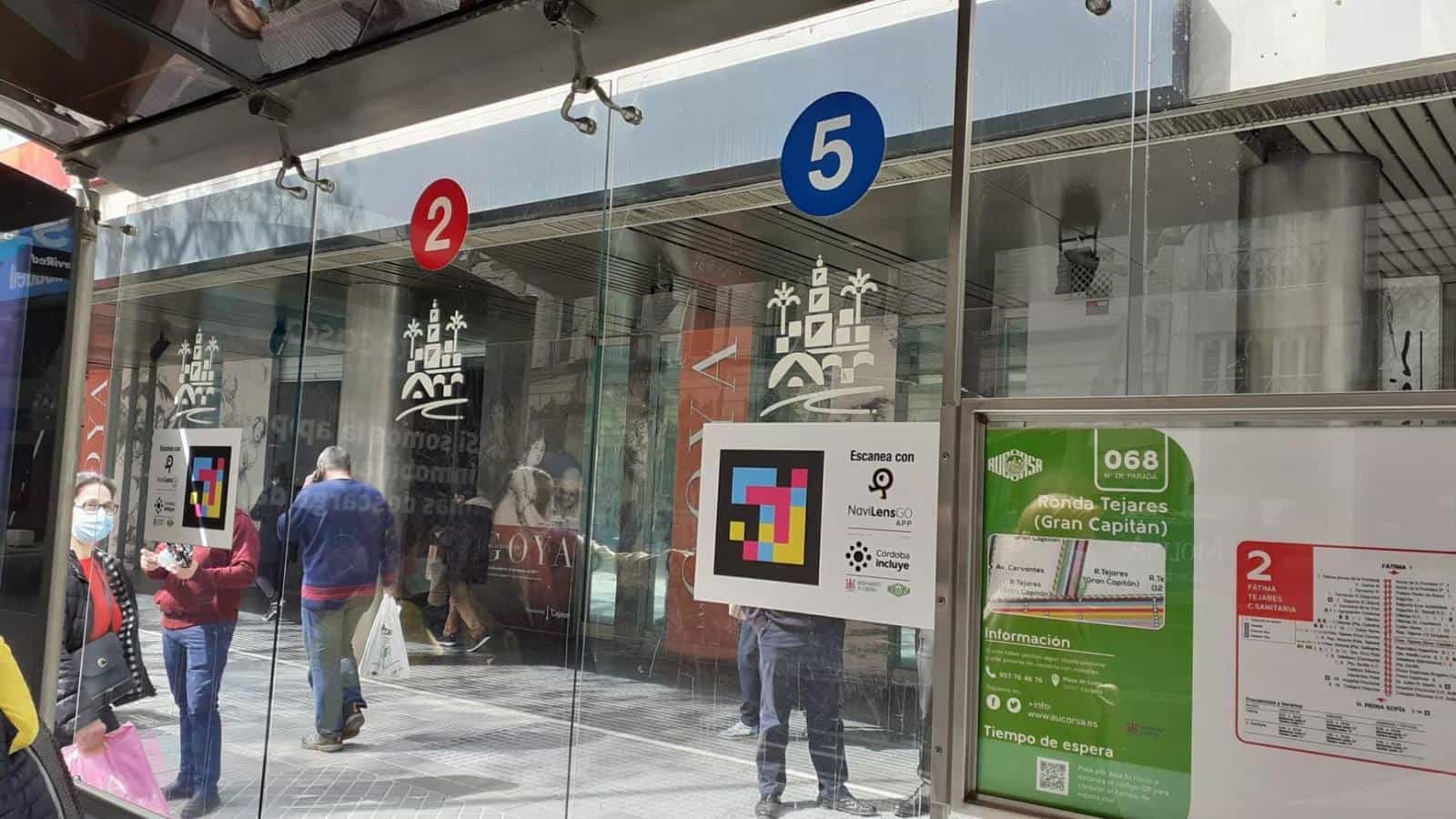
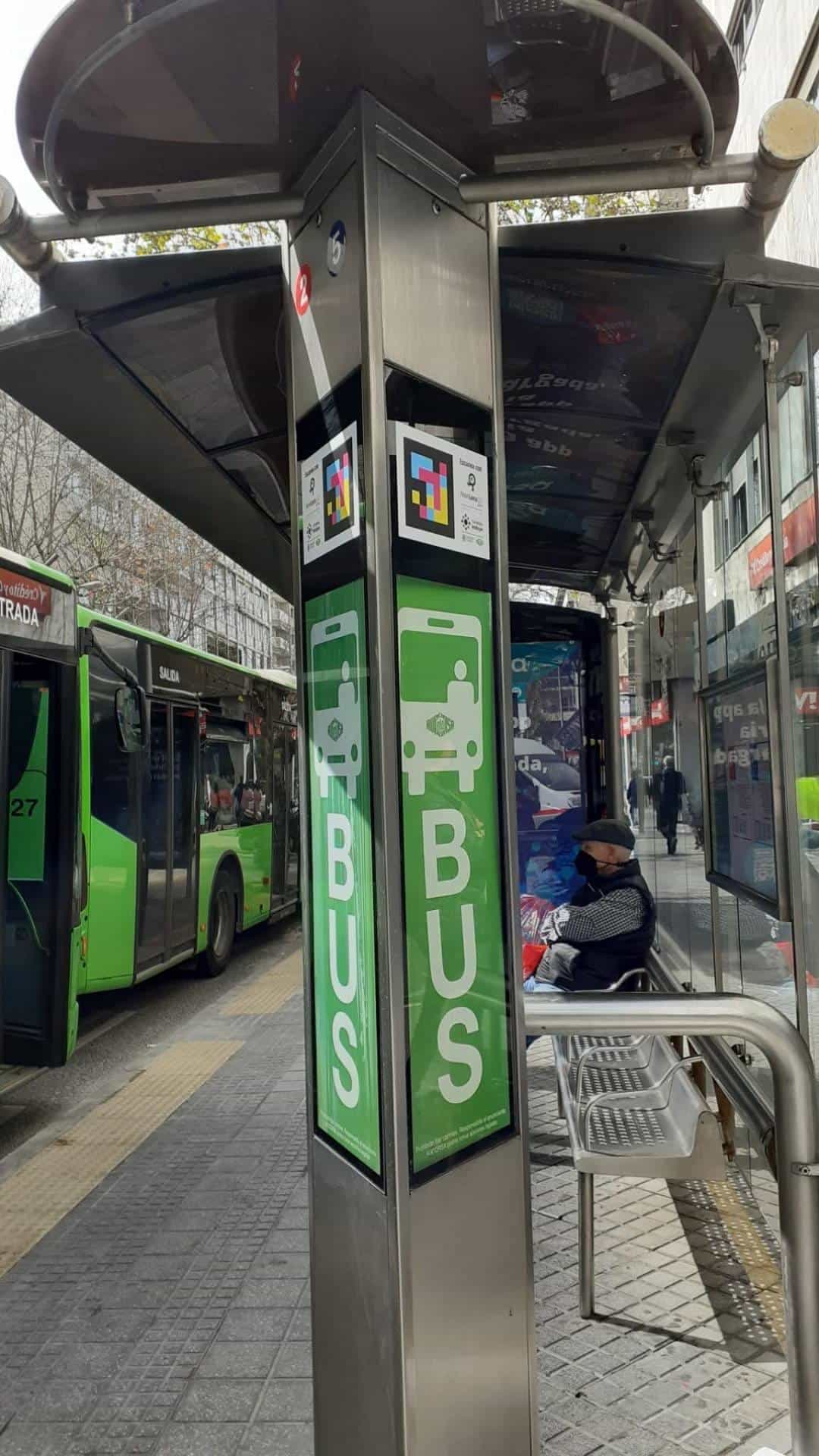
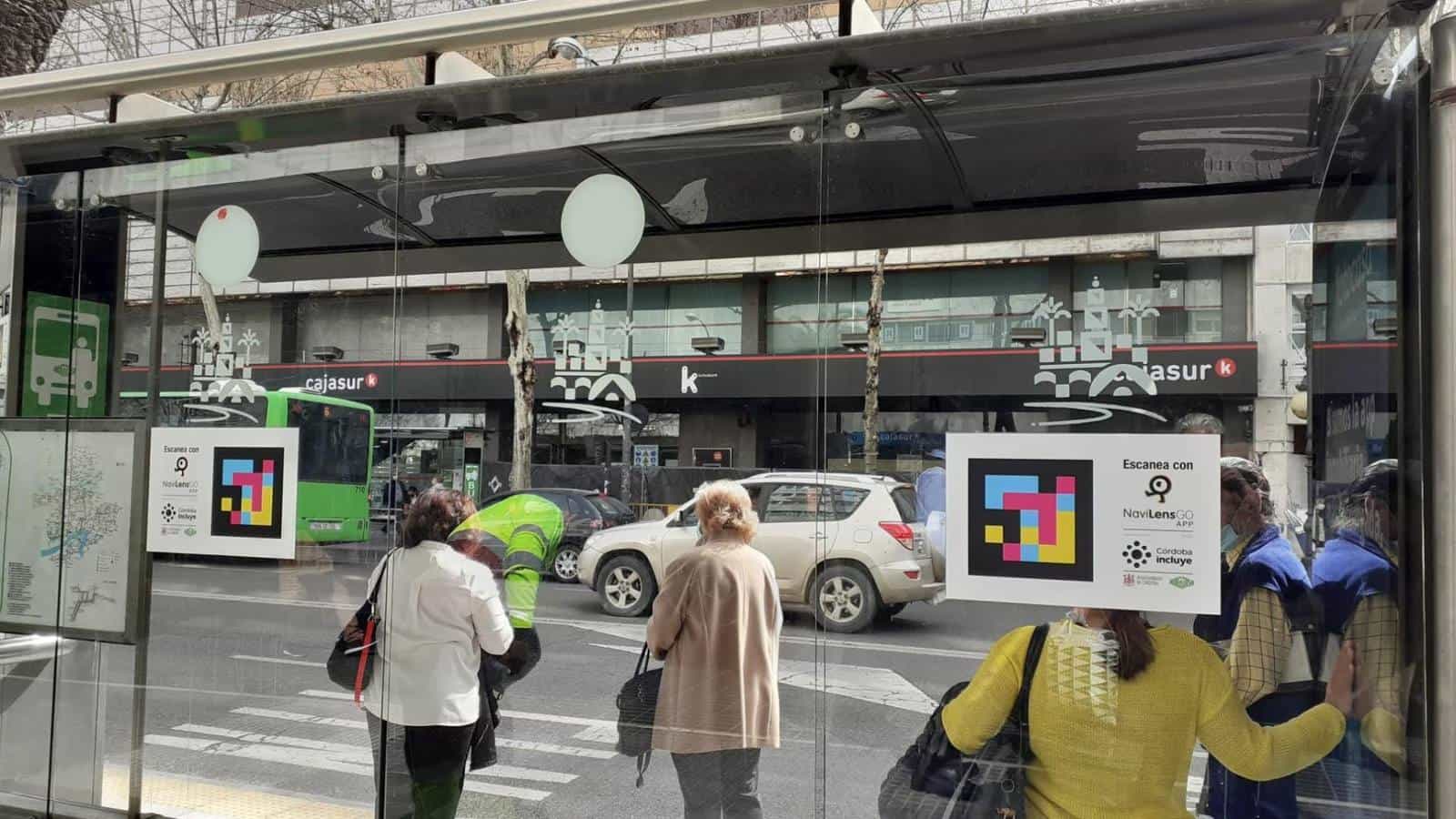
Every AUCORSA stop carries a “Scan with NaviLens GO · Córdoba Incluye” sign on the shelter and on the totem post. It is detected from several yards away, while moving and without focusing.
The passenger hears the stop number and name (068 Ronda Tejares, 711…), the lines (2, 5…), their destination—Fátima, Health City, Reina Sofía Hospital—and the next waiting times, also with low vision or without Spanish.
§ Timeline
From one stop to an accessible urban network.
- Mar 2021
Official launch on Line 2 (Reina Sofía Hospital)
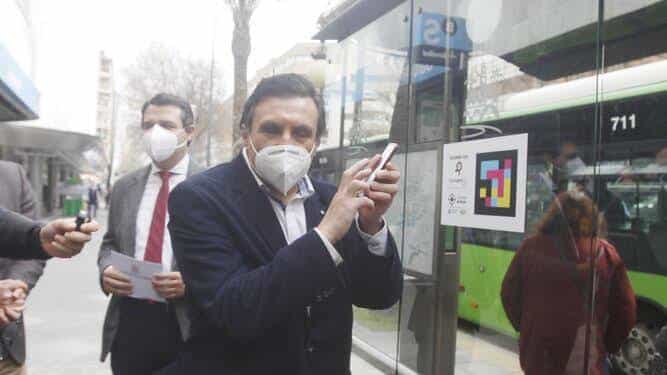
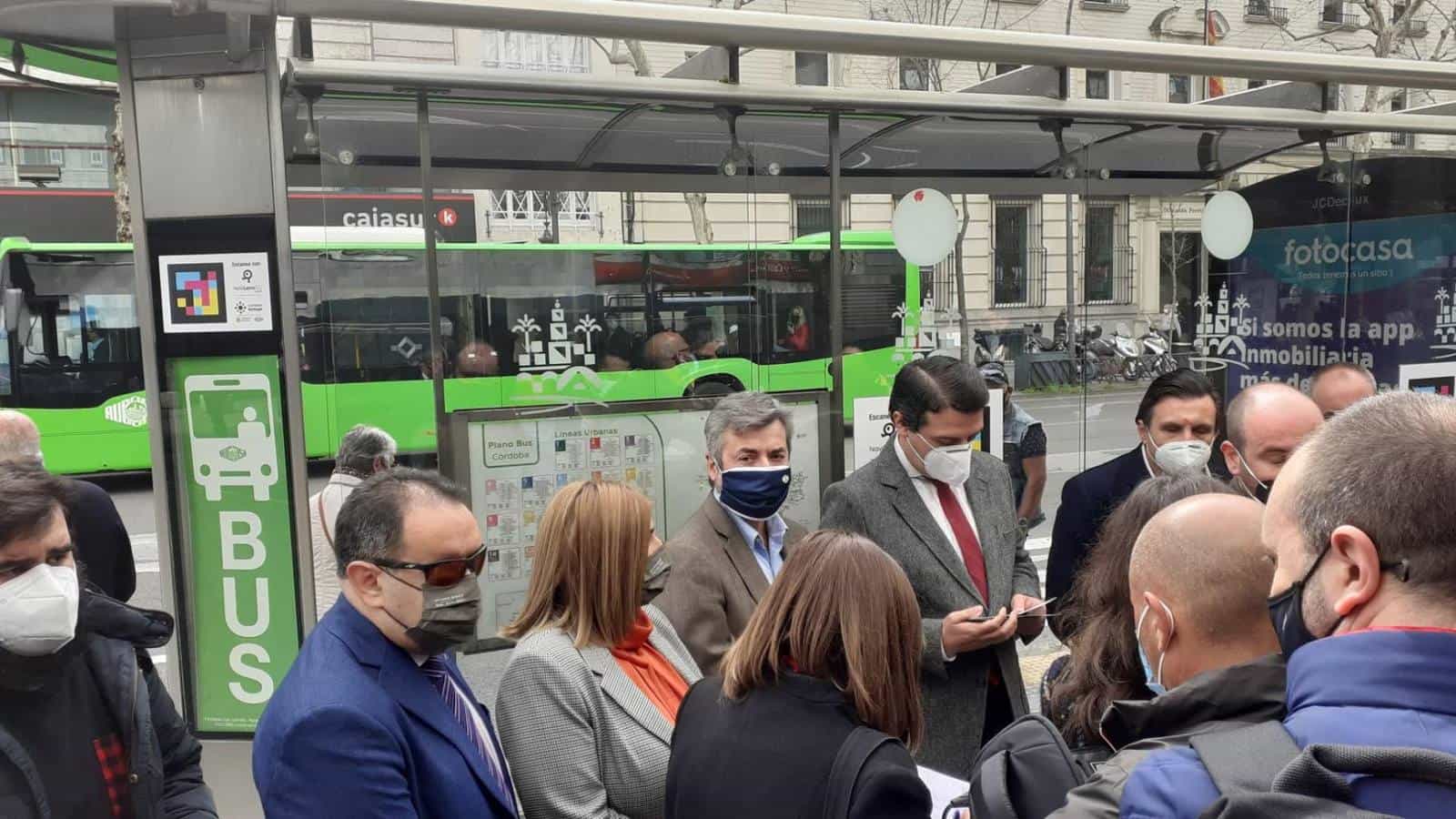
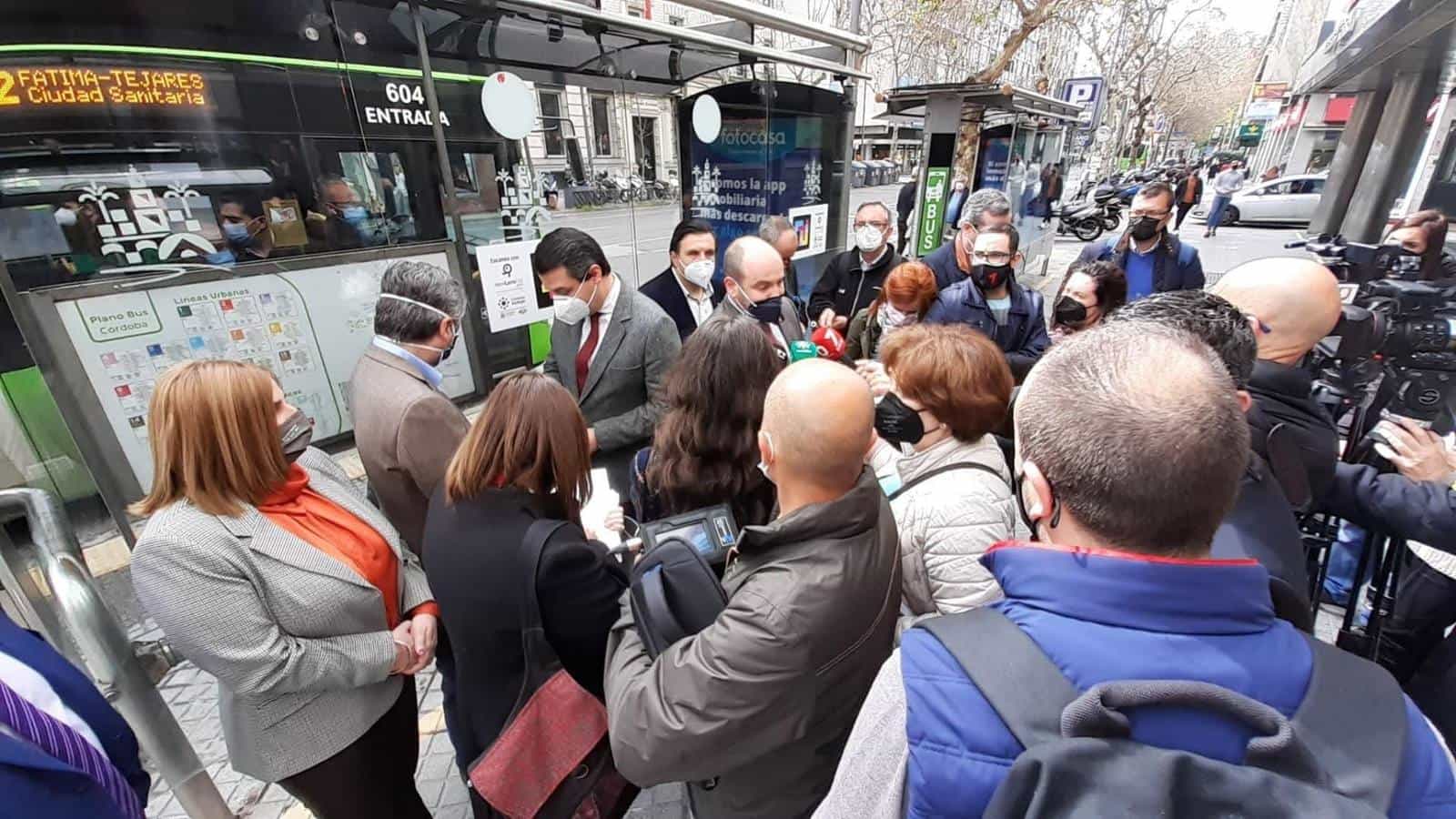
Mayor José María Bellido, AUCORSA chair Miguel Ángel Torrico, deputy mayor for Inclusion and Accessibility Bernardo Jordano and ONCE Córdoba director Carmen Aguilera unveil NaviLens at 20 stops on Line 2, which connects the Reina Sofía University Hospital. Córdoba becomes the first Andalusian capital to roll out the system on its urban transport.
- 1 year on
2,000+ users and Ronda de los Tejares as benchmark
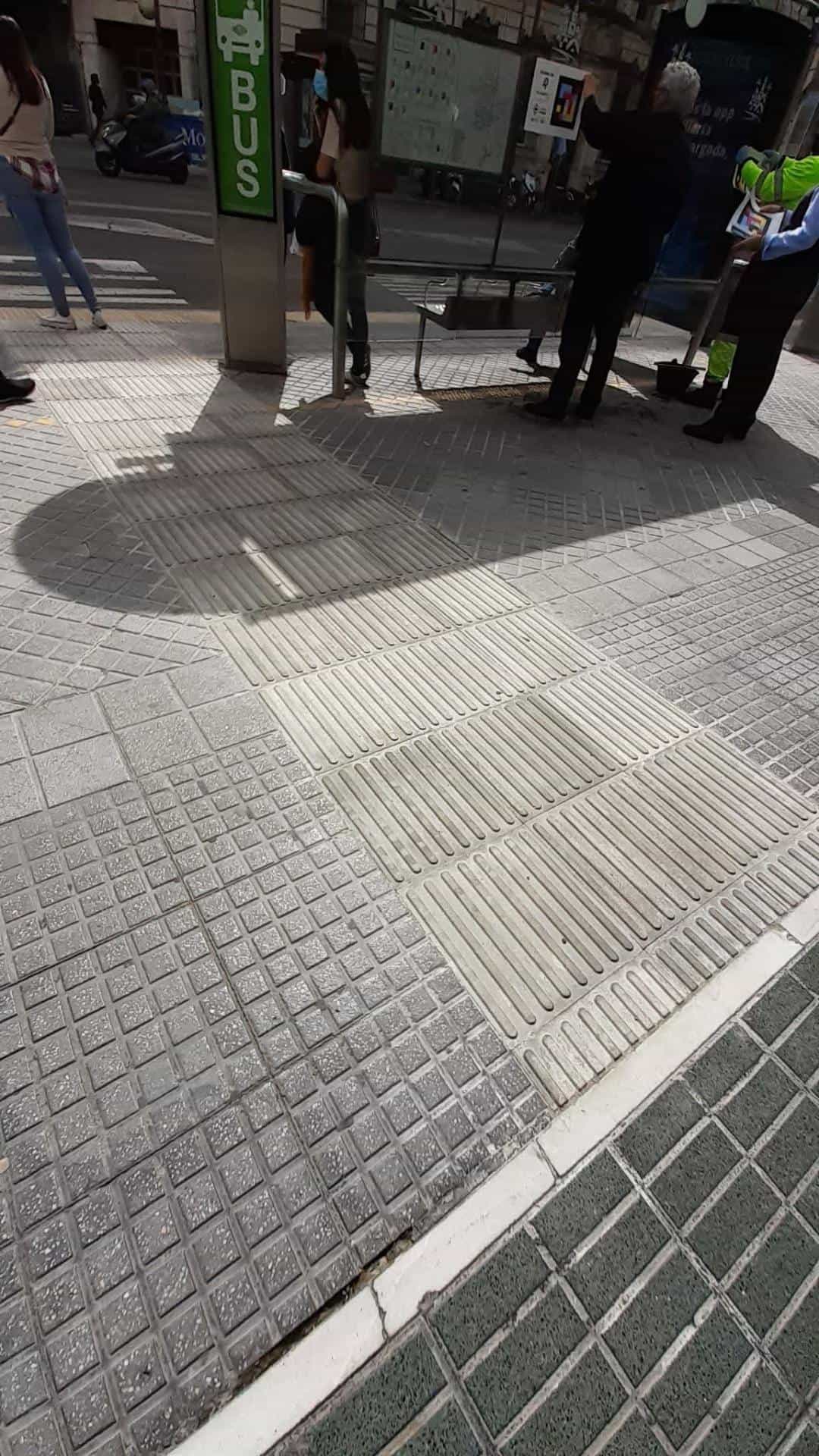
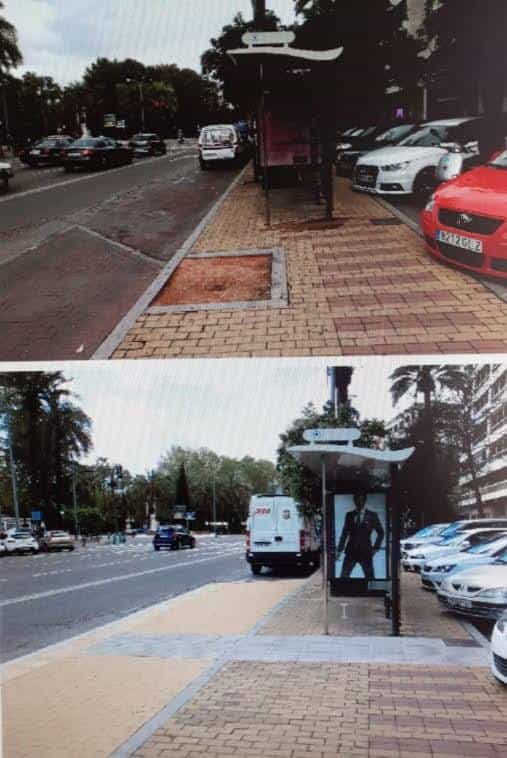
Bernardo Jordano reports: over 2,000 people have used AUCORSA’s NaviLens codes, with the Line 2 stop on Ronda de los Tejares in the lead—800 people with visual disability and 100 interactions from general users. In parallel, Infrastructure adapts the stop surroundings with tactile paving so they can also be detected with the cane.
- Apr 2025
Expansion to 200 more stops and to street signs
Bernardo Jordano and the new ONCE Córdoba director, Anabel Mercado, present the extension of the system to 200 additional stops and to 100 more points—taxis, ATMs, opticians and municipal buildings—and announce its arrival on the plaques bearing street and square names of Córdoba. Usage figures confirm the model: 5,000 impacts at bus stops, 4,000 at the Julio Romero de Torres Museum, 1,000 in taxis and 800 in pharmacies.
- Model
An urban bus accessible to the whole city
With AUCORSA, Córdoba consolidates a single standard—the “Scan with NaviLens GO · Córdoba Incluye” sign—on shelters, posts and line panels, read from 15–20 m away and translated into 42 languages, with no additional download or borrowed device.
§ On the ground
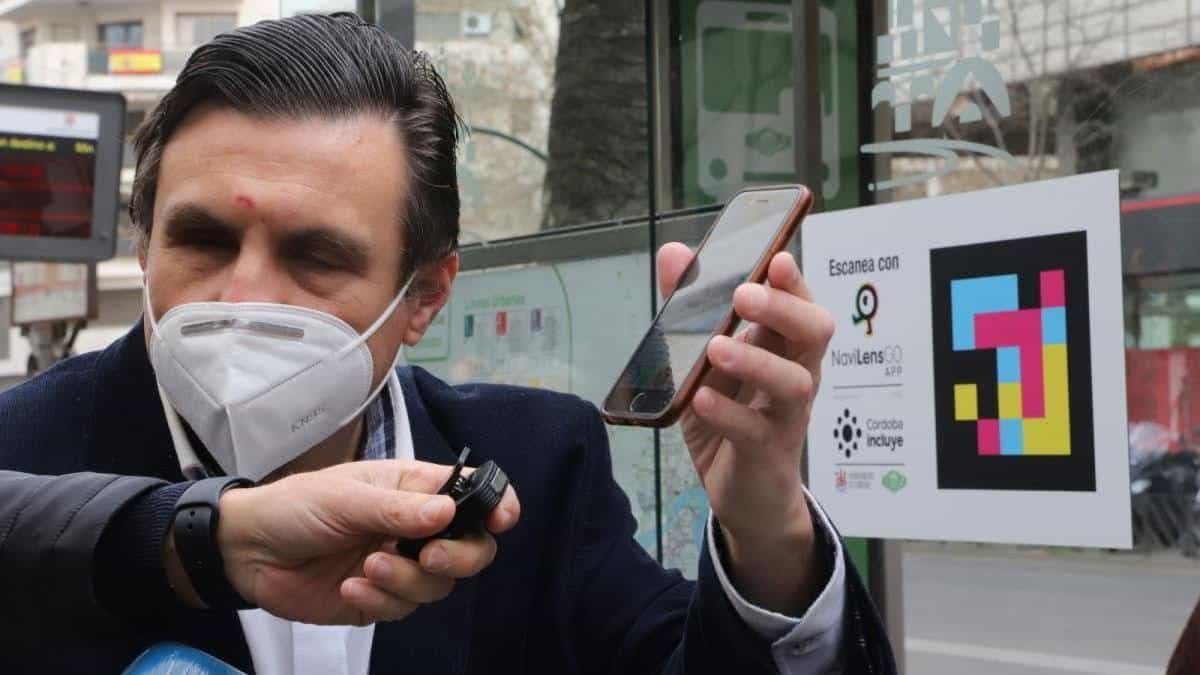
Shelters, posts and stops of Córdoba.
§ What they said
What the City Council said.
“El balance es más que satisfactorio. Solo en una parada el código ha registrado casi 800 interacciones de usuarios con discapacidad visual y 100 más de usuarios convencionales. Eso demuestra que los usuarios lo han incorporado en su día a día.”
§ Results
An urban bus anyone can use.
100%
Of the sign’s information available by voice
42
Languages — including English, French, German and Arabic
0
Visual barriers to identify stop and line
§ And your network?
Your next station can also speak.
Tell us about your network, your pain points and the KPIs you want to move. We’ll show you how NaviLens would fit—with comparable cases.