Case study · Donostia / San Sebastián · Basque Country
Under Atotxa, every bay announces itself.
The Donostia / San Sebastián City Council, together with NaviLens, installs next-generation codes on the 21 bays of the subway station — shared by PESA, ALSA, Lurraldebus and Bilman Bus. Blind travelers locate their platform, operator and next service with their phone.
21
Bays signed with NaviLens code
Street → -2
Codes outside, at access points, in the concourse and at bays
PESA · ALSA · Lurraldebus
Operators sharing platforms
42
Languages read aloud
The client
Donostia Geltokia Station
Donostia City Council
The Donostia Geltokia Station is the city’s underground bus terminal: a three-story building with mezzanine, next to the Urumea river and the Adif train station, with 21 bays operated by commuter, regional and long-distance companies — PESA, Lurraldebus, ALSA, Bilman Bus, Eurolines.
The Donostia / San Sebastián City Council, in collaboration with NaviLens, installs next-generation codes on the glass doors of each bay. The initiative is part of the city’s commitment to 100% accessible transport, in line with the later NaviLens deployment on the new Dbus shelters.
§ The solution
One code per bay, read from the central corridor.
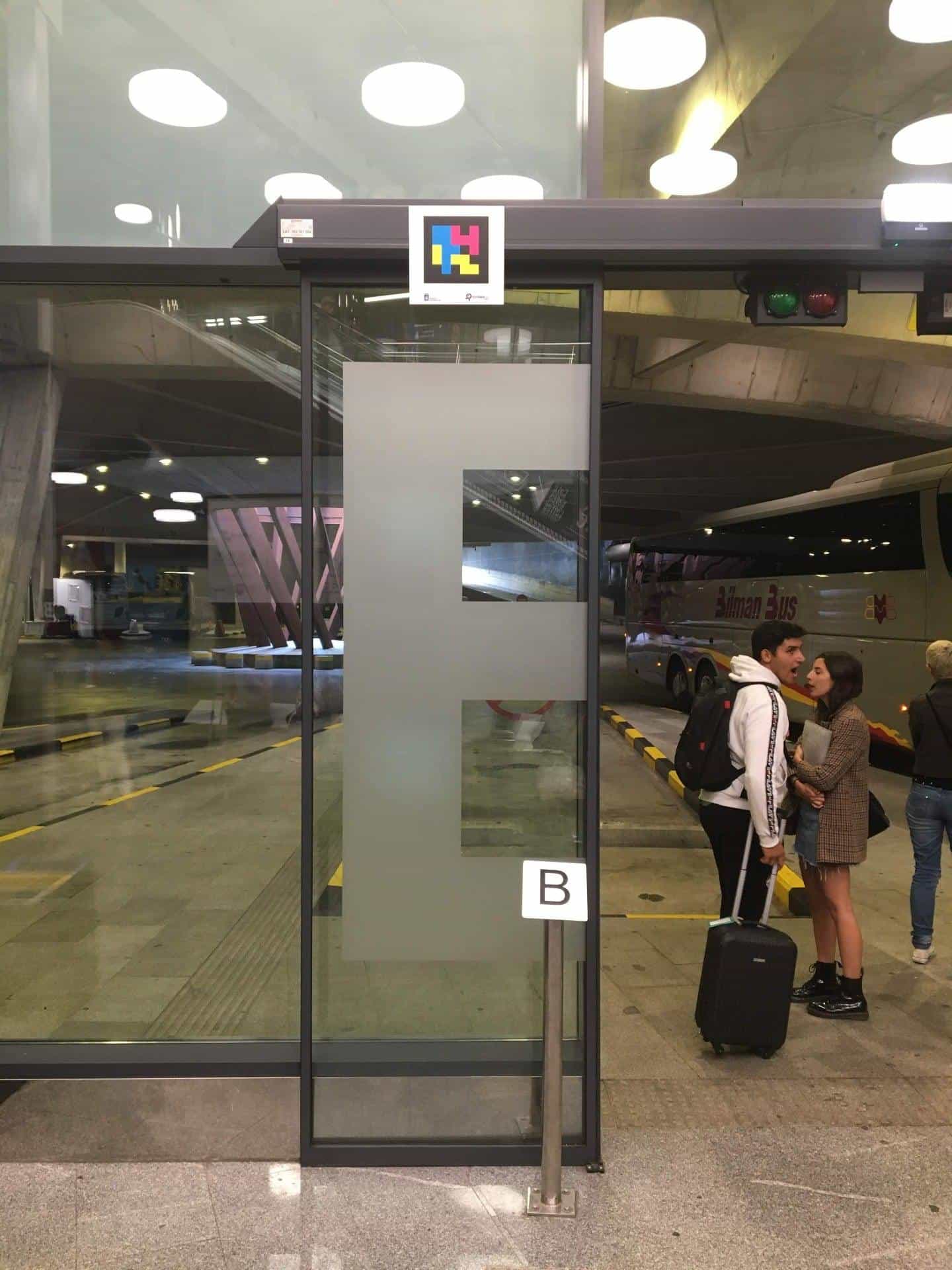
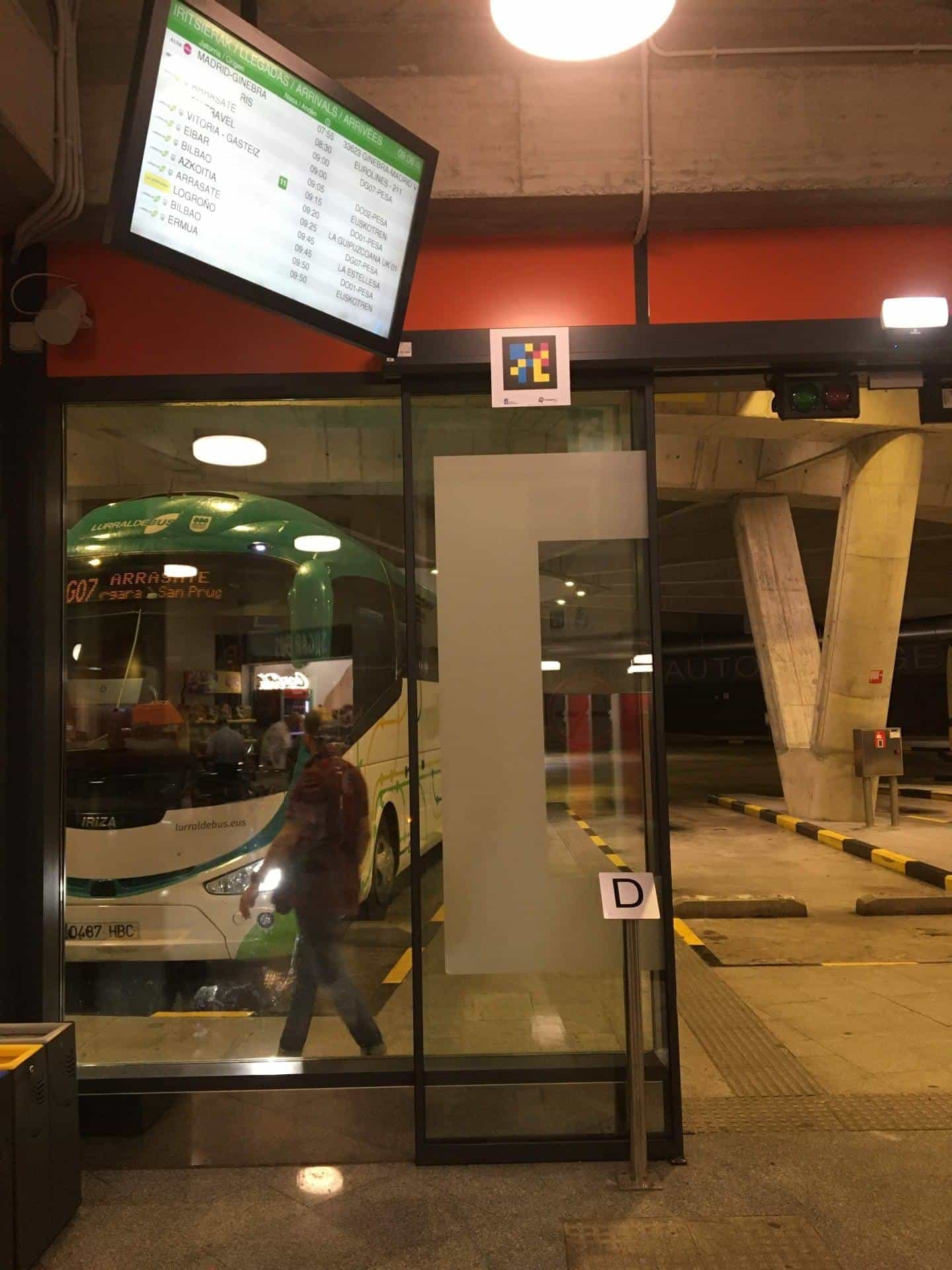
On each glass door—bays A, B, C, D… up to 21—a NaviLens code has been placed at lintel height, just below the bilingual Iritsierak / Llegadas screen. The user detects it from several yards away, without aiming and even with glass reflections.
The app reads aloud the bay letter, the operating company and the next services, and emits “pedestrian crossing”-style orientation sounds indicating how far and in which direction the platform is.
§ Journey
From the concourse to your bus, without asking at the counter.
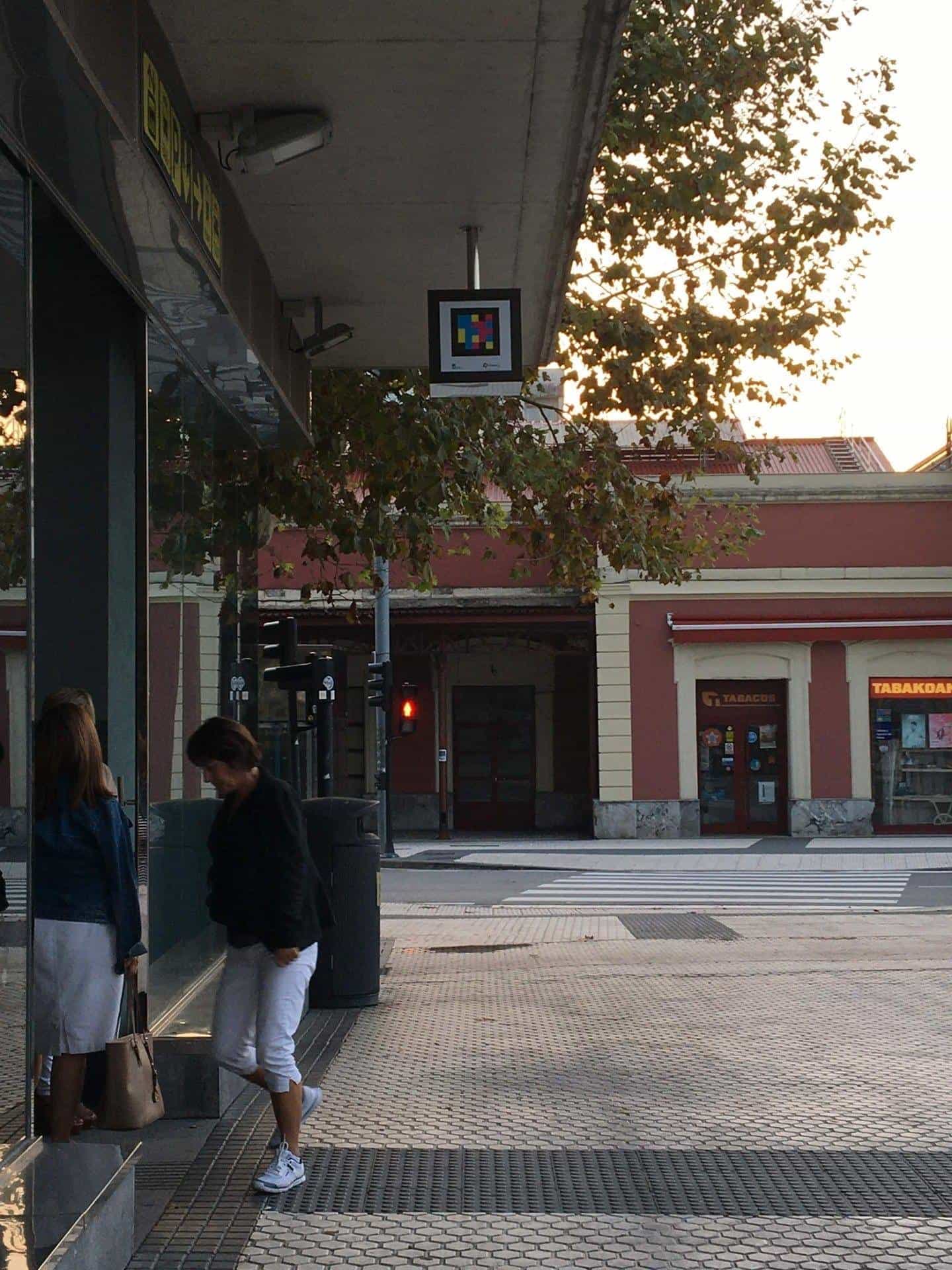
Arrival · Plaza de Atotxa
First code on the street
The first NaviLens greets those arriving from Donostia train station and Paseo de Francia. It hangs from the roof of the outdoor shelter, next to the kiosk, and points to the subway station entrance.
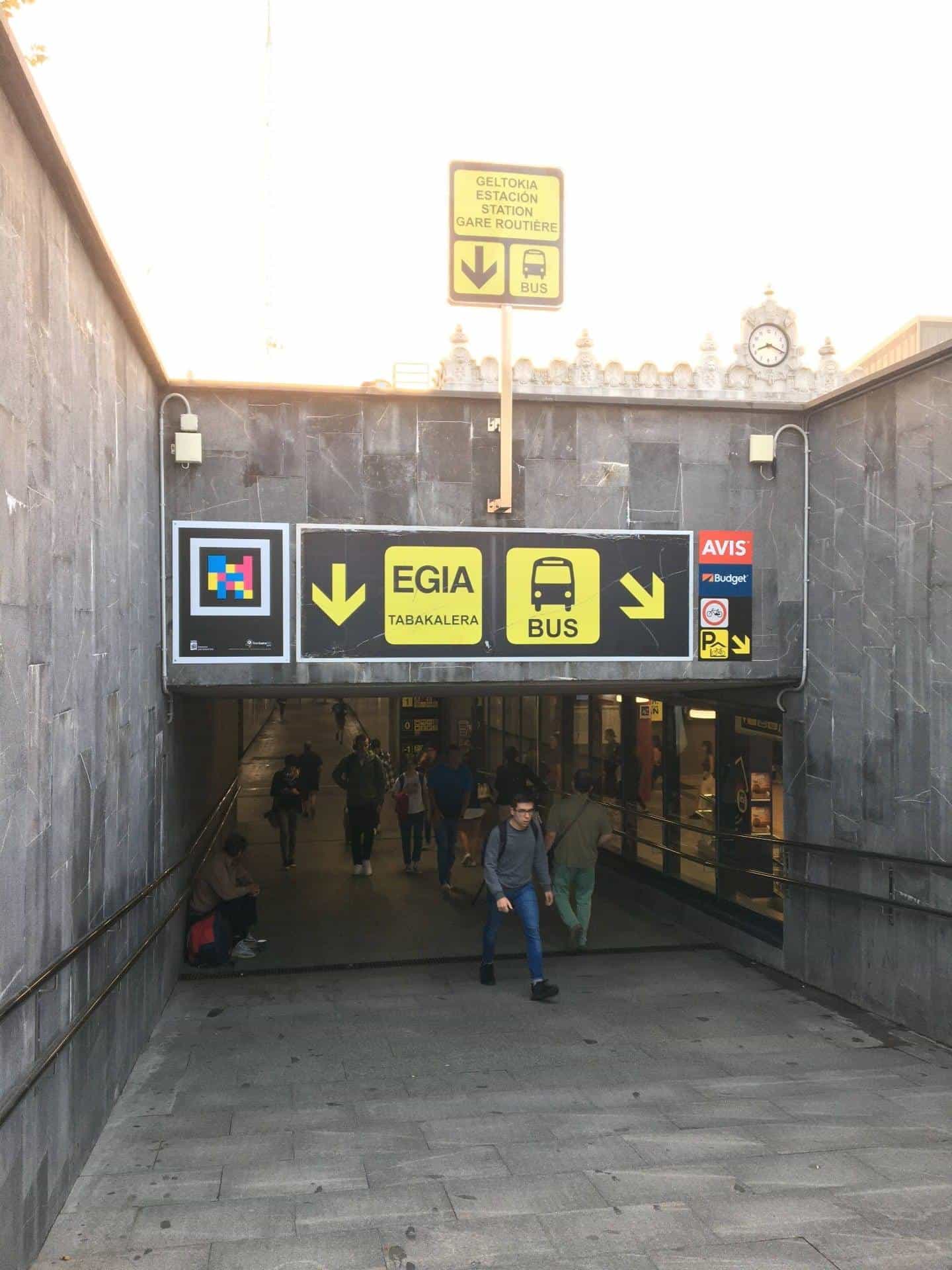
Access · Egia · Tabakalera · Bus
Next to the yellow signage
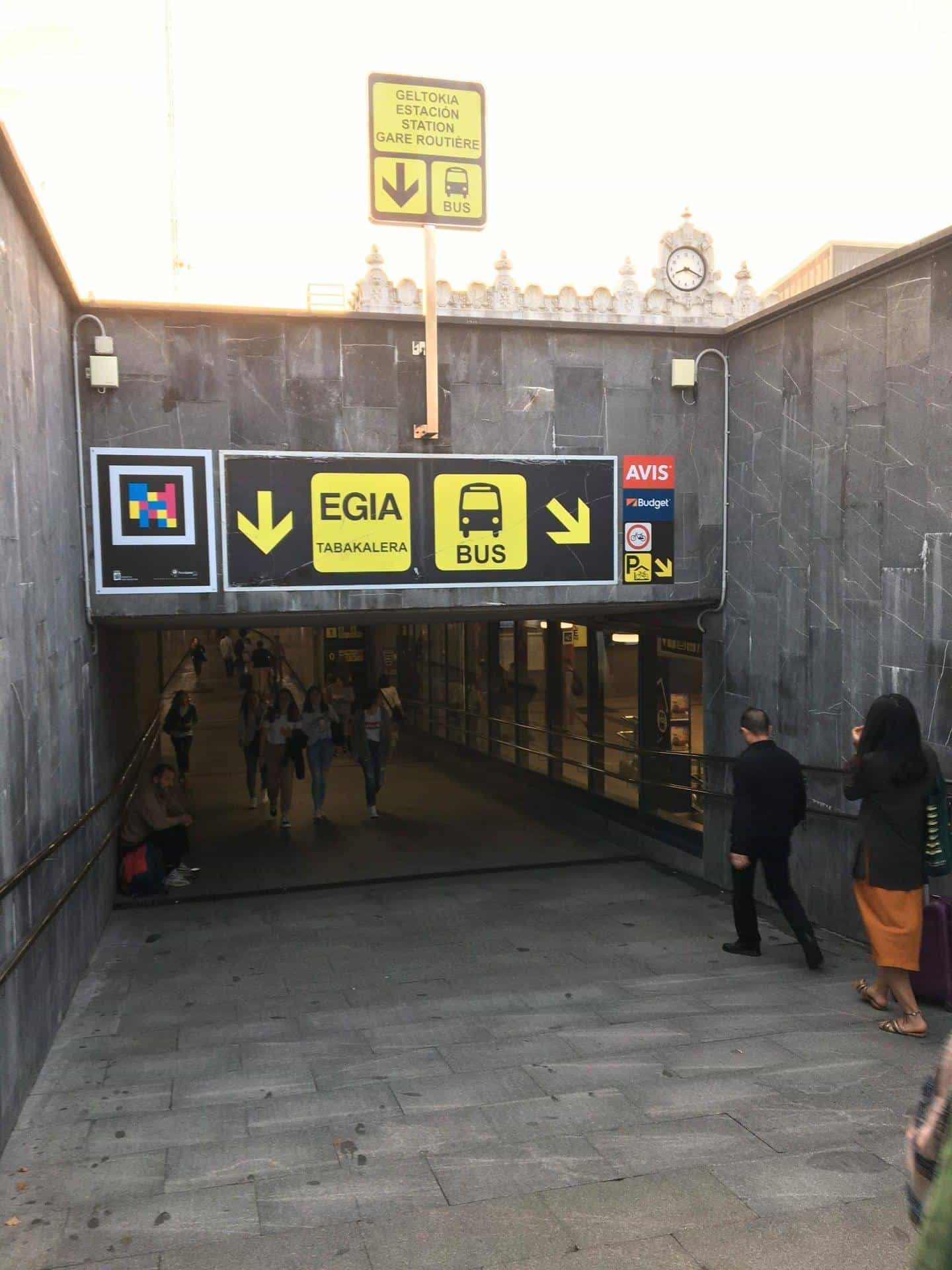
At the mouth of the ramp, the code is placed next to the official Egia · Tabakalera · Bus sign. The app confirms aloud that the next step is to go down to reach the bays.
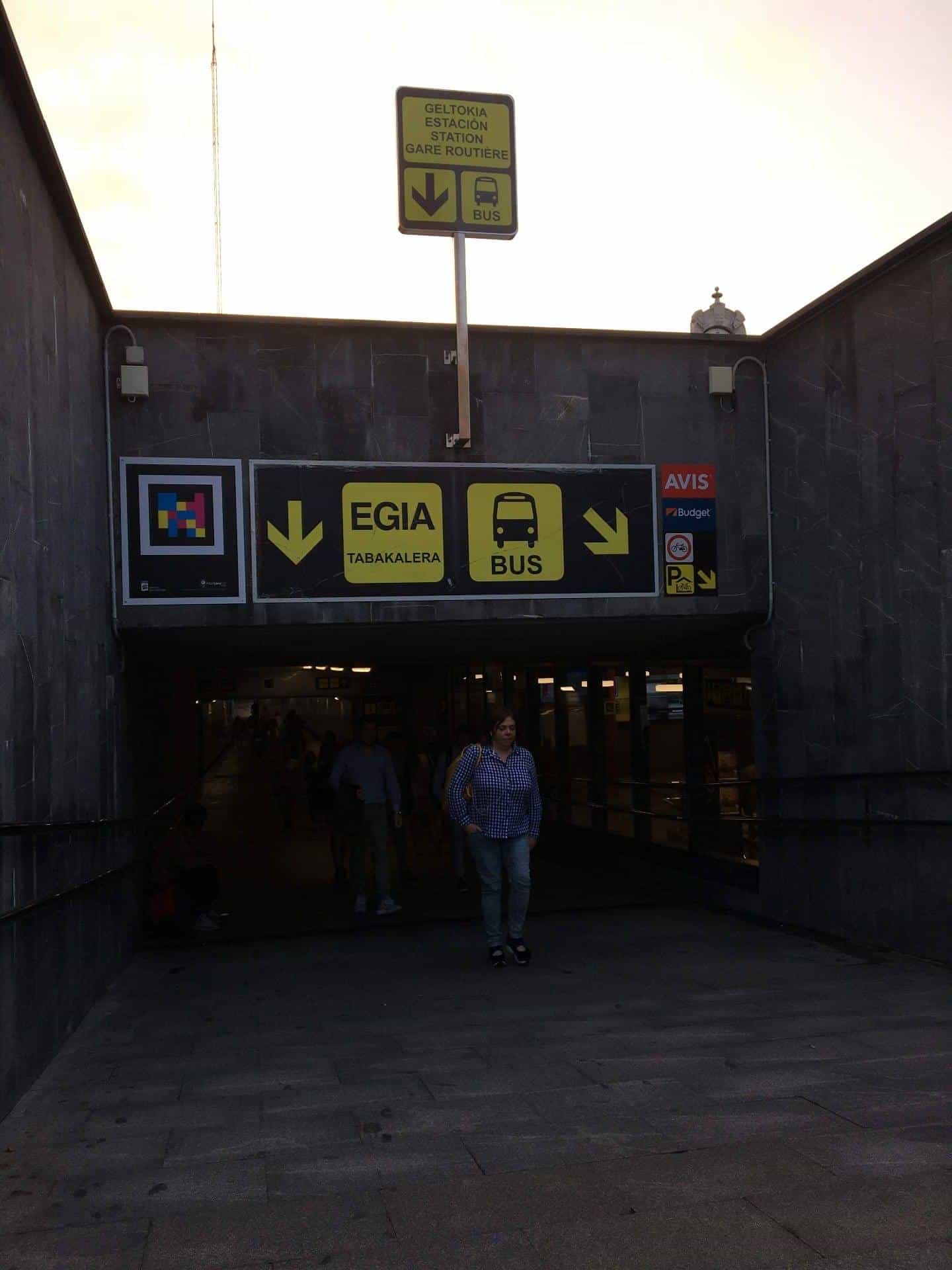
Entrance · 4 languages
“Geltokia · Estación · Station · Gare Routière”
Below the four-language sign identifying the station, the code ensures that those who can’t read it hear exactly the same: you are at the main entrance to the bus station.
Concourse · Floor directory
The whole building, in a single reading
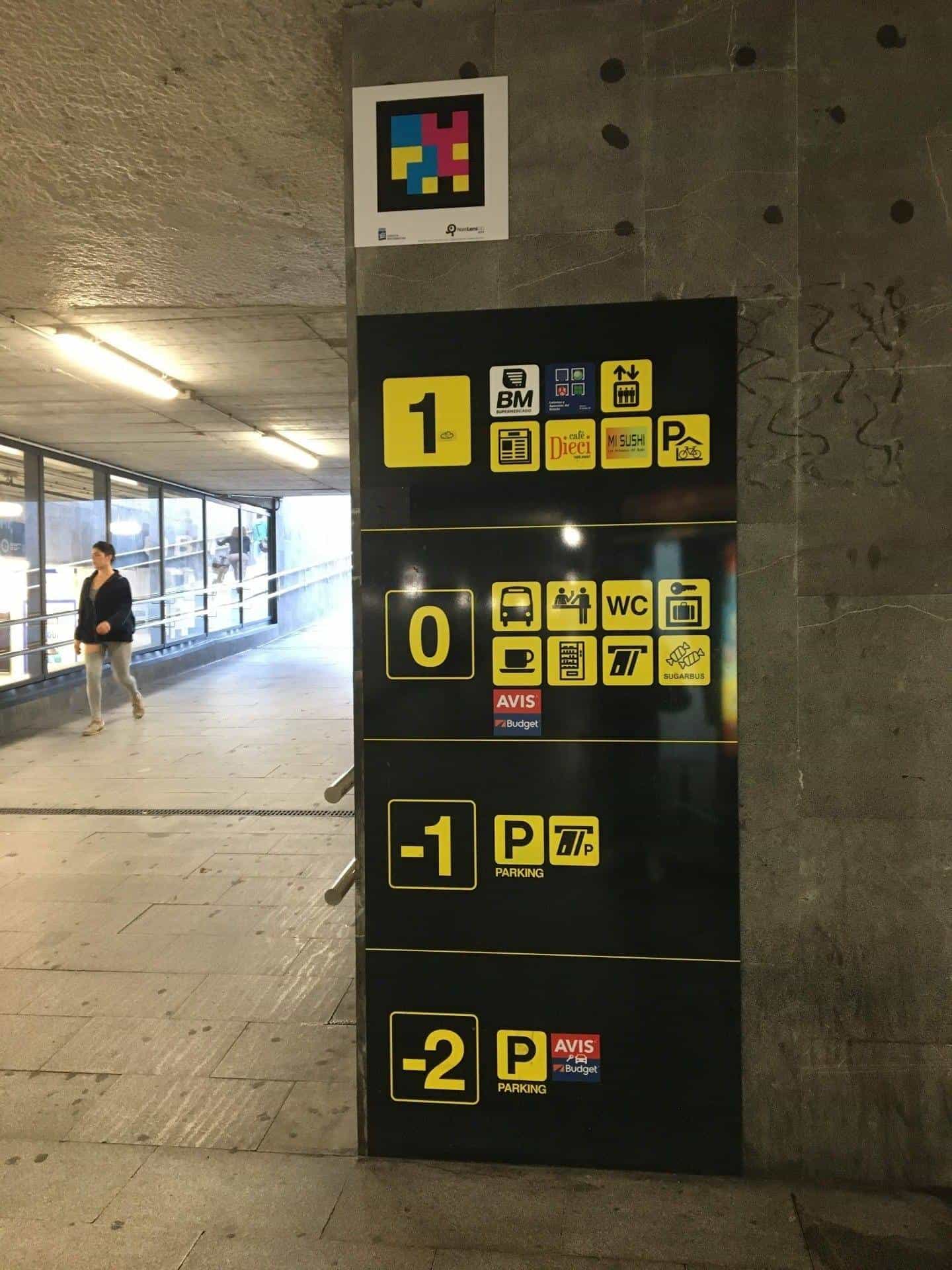
Above the vertical directory (floors 1, 0, -1 and -2) one code summarises what’s on each level: BM supermarket, bays and ticket offices, WC, Avis/Budget car rental, bike and car parking.
Ramp · Peak time
Readable even with a crowded ramp
The code reads even with passenger traffic and backlight. No need to come close or frame: the blind traveler keeps walking while the app confirms they are already inside the station.
Bay B · Bilman Bus
Code on the platform lintel
Each glass door bears its NaviLens code at the top, aligned with the white bay-letter sign. Long-range detection even under strong overhead light.
Bay D · Lurraldebus & PESA
Next to the arrivals screen
The code sits beside the bilingual Iritsierak / Llegadas monitor. The app converts to voice what the screen shows to those who can read it: line, time and origin.
Tunnel · Intermodal · RENFE · Taxi
Bus ↔ train ↔ taxi connection
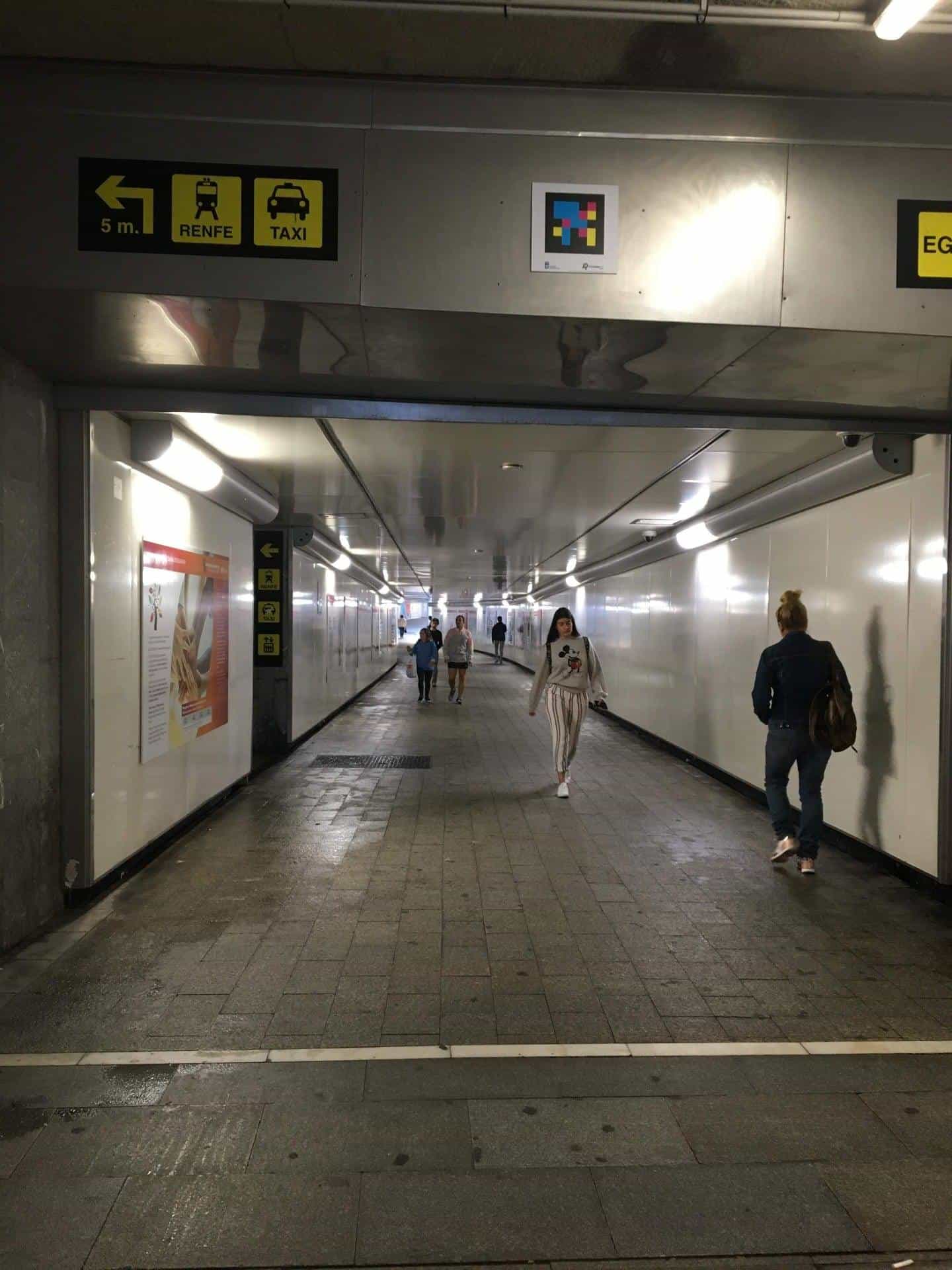
On the lintel of the tunnel linking the bus station with RENFE and the taxi rank, the code echoes in voice what the yellow sign says: “5 m. RENFE · TAXI”. The blind traveler knows without asking which exit is the right one for changing mode.
Elevator · Indoor · Concourse
“Igogailua / Elevator”, also heard
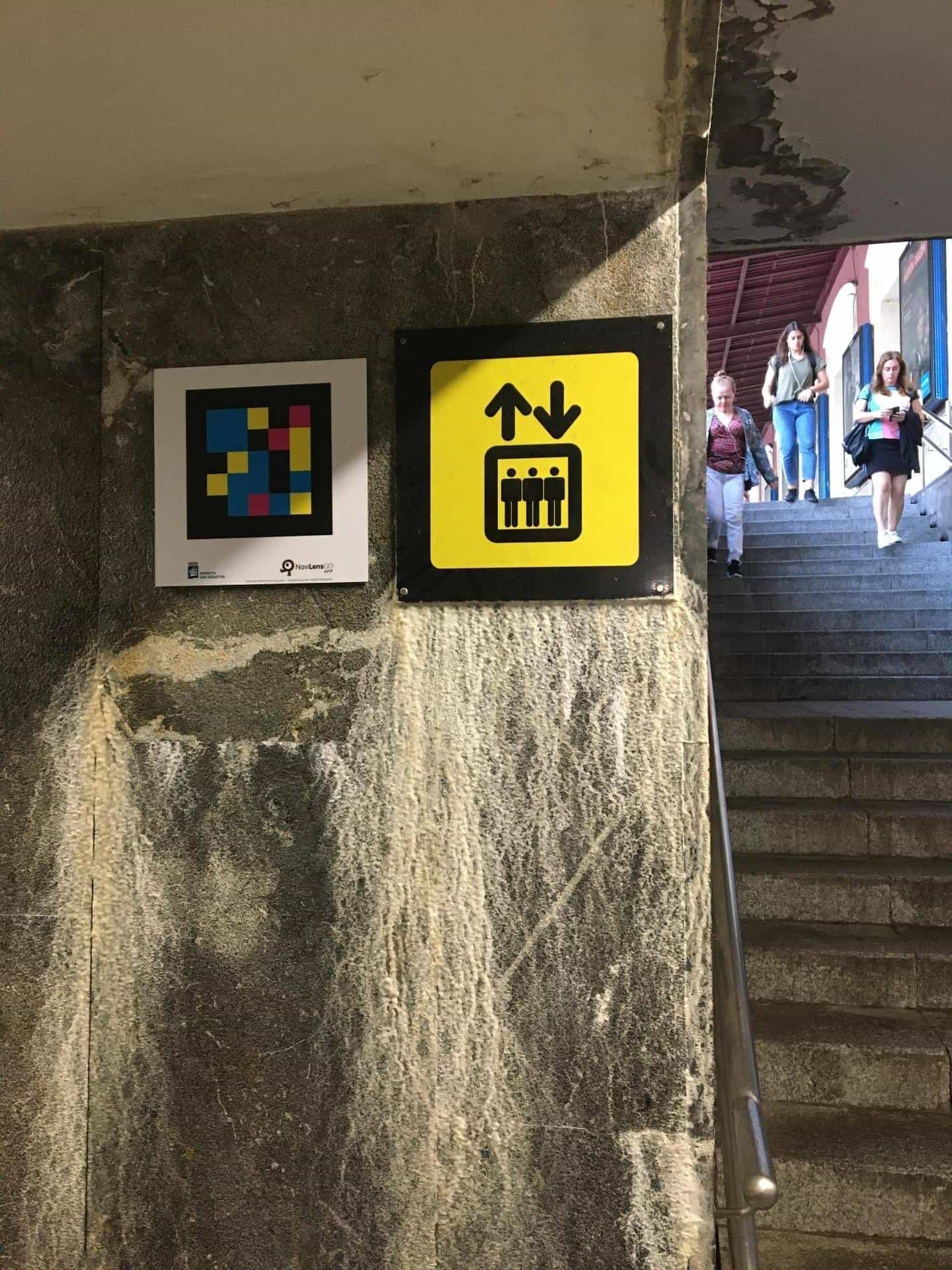
Next to the yellow cabin pictogram, the Donostia-specific NaviLensGO code announces there is a elevator and which floor it goes to. A safe alternative to the stairs that no longer depends on sight.
Outdoor elevator · Street
From the sidewalk down to the bays by cabin
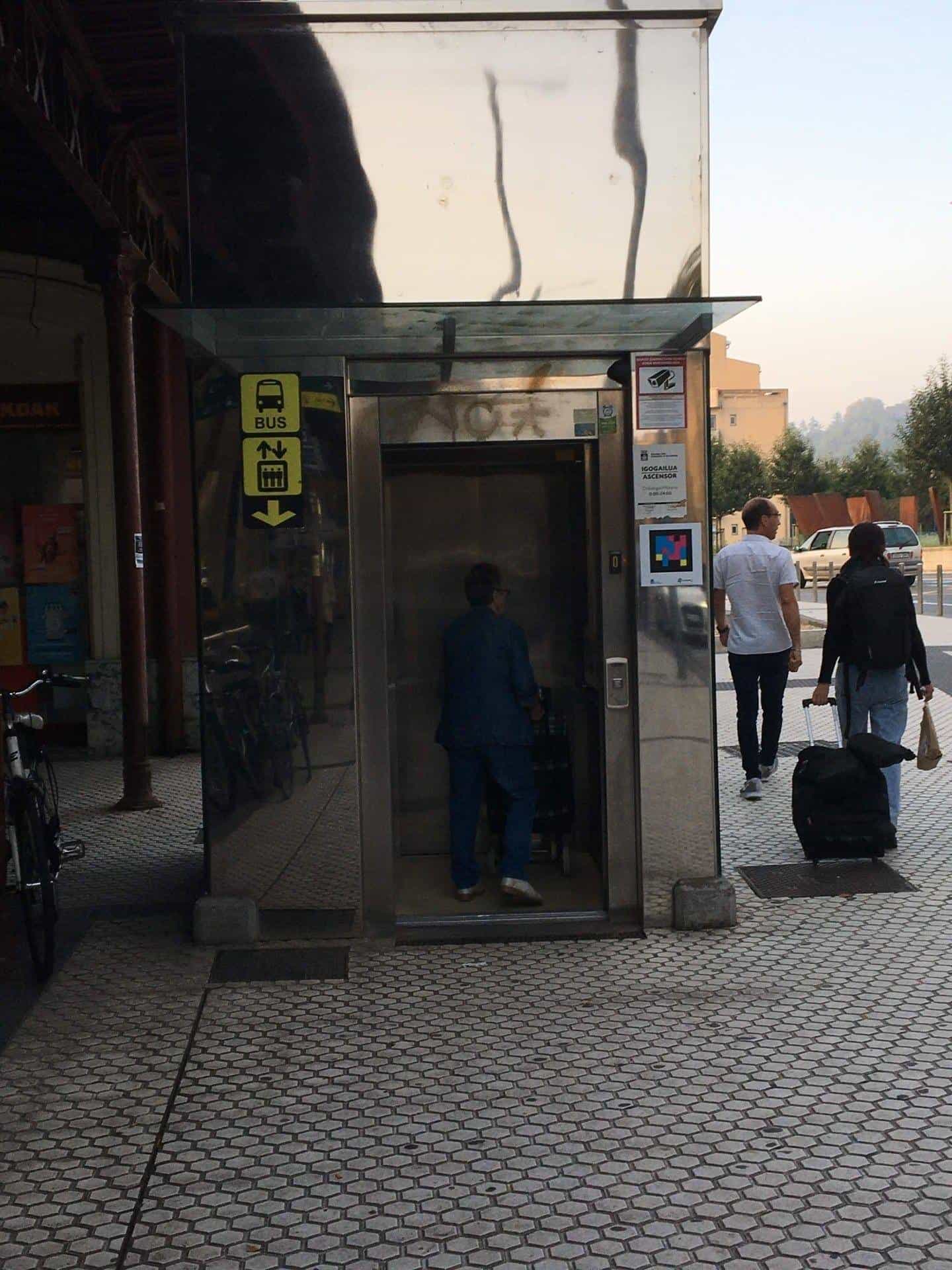
The street-level elevator—connecting Atotxa sidewalk with bay level 0—carries its own code next to the Igogailua / Elevator 6:00–24:00 schedule. It is the accessible route for people with reduced mobility or heavy luggage.
App · NaviLens
“Scan” or “Go to”
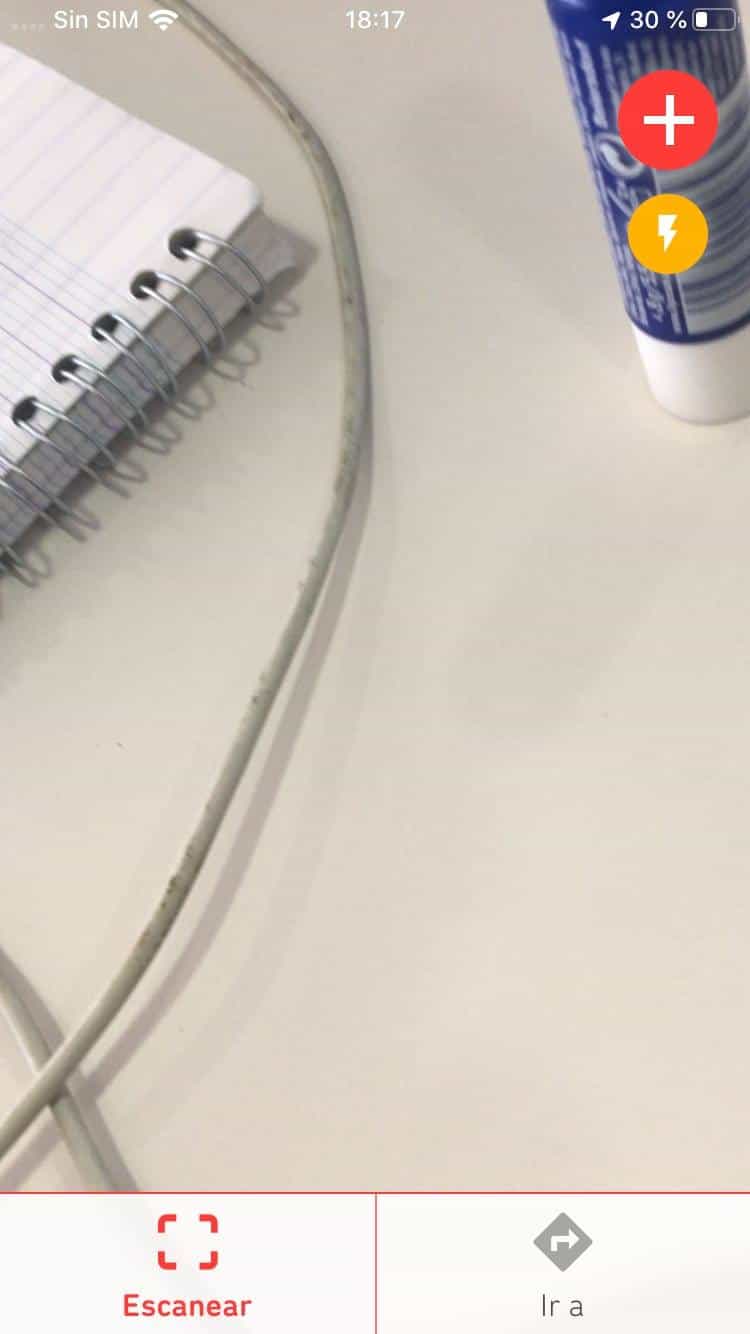
The user opens the app, moves the phone and hears which bay is in front of them. Once the platform is identified, the Go to mode guides to the code with sounds similar to a pedestrian crossing.
§ What they said
“The Donostia / San Sebastián City Council, in collaboration with NaviLens, has installed next-generation QR codes at the bus station that will be of great help for blind people moving through the station.”
“Through the NaviLens app and QR codes installed at the stops, readable from 50 feet, blind and low-vision people receive real-time audio about lines and schedules.”
“The new Dbus shelters now feature the innovative NaviLens guidance system, a code system readable from a long distance that lets blind and low-vision people move independently.”
§ Press notes and references
- donostia.eus — Next-generation QR codes at the Donostia / San Sebastián bus station
- Dbus — New shelters feature the NaviLens guidance system (Sep 2023)
- El Diario Vasco — Dbus shelters debut a guidance system for blind and low-vision people
- AGI Elkartea — Accessibility at Donostia bus stops with NaviLens
- San Sebastián Accessible Tourism — Donostia Geltokia Station
§ And your network?
Your next station can also speak.
Tell us about your network, your pain points and the KPIs you want to move. We’ll show you how NaviLens would fit—with comparable cases.