Case study · Canido, Ferrol · Galicia
Street art, also with your hands.
3D tactile models fixed next to the Meninas de Canido murals, each with a NaviLens code that delivers a voice audio description in 42 languages. A project born in an IES de Fene classroom that has turned Canido into Spain's first adapted street-art museum.
Canido · Ferrol
Open-air mural neighborhood of the Meninas, A Coruña
1st urban museum
Adapted museum in Spain, according to Ferrol 360
3 pilot works
Murals by José Manuel Bastón, Edu Albo and Kike
42 languages
Voice audio description from each NaviLens code
The client
Os Robots
do Pazo
Os Robots do Pazo is the First Lego League team at IES de Fene, made up of students aged 12 to 15 who developed Tocando as Meninas as an educational innovation project, in partnership with ONCE.
After winning the Xunta de Galicia Innovative Project Prize and the National Innovation Award at First Lego League Spain, the project jumped from the classroom to the street with NaviLens and Eduardo Hermida, the artist behind the Meninas de Canido festival.
The first three panels were installed in September 2024 on works by José Manuel Bastón, Edu Albo and Kike, around Hermida's studio.
§ The challenge
Make a mural also speak and be touchable.
- 01
An urban museum… you can't touch
The Meninas de Canido are large murals painted on facades, party walls and ruined walls across the neighborhood. For a blind or low-vision person the piece is literally invisible: it can't be seen from a distance and can't be touched without losing the composition.
- 02
No signage, no language, no context
The festival had no interpretive panels next to each work. Locals and international tourists could see the mural but not learn its title, authorship, year, technique or intent without a guide.
- 03
Turning a school project into a permanent museum
The technical challenge was moving from a classroom prototype—made for a First Lego League—to weather-resistant pieces fixed to real facades and replicable across other murals on the route.
§ The solution
A tactile panel with its talking code at every mural.
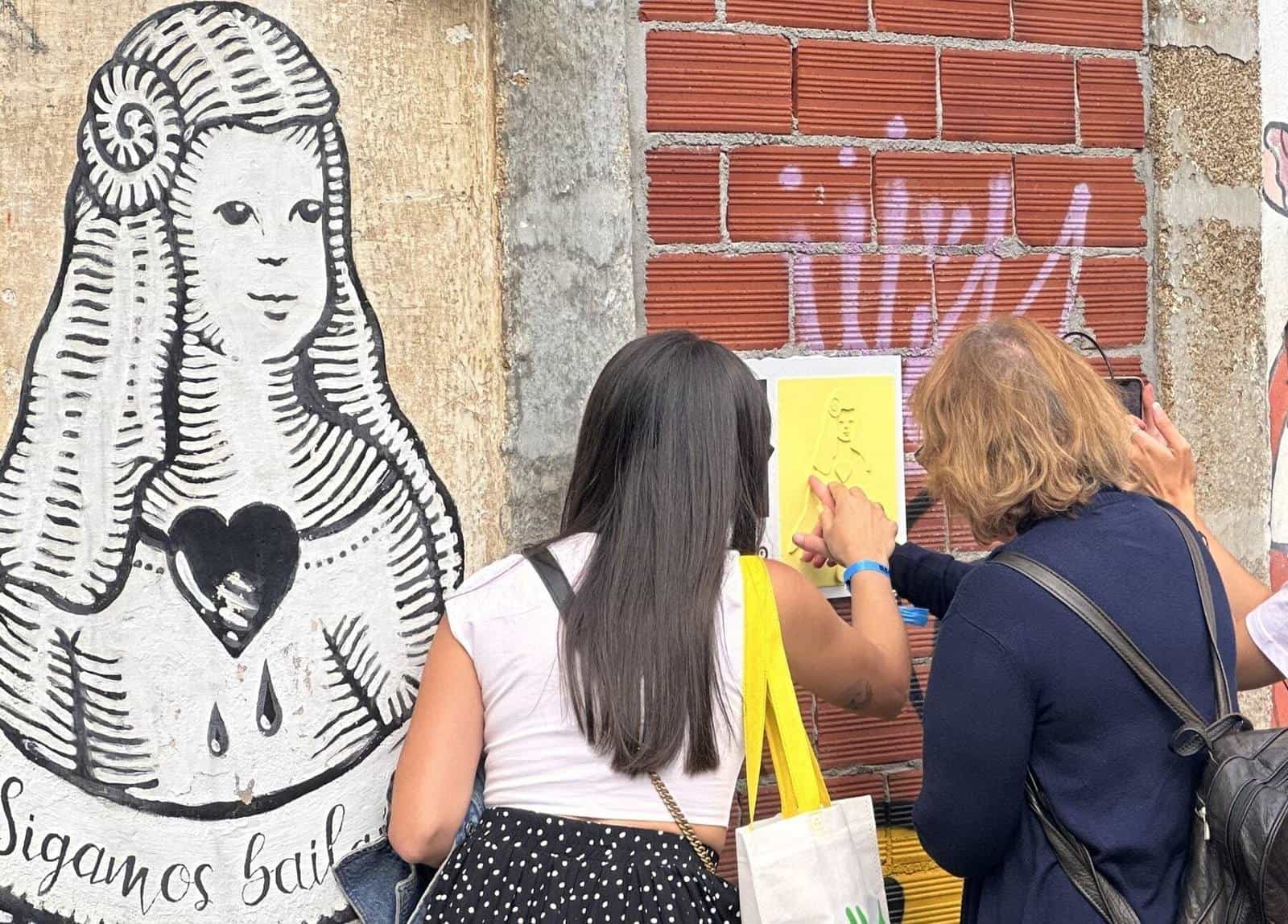
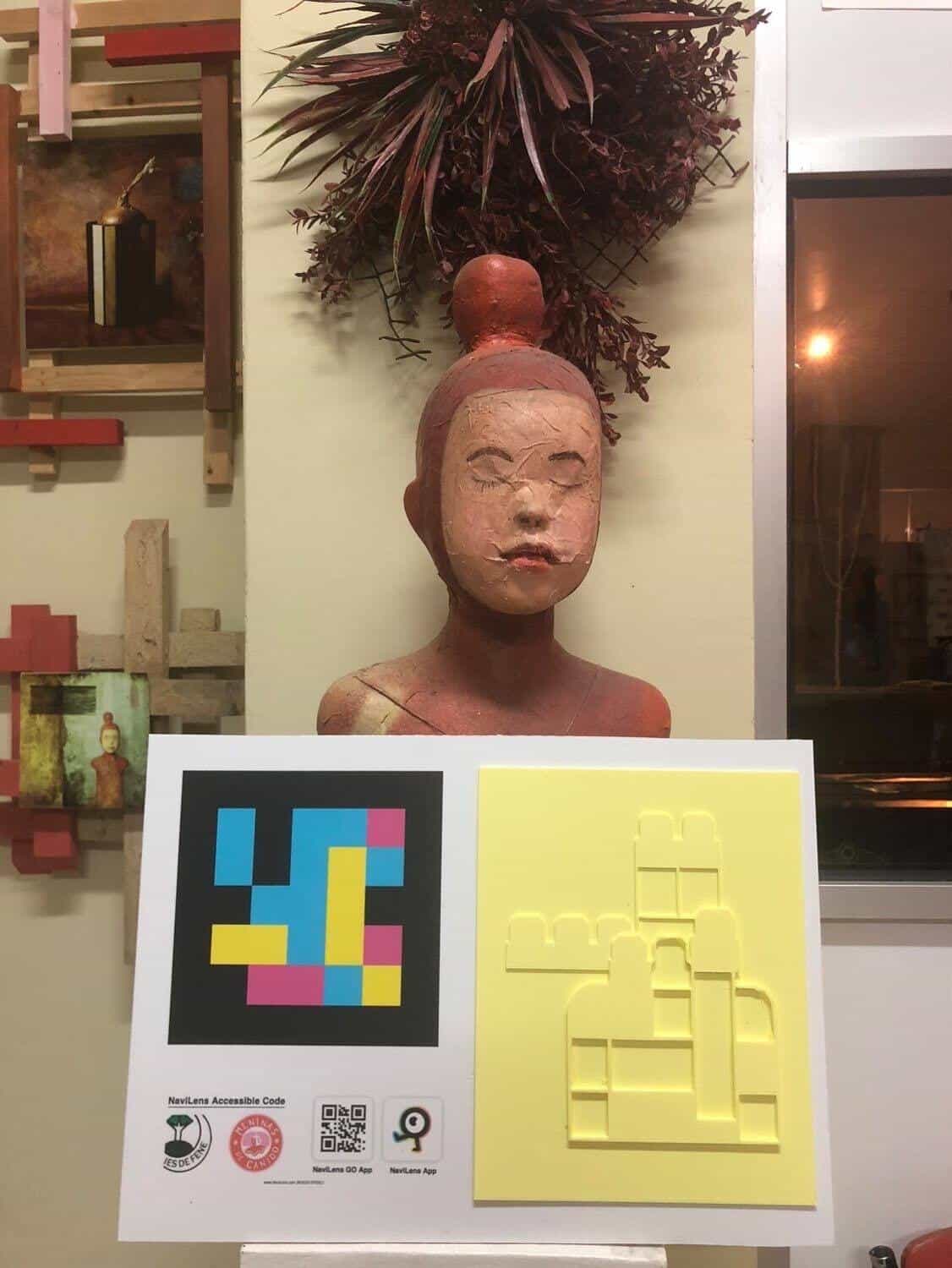
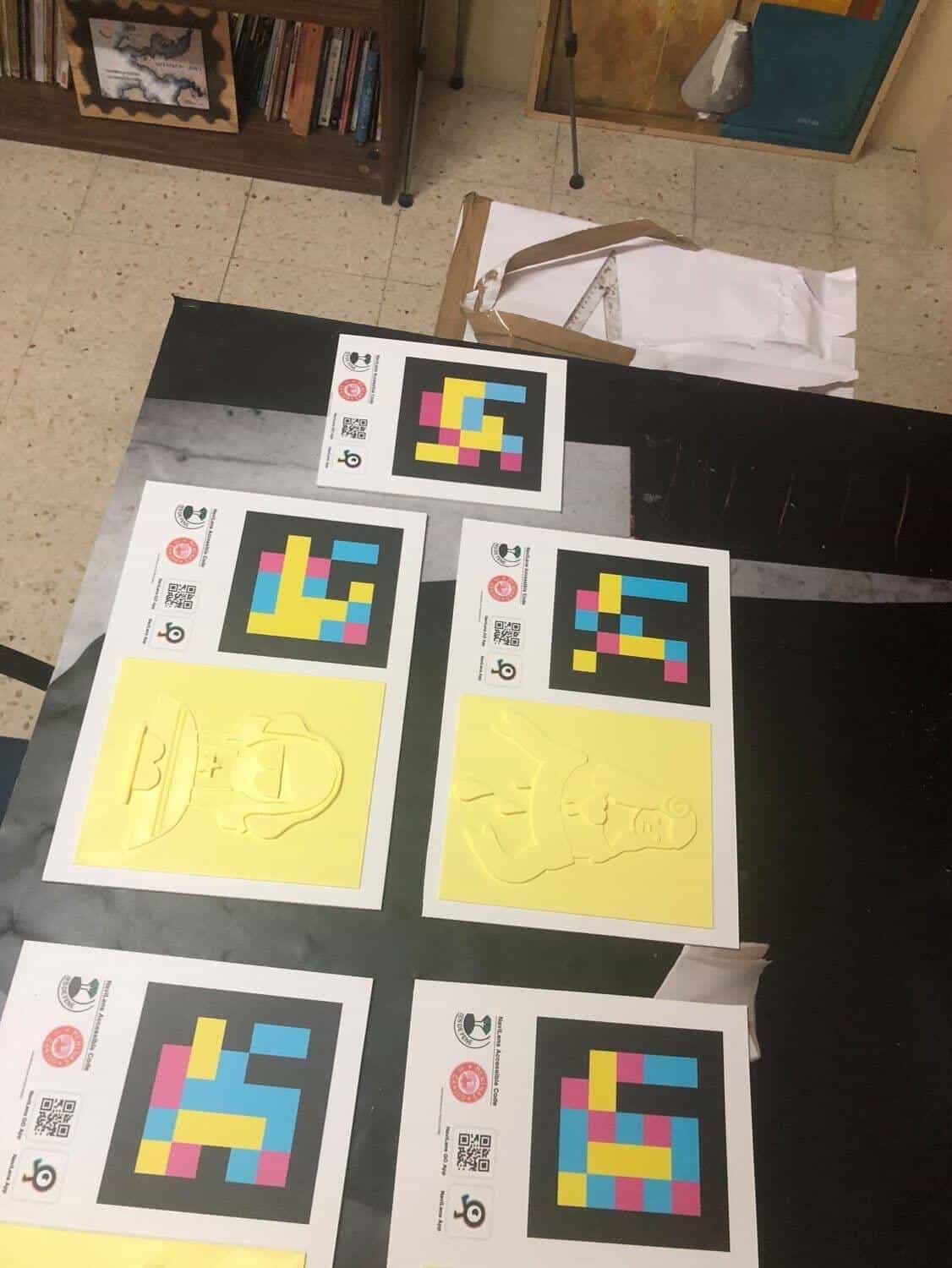
Each work gets a double panel: on the left, a large-format square NaviLens code detectable from several yards, without focusing and on the move; on the right, a yellow 3D-printed relief that reproduces the mural's composition for the hands to recognize.
When pointed at with a phone, NaviLens GO delivers the audio description—title, authorship, technique and intent—in the language set on the device, up to 42 languages.
The carrier is designed for outdoor use and fixed next to the mural, on the adjacent wall, so as not to alter the artist's original piece.
§ § The experience, in video
Scan, listen and touch a Menina of Canido.
A walk through Canido with a student from IES de Fene, showing panel by panel how the NaviLens code is scanned, how each Menina's audio description sounds on the phone, and how the 3D-printed relief model is recognized by touch.
§ The rollout
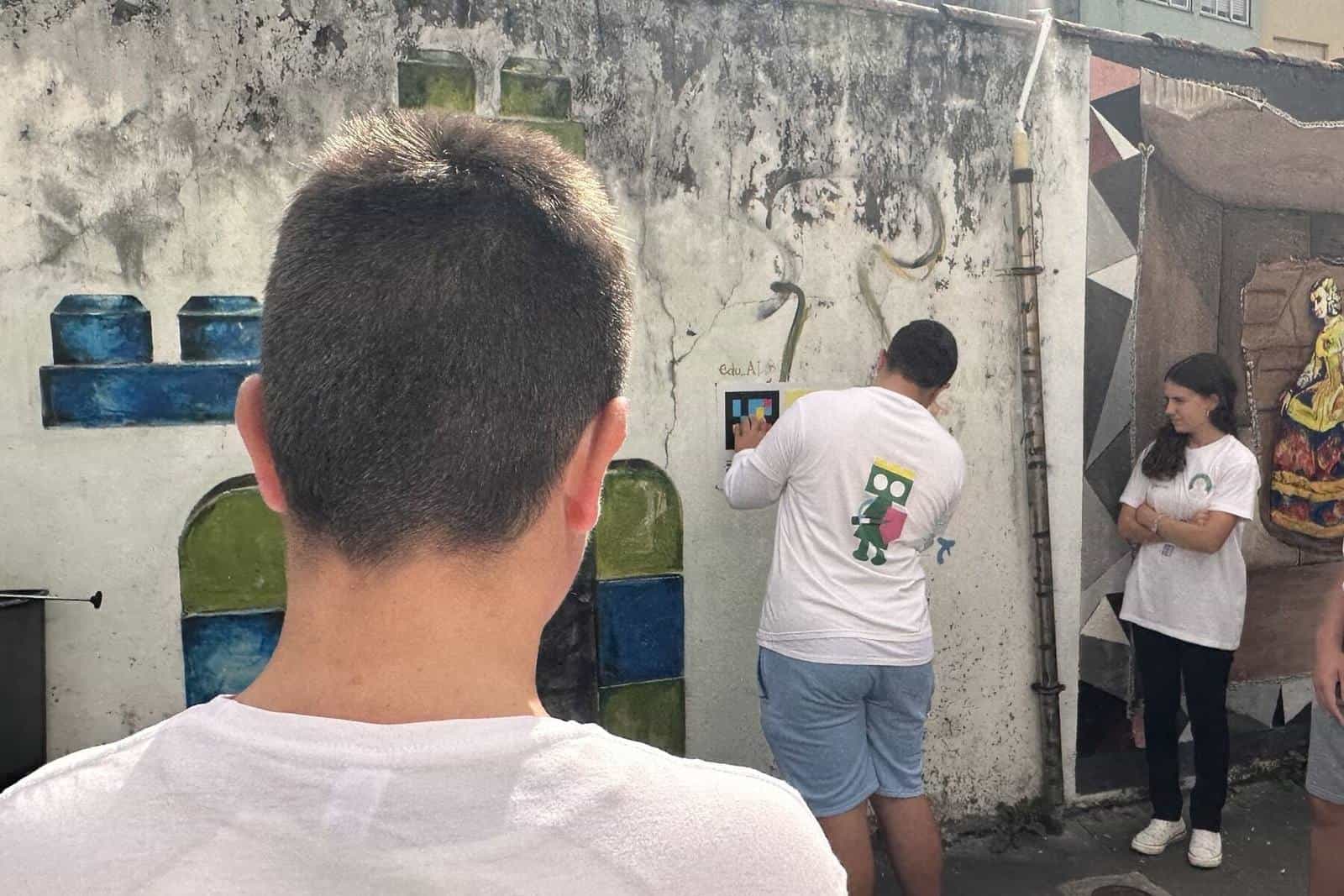
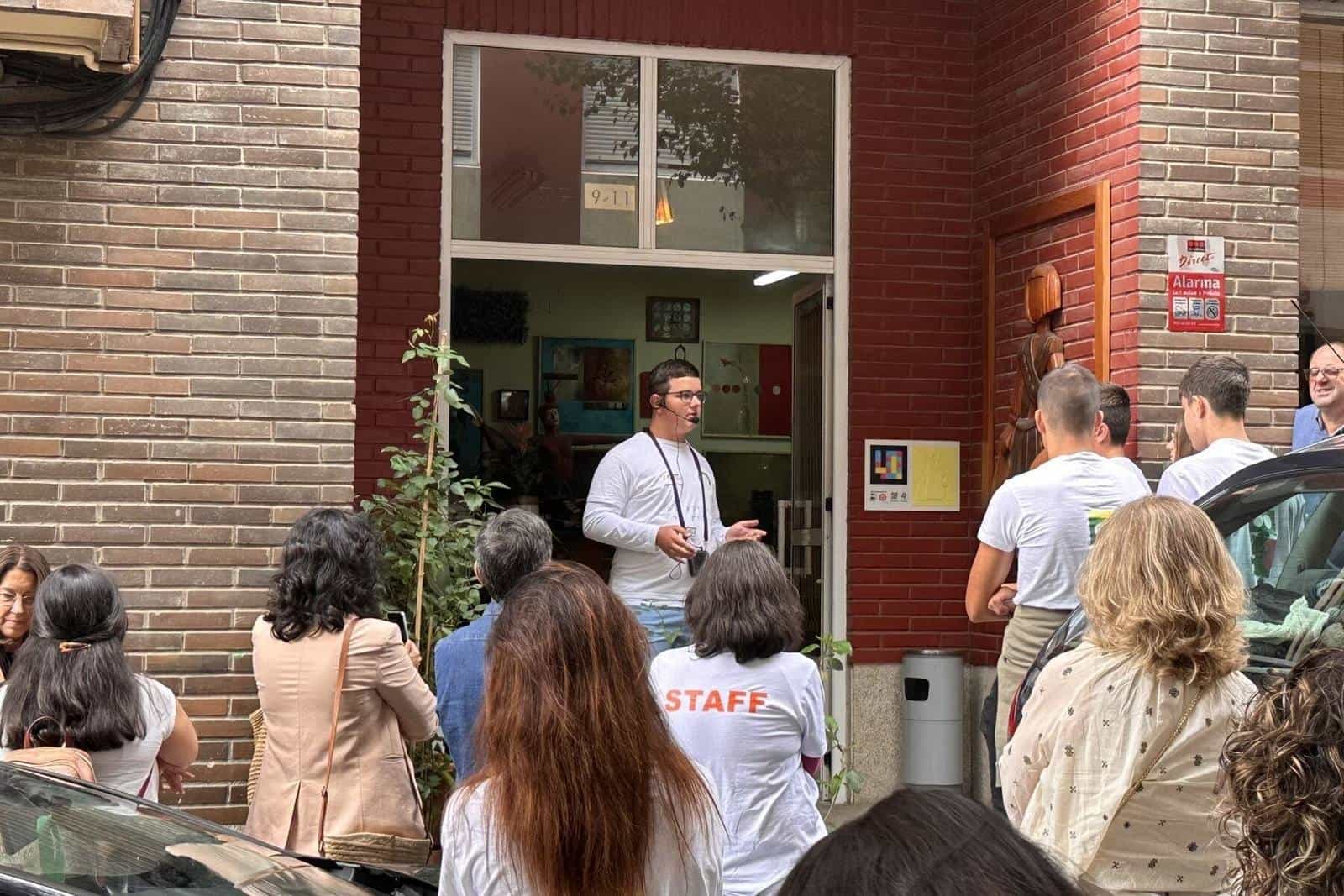
From the IES de Fene classroom to the streets of Canido.
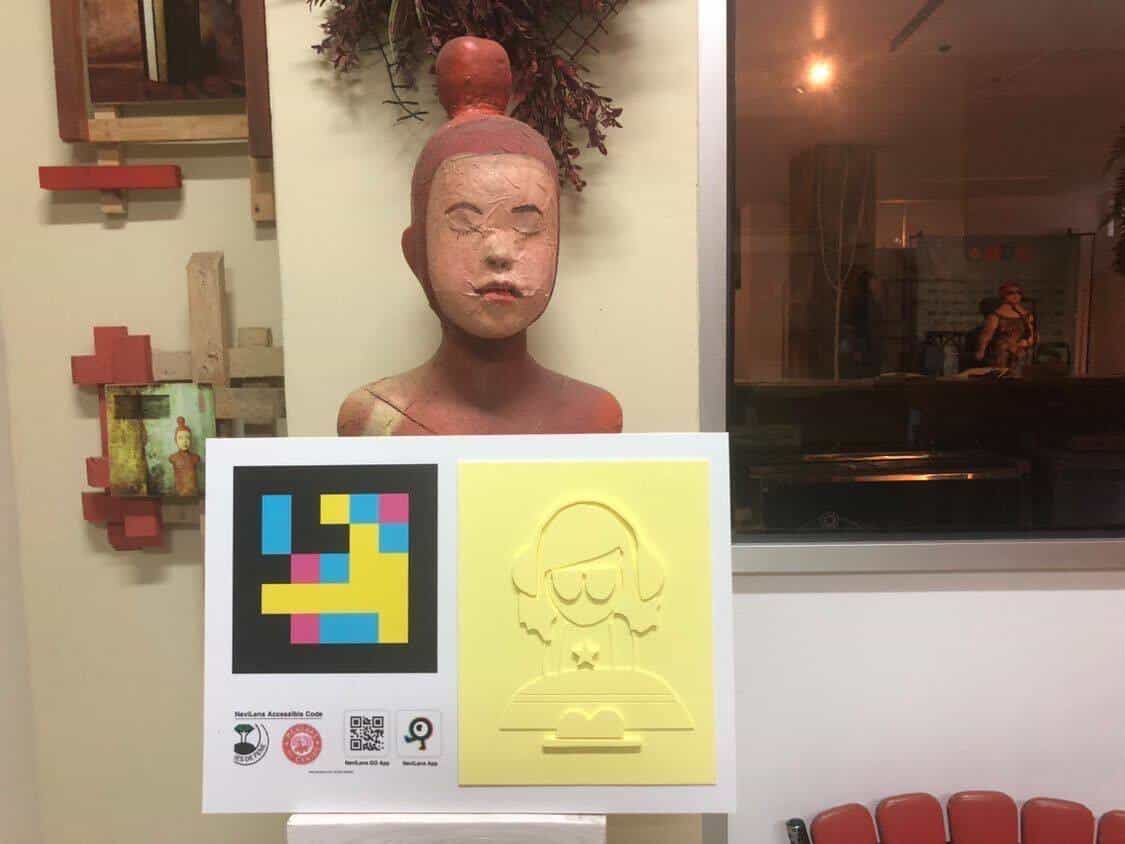
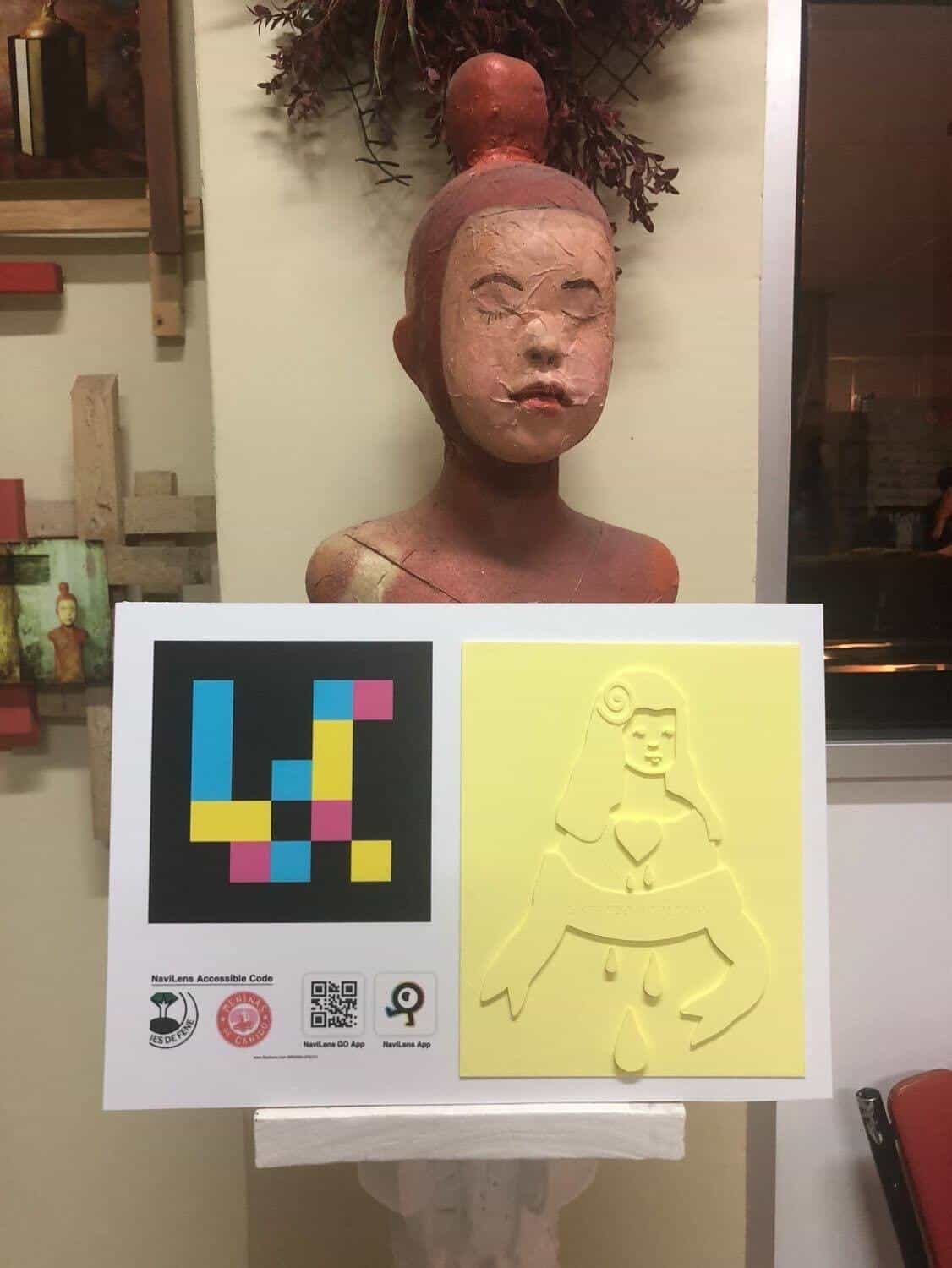
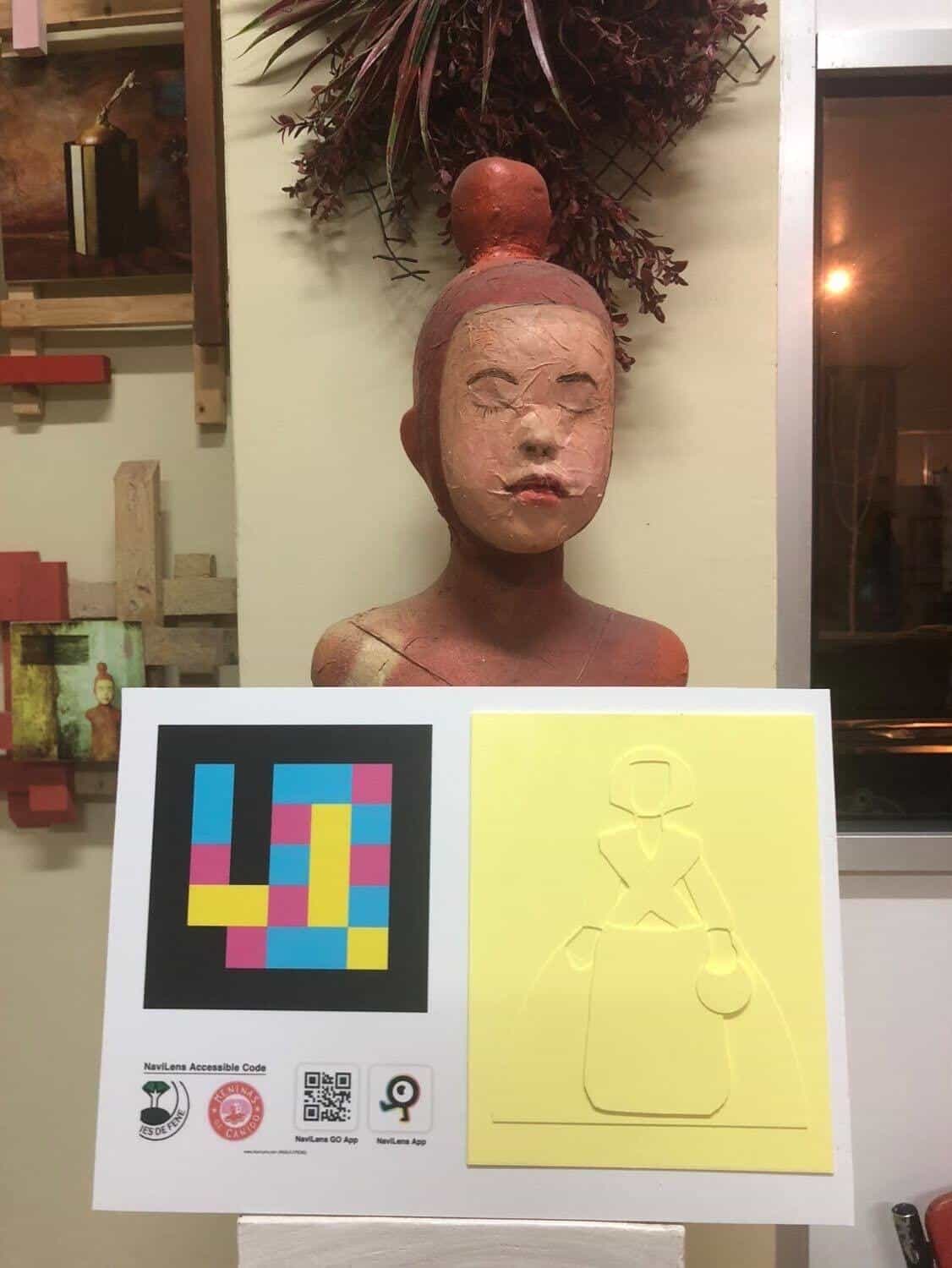
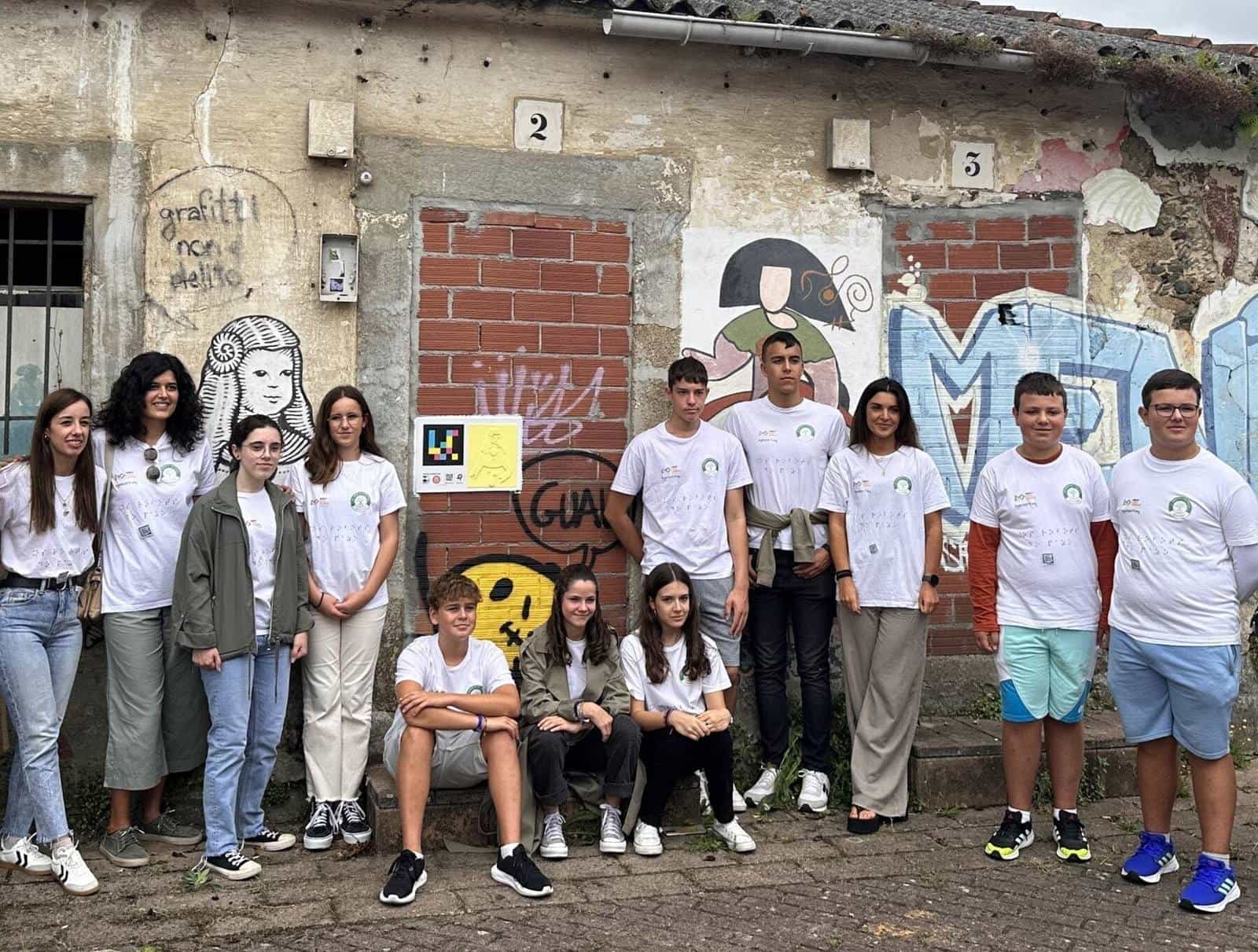
§ Timeline
From a classroom idea to a street museum.
- 2023—2024
Born in the IES de Fene classroom
A team of students aged 12 to 15 —“Os Robots do Pazo”—at IES de Fene develops “Tocando as Meninas” as an innovative project for First Lego League Galicia, with 3D-printed models of the Canido murals and a sensory plaque with audio description, in partnership with ONCE.
- Mar 2024
Double prize: Xunta de Galicia and FLL Spain
At the X First Lego League Galicia (Ferrol), Os Robots do Pazo win the Xunta de Galicia Innovative Project Prize and are nominated—and then awarded—the National Innovation Award at First Lego League Spain.
- Summer 2024
From classroom to street with NaviLens and Eduardo Hermida
The project catches the attention of NaviLens and of Eduardo Hermida himself, the driving force behind the Meninas de Canido festival. The models are redesigned for outdoor use and a NaviLens code is added to each panel to deliver the multilingual voice audio description.
- Sep 2024
Launch of “O sentir da rúa” in Canido
Coinciding with the last day of the Meninas de Canido festival, the first three panels are unveiled—on works by José Manuel Bastón, Edu Albo and Kike—next to Eduardo Hermida's studio. Canido is presented as Spain's first adapted street-art museum.
§ What they said
What the press said about the project.
“The experience of 3D-printed models and NaviLens codes turns Canido into Spain's first adapted street-art museum.”
“Os Robots do Pazo, from IES de Fene, take home the Xunta de Galicia innovative-project prize and are nominated for the First Lego League National Innovation Award.”
“Tourists — who sometimes don't speak the language of the country they visit — will also be able to improve their walk through the Meninas of Canido: information is shown in the phone's language via the NaviLens app.”
§ Results
The same neighborhood, now also audible and palpable.
Touch + voice
Every mural, accessible by touch and through multilingual audio description
Locals + tourists
Same carrier for blind people, residents and international visitors
Living and replicable
A collaborative project open to more murals, sign language and a children's version
§ And your destination?
Your destination can also guide in 42 languages.
Tell us about your trails, visitor centers, landmarks or galleries. We’ll show you how NaviLens would make your offering accessible—with comparable cases.