Case study · Madrid
Fifteen murals, one route for everyone.
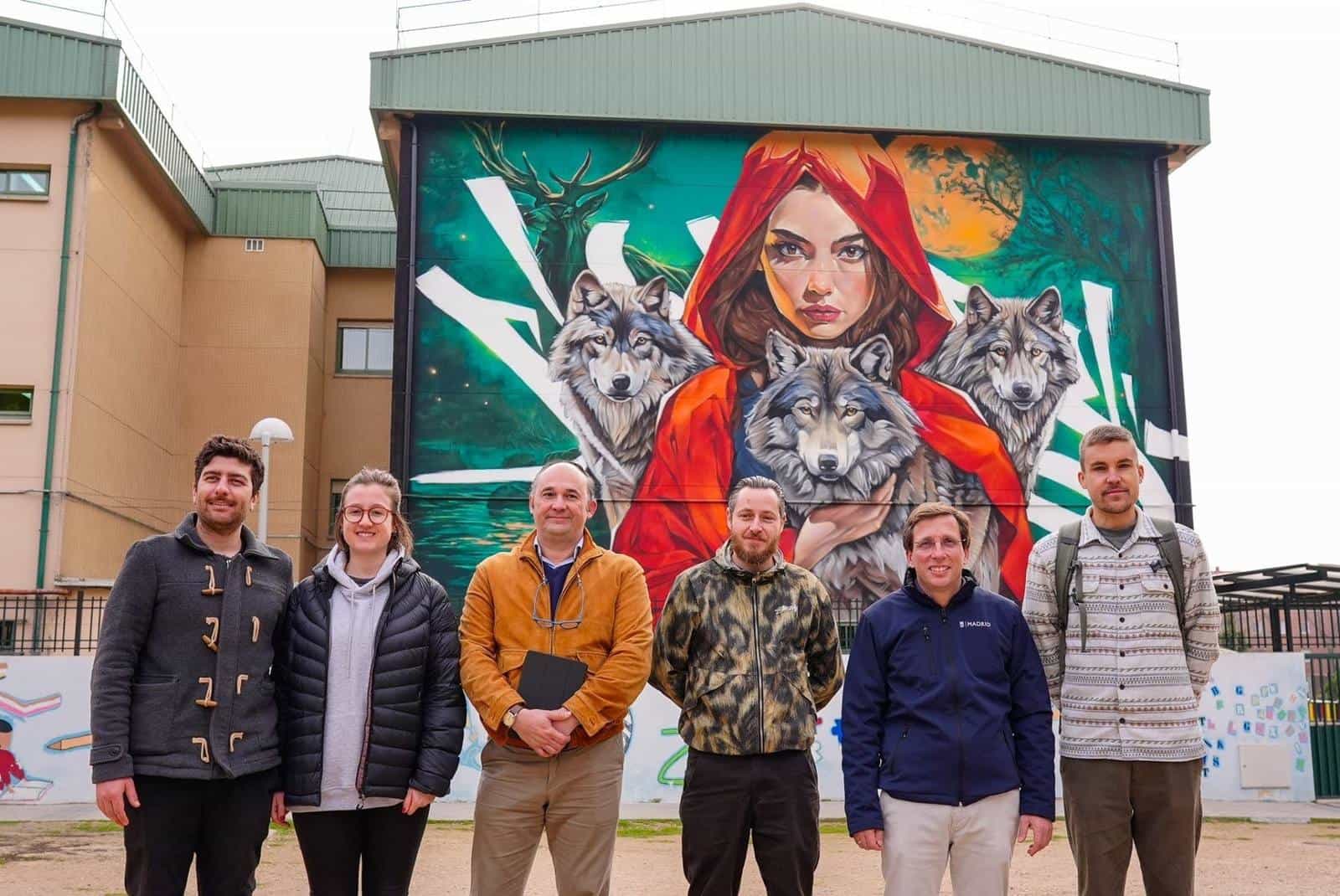
On 21 February 2025 the district of Moratalaz inaugurated Muraltalaz, an interactive and accessible street-art route: fifteen murals on municipal buildings, each with a NaviLens plate next to the artwork that plays the audio description in the language of the passer-by's phone.
15 murals
Municipal facades across the Moratalaz district
21 Feb 2025
Inaugurated by Mayor José Luis Martínez-Almeida
42 languages
Multilingual audio description on every plate
Council + ONCE + ILUNION
District Council · ONCE Resource Center · ILUNION Accesibilidad
Client
Madrid City Council
Moratalaz District Council
Muraltalaz is the interactive, accessible street-art route of the Moratalaz district: fifteen works painted during 2024 by top muralists—including Pichiavo, SFHIR and Asem Navarro—on facades of cultural centers, sports halls, libraries and public schools. Mayor José Luis Martínez-Almeida inaugurated it on 21 February 2025.
Madrid City Council wanted the project to be accessible from day one. The Moratalaz District Council brought in the ONCE Resource Center in Madrid and ILUNION Accesibilidad, who audio-described every mural. The accessible signage was solved with NaviLens plates installed next to each artwork.
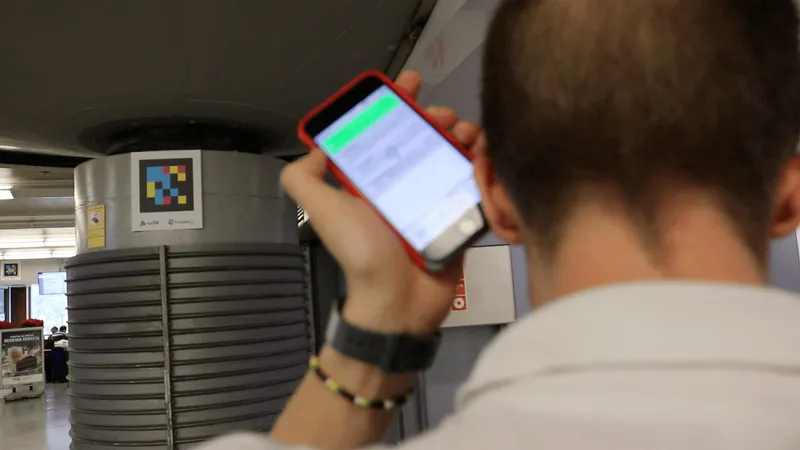
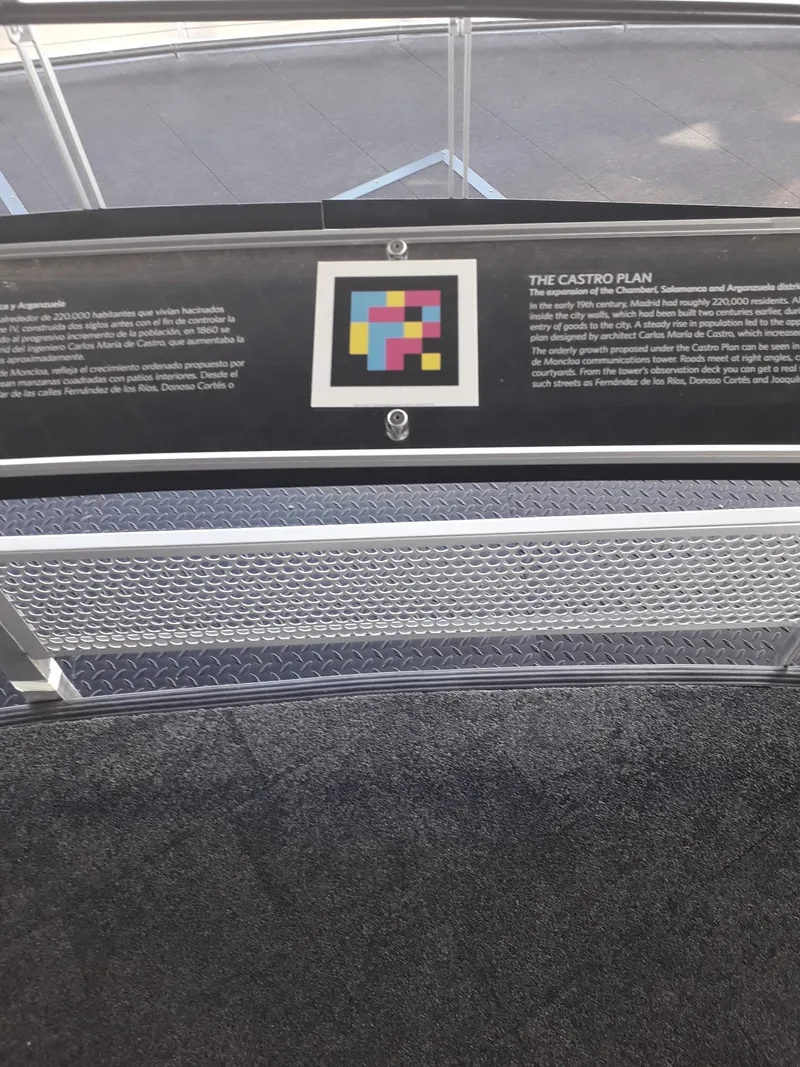
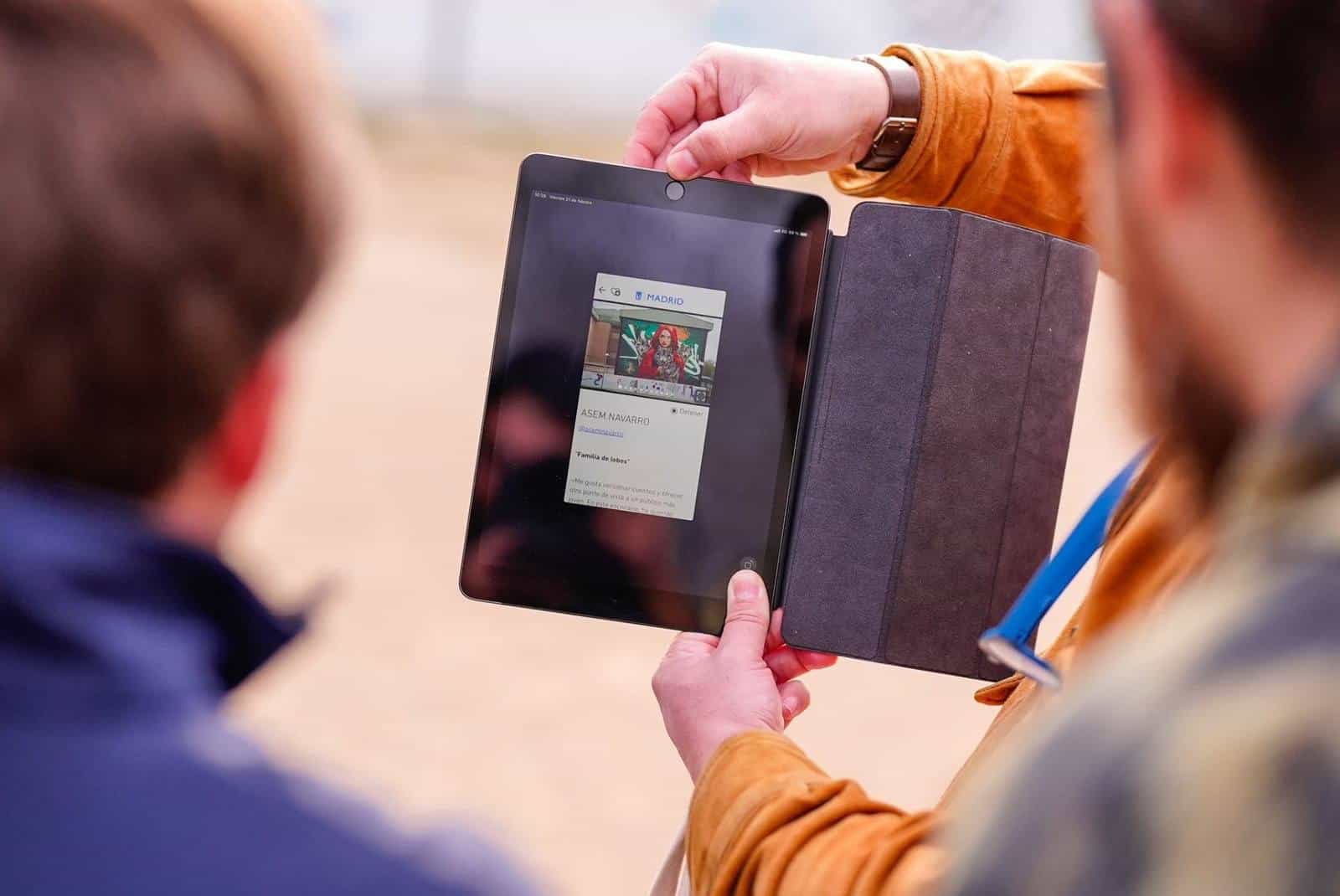
Each plate carries the “MURALTALAZ” wordmark, the mural's caption—title, artist, motivation—and a NaviLens code. Any passer-by can point a phone from several yards away, without focusing, and hear the mural's audio description in Spanish, English and 40 other languages.
§ The challenge
So a mural isn't lost on those who can't see it.
- 01
A street-art route for an entire neighborhood
The Moratalaz District Council wanted to turn the blank facades of its facilities—cultural centers, libraries, sports halls, schools—into a map of identity and belonging. Fifteen top-tier muralists painted across the district in 2024, but a layer was needed to let those who couldn't see the works read them.
- 02
Street art that also describes itself
A mural on a six-story wall has no museum label: you see it walking by. For a blind or low-vision person, that meant the neighborhood's street-art route simply didn't exist. Each mural had to be translated into voice—title, artist, motivation, detailed description—without intruding on the artwork itself.
- 03
An interactive route, for tourists too
The Council also wanted the route to work as a multilingual cultural and tourist product: any visitor could point their phone at a mural's plate and hear the audio description in their language, without downloading maps, without GPS and without having to aim at an exact point.
§ Solution
A plate that reads the mural out loud.
Next to each of the fifteen murals, a white plate with the wordmark MURALTALAZ, the artwork's caption and a NaviLens code. The passer-by opens the app—branded by Madrid City Council itself—, scans without focusing and hears the audio description in their phone's language.
The audio description is signed by ILUNION Accesibilidad and the ONCE Resource Center in Madrid: it isn't a tourist text but a detailed account of composition, colors, characters and the artist's intent, so a blind person can picture the whole mural without seeing it.
Same plate, same audio description, same code: a blind resident, a school group on a guided tour and an international tourist each receive exactly the information they need, each in their own language.
§ The route
From Pichiavo to SFHIR, facade by facade.
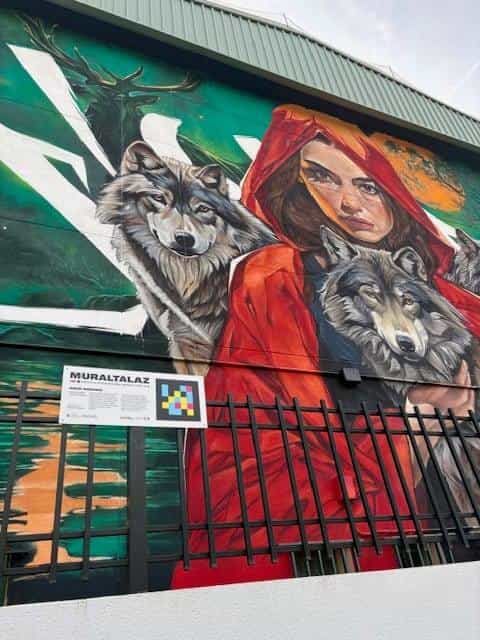
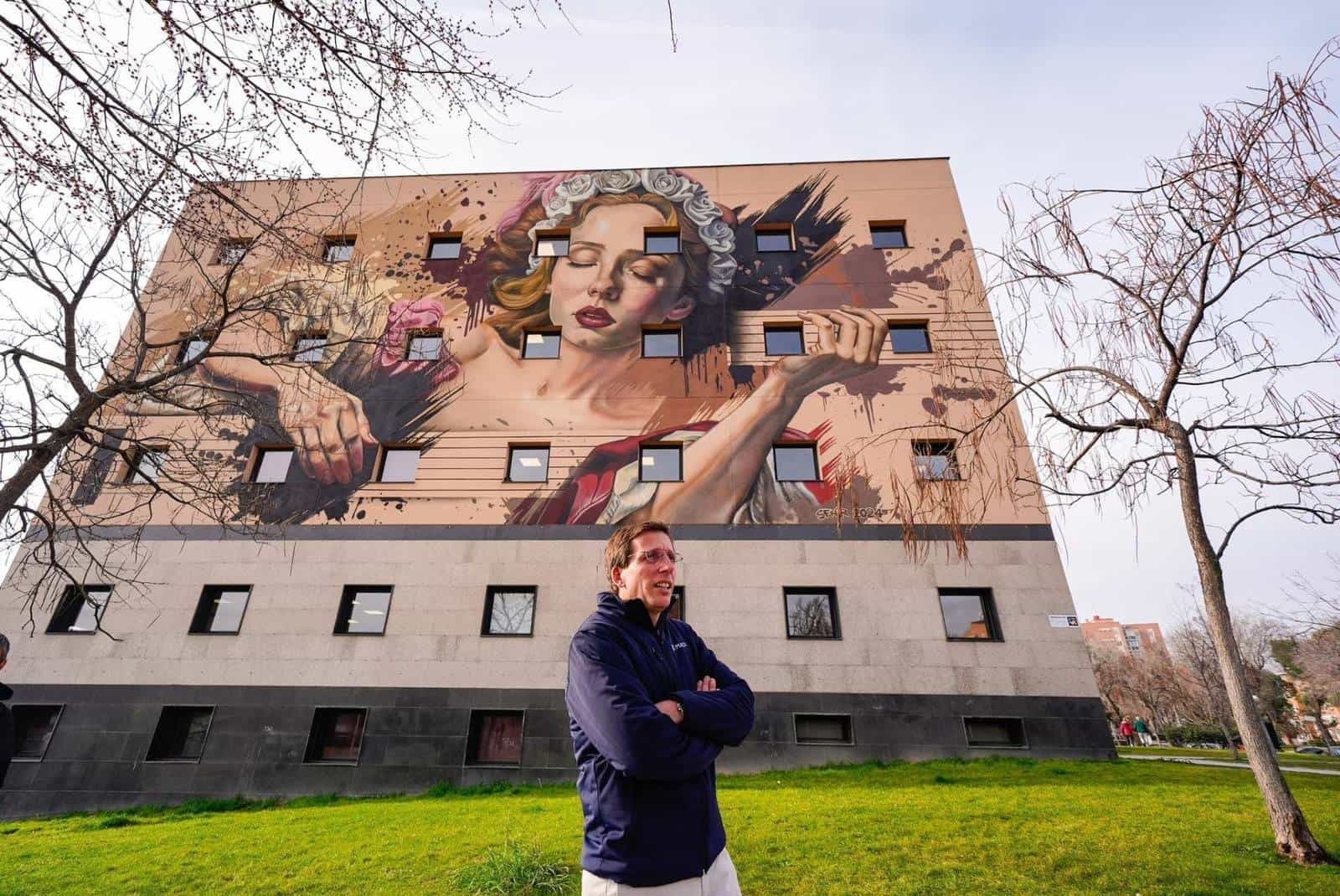
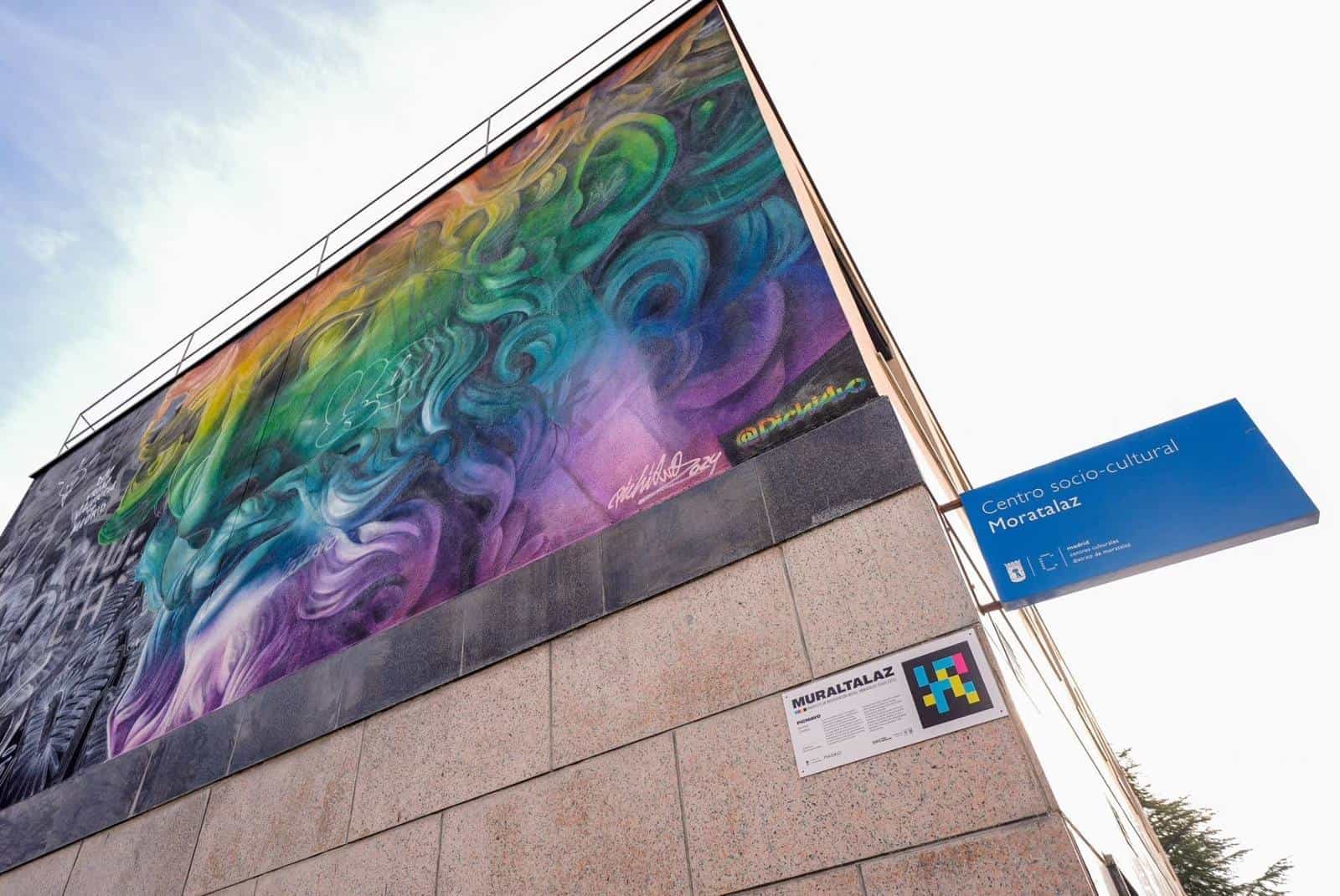
The route covers facades of cultural centers, sports halls, libraries and schools across the district. Each plate works as a label: it identifies artist and work, and translates the mural into voice for those who can't see it—and for those who want to hear it in another language.
§ Why it matters
Street art also belongs to those who can't see it.
Inclusion
A blind or low-vision person can walk the neighborhood's mural route on their own and hear the detailed description of each work, audio-described by ILUNION and the ONCE Resource Center.
Tourism
Muraltalaz also works as a multilingual cultural product: an international tourist scans the plate and hears the audio description in their own language, without downloading maps or guides.
Identity
The fifteen murals become anchors of identity and belonging for Moratalaz: public art, neighborhood memory and accessibility, all on the same facade.
§ And your destination?
Your destination can also guide in 42 languages.
Tell us about your trails, visitor centers, landmarks or galleries. We’ll show you how NaviLens would make your offering accessible—with comparable cases.