Case study · Yongin, South Korea
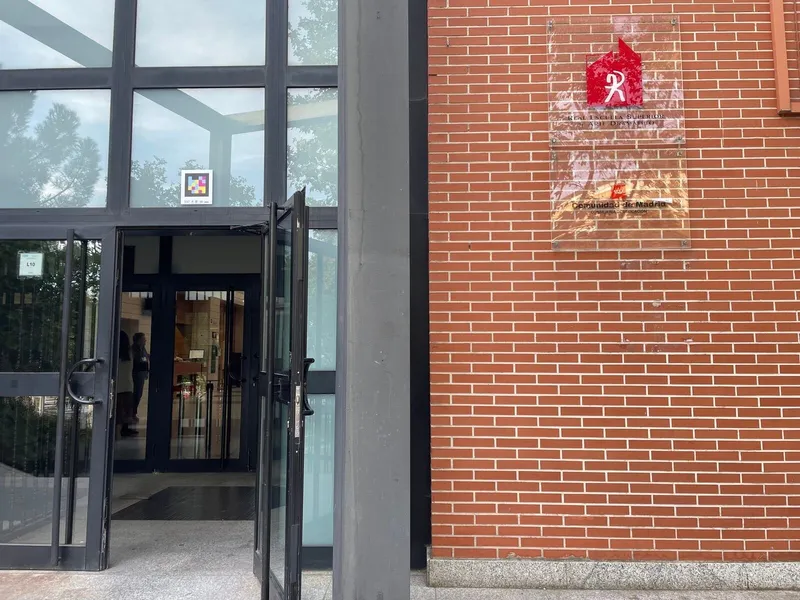
The house of human rights, accessible from the front door.
How the National Human Rights Education Institute—the new training center of the National Human Rights Commission of Korea—embeds NaviLens into its exhibition hall in Yongin: 20 codes guide blind and low-vision visitors from the entrance to the exit, zone by zone, in the technology's first deployment in South Korea.
1st
NaviLens deployment in South Korea
20
NaviLens codes from entrance to exit
2,500 sq ft
Exhibition hall (70 pyeong) in the new institute
42
Languages read aloud, Korean included
The client
National Human Rights Education Institute
The National Human Rights Commission of Korea (NHRC), established in 2001, is the country's independent human rights institution. On April 28, 2026 it opened the National Human Rights Education Institute (국가인권교육원) in Singal-dong (Giheung-gu, Yongin), its first center dedicated to human rights training and education, with classrooms, training spaces and an exhibition open to the public.
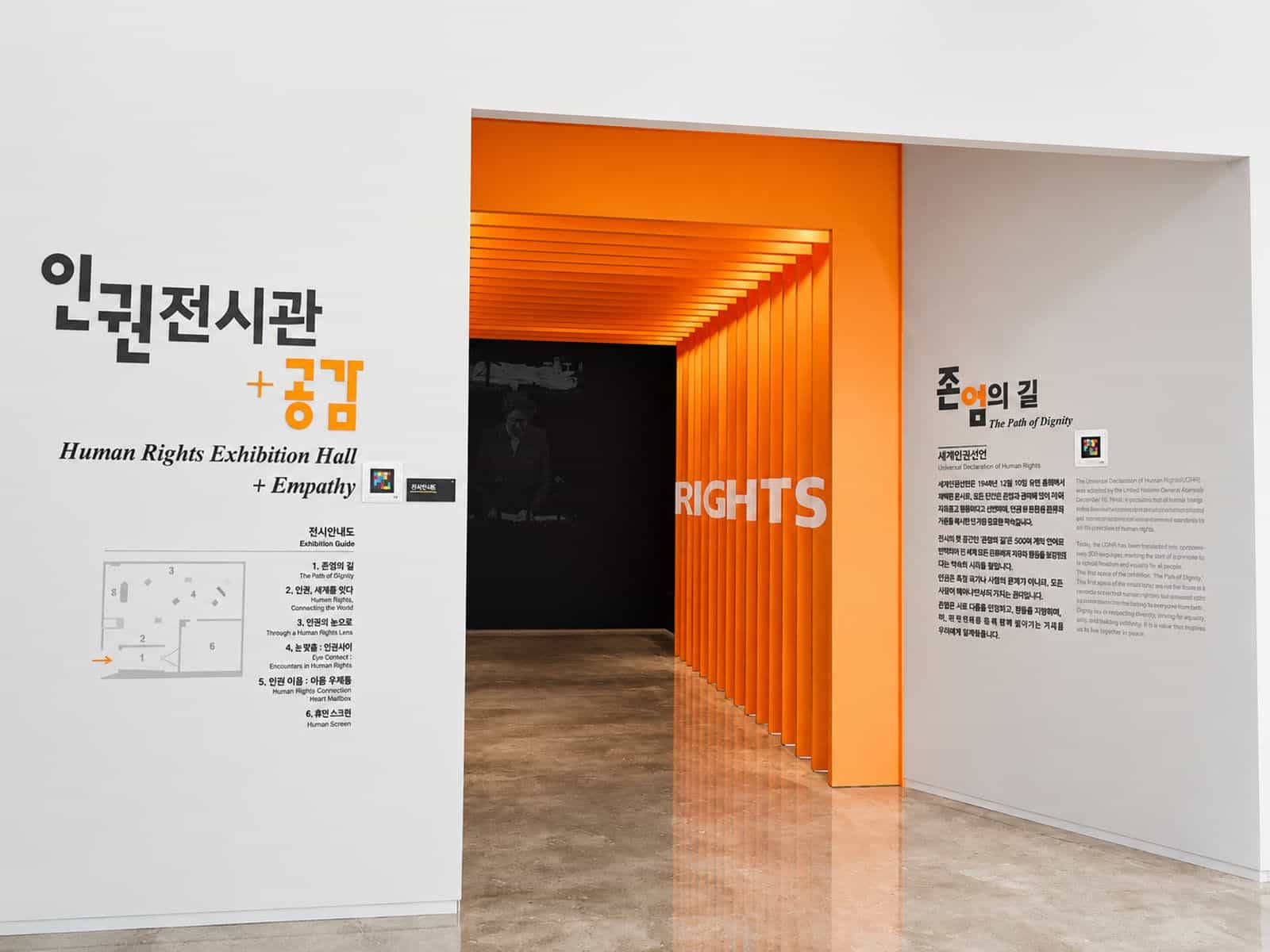
The “Human Rights Exhibition Hall + Empathy” covers roughly 2,500 square feet organized into five zones plus a participatory space: “The Path of Dignity”—the Universal Declaration—, a timeline of the major international norms, an illustrated mural for seeing everyday life through a human rights lens, the “Eye Contact” encounter, the “Heart Mailbox” letter wall and the “Human Screen.”
On top of that route, the institute adds the NaviLens layer: wayfinding and exhibit content also reach those who cannot read the panels, in the technology's first deployment in South Korea.
§ The challenge
So the house of human rights leaves no one out.
- 01
An exhibition made of text
Timelines, declarations, murals and signs in Korean and English: nearly all the content is visual. Without an audio layer, a blind visitor depends on a companion to access precisely the message the center wants to convey.
- 02
Finding your way in a brand-new building
The institute opened in April 2026 and every visitor arrives for the first time. The full journey had to be solved: the main entrance, the information desk, the entrance to the exhibition, moving from zone to zone, and the exit.
- 03
Practicing what it teaches
A public center that teaches equality and non-discrimination must demonstrate them in its own space. And there was no previous NaviLens reference in South Korea to build on.

§ The solution
Twenty codes, one complete journey.
Twenty NaviLens codes cover the route end to end: the building entrance, the entrance to the exhibition, the information desk, the interior routes, the five exhibition zones with their content points, the participatory space and the exit.
The NaviLens GO app detects each code from a distance, on the move and with no need to aim, and reads aloud where the visitor is and what each zone is about, in the phone's language: 42 languages, Korean included.
The same signage serves everyone: sighted visitors scan for extra information; blind visitors orient themselves and access the exhibition content with the same independence.
§ Gallery
Six spaces, one accessible layer.

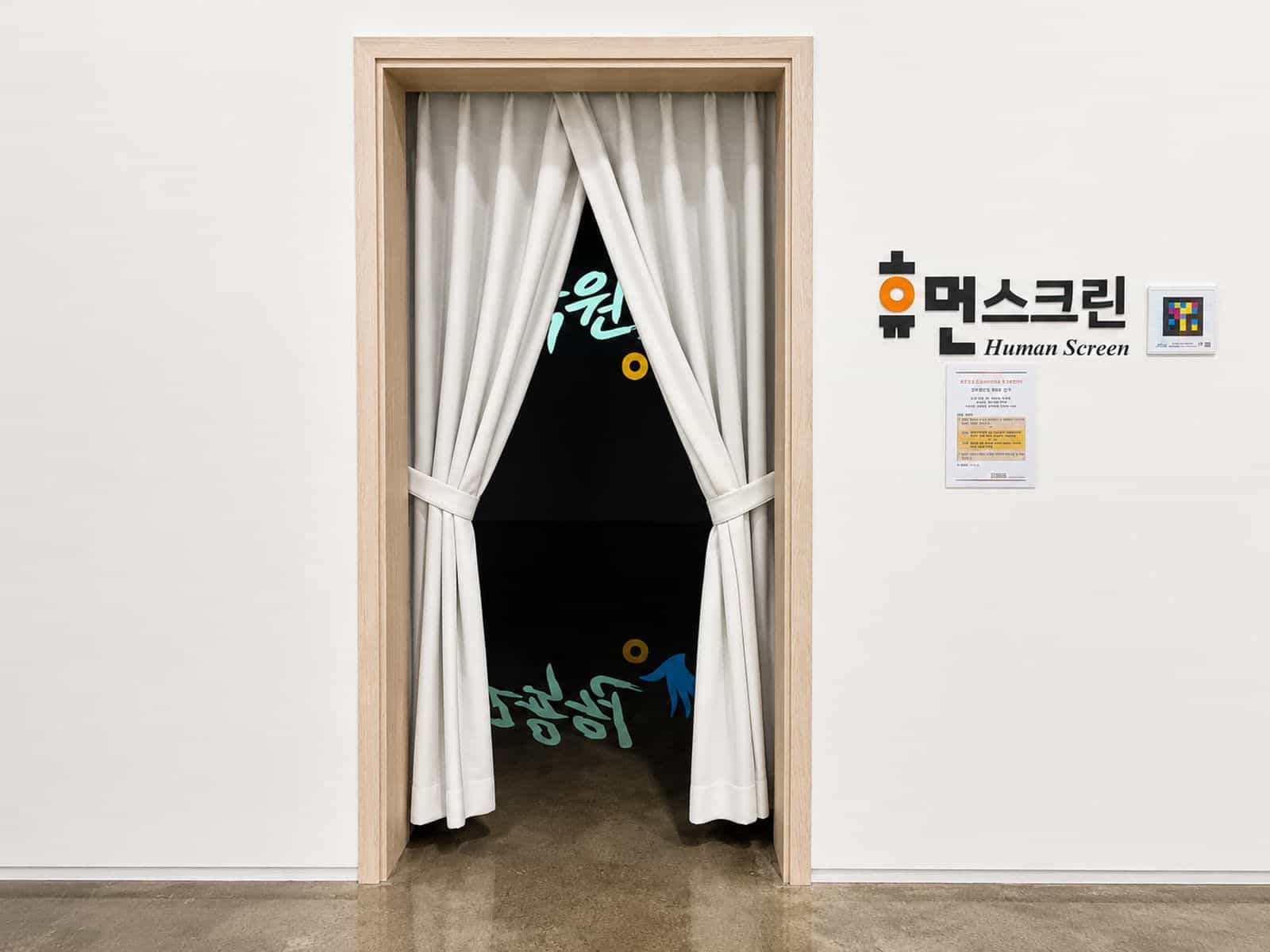
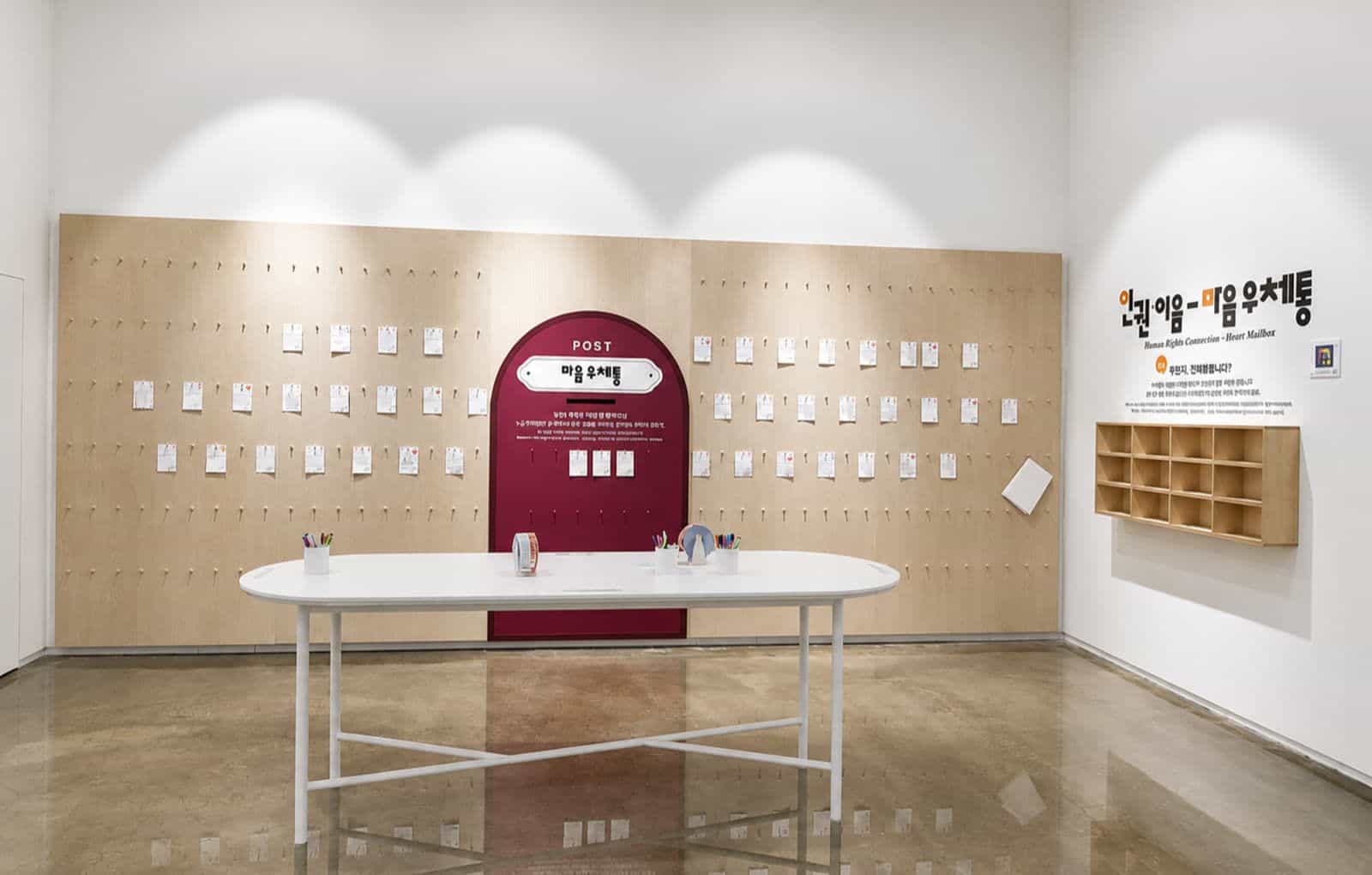
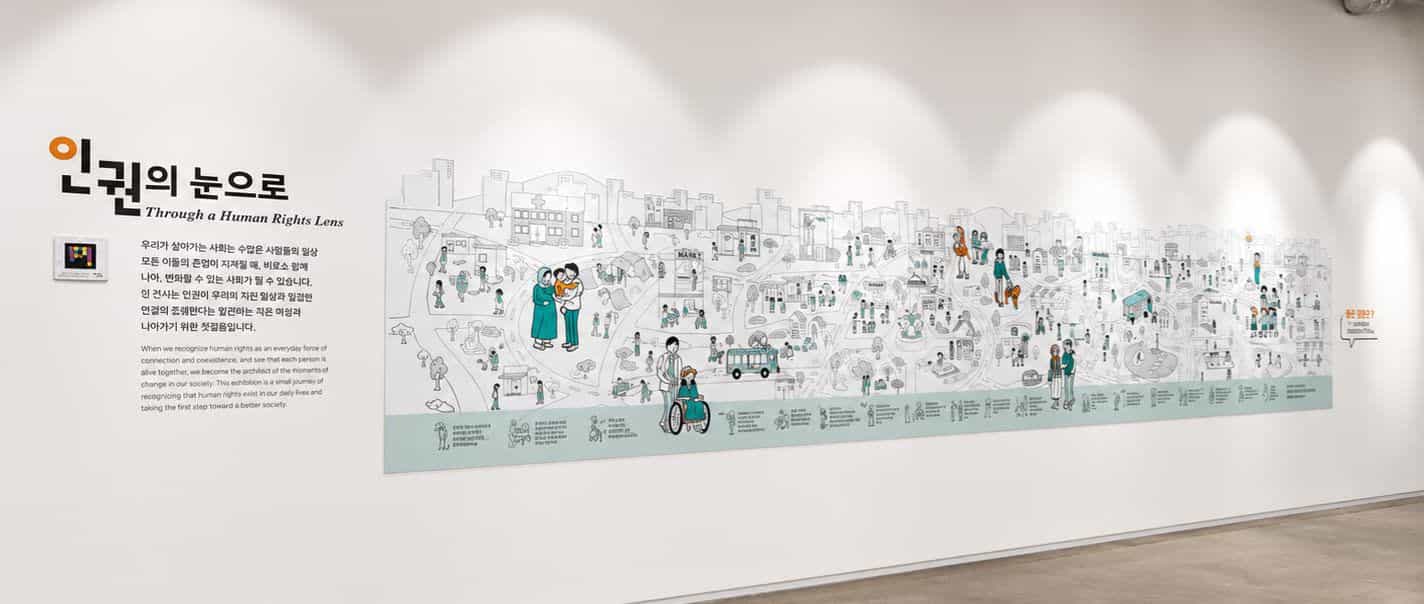
§ Timeline
From opening day to the country's first NaviLens.
- 2001
South Korea establishes its national human rights commission
The National Human Rights Commission of Korea (NHRC) is born: the independent institution charged with protecting and promoting human rights in the country and expanding human rights education across the public and private sectors.
- Apr 28, 2026
The National Human Rights Education Institute opens
The NHRC opens its first center dedicated to human rights education in Yongin (Gyeonggi). The ceremony is attended by commission chairperson Ahn Chang-ho and the city's acting mayor, along with about a hundred officials.
- 2026
First NaviLens deployment in South Korea
The exhibition hall adds 20 NaviLens codes covering the entrance, the desk, the routes, the five zones, the participatory space and the exit: wayfinding and content accessible by voice in 42 languages.
§ Results
A debut that sets the path.
Complete
Independent journey from entrance to exit, zone by zone
Free
Cost to the visitor: NaviLens GO app free on iOS and Android
Benchmark
First deployment in South Korea, replicable across the country's public network
§ And your campus?
Every classroom and clinic can be guided by voice.
Tell us about your facility, your journeys and your users. We’ll show you how NaviLens would make wayfinding easier.