Case study · Pamplona / Iruña
The Camino de Santiago, read aloud to those who can't read the sign.
In 2021 Pamplona City Council installed NaviLens codes at 15 stops along the Camino route through the city: from the Portal de Francia to the Hotel Tres Reyes, taking in the Tourist Office, the Cathedral, the Santo Domingo Market and the Ultreia pilgrim reception center. Pilgrims point their phone and hear the information in their language.
15 stops
Camino de Santiago landmarks through Pamplona
2021
Official launch of NaviLens accessible signage
Gastronomic route
From the Portal de Francia to the Hotel Tres Reyes
ES · EU · EN · FR · 36+
Voice read-out in the language of the pilgrim's phone
The client
Pamplona City Council
Iruñeko Udala · Tourism
Pamplona / Iruña is the first major city of the Camino Francés after crossing the Pyrenees at Roncesvalles. That makes it a reference point for pilgrims: the first tourist office, the first reception center—Ultreia—, the first cathedral on the Camino and the first gastronomic route with its own brand are all here.
In July 2021 Pamplona City Council unveiled the city's first accessible tourist route: the Camino de Santiago Gastronomic Route, with 15 information points fitted with NaviLens codes, read aloud in the language of the visitor's phone.
The accessibility layer coexists with the Camino's historic signage—the yellow arrow and the scallop shell—and adapts to each stop: hotel and office windows, lit shop fronts, market columns and the stone walls of monumental buildings.
§ The challenge
Letting any pilgrim arrive, listen and keep walking.
- 01
The first city on the Camino Francés
Pamplona is the first major city on the Camino Francés after Roncesvalles: every year thousands of pilgrims from dozens of countries enter through the Portal de Francia and cross the old town. For a blind, low-vision visitor or one who doesn't speak Spanish, reading the route's signs and finding pilgrim resources was a real barrier.
- 02
A gastronomic route with fifteen stops
The City Council shapes the Camino Route as a gastronomic and heritage trail: tourist office, Cathedral, Santo Domingo Market, historic restaurants, hotels and the Ultreia pilgrim reception center. Each stop has its own sign and opening hours; without a shared accessible layer, blind and low-vision visitors had to ask for help at every stop.
- 03
One system for facade, shop window and counter
A single signage system was needed that would work on the stone facade of the Cathedral, on the glass of a 20th-century hotel, on the lit Ultreia shop window or on a market column—and that could be read from several yards, without aiming, in the pilgrim's language.
§ The solution
A code at every stop along the route.
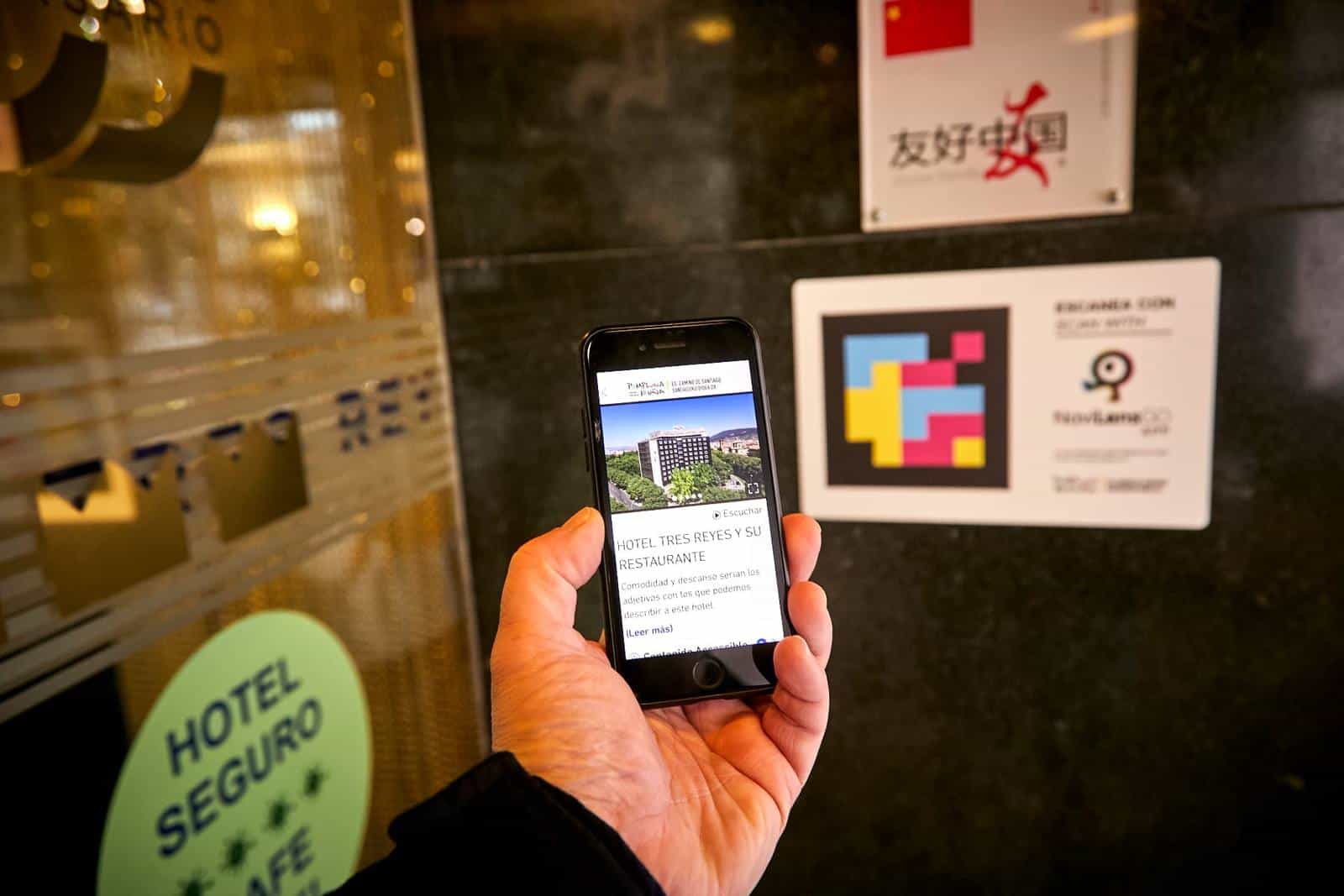
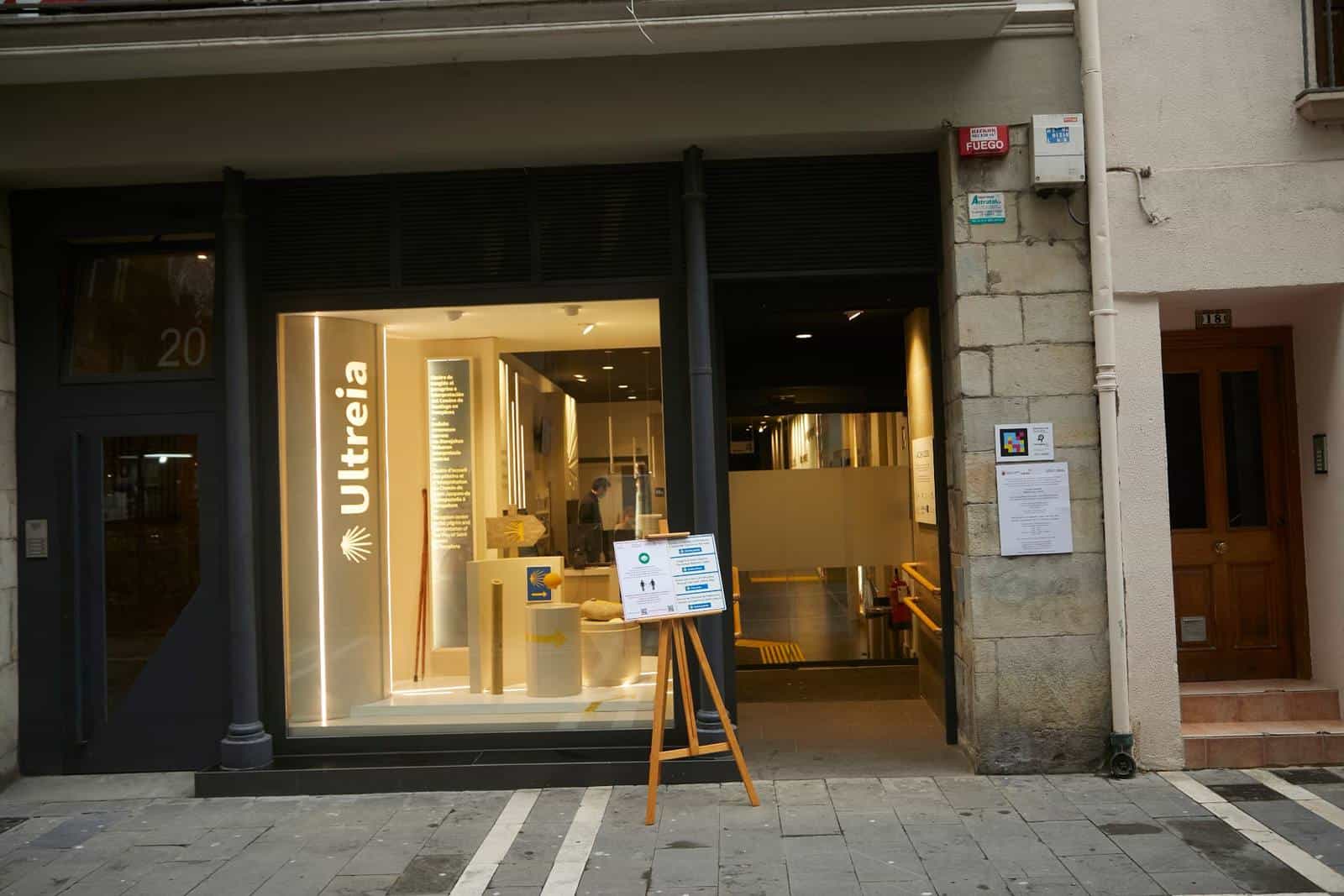
Pamplona placed NaviLens codes at the 15 stops of the Camino Route: Tourist Office (Mayor 20), Ultreia · Pilgrim Reception Center, Portal de Francia, Cathedral of Santa María, Santo Domingo Market, historic restaurants and route hotels such as the Hotel Tres Reyes.
Visitors open NaviLens GO, sweep the phone without aiming and hear out loud—in the language of their phone—the location's information: what it is, opening hours, pilgrim services and how to carry on along the route.
The support adapts to each facade: a rigid white plate on stone and glass, a stand in a shop window, a sticker on a market column. The layer is always the same; the code is detected several yards away in midday light or indoors in low light.
§ The route
From the Portal de Francia to the Hotel Tres Reyes.
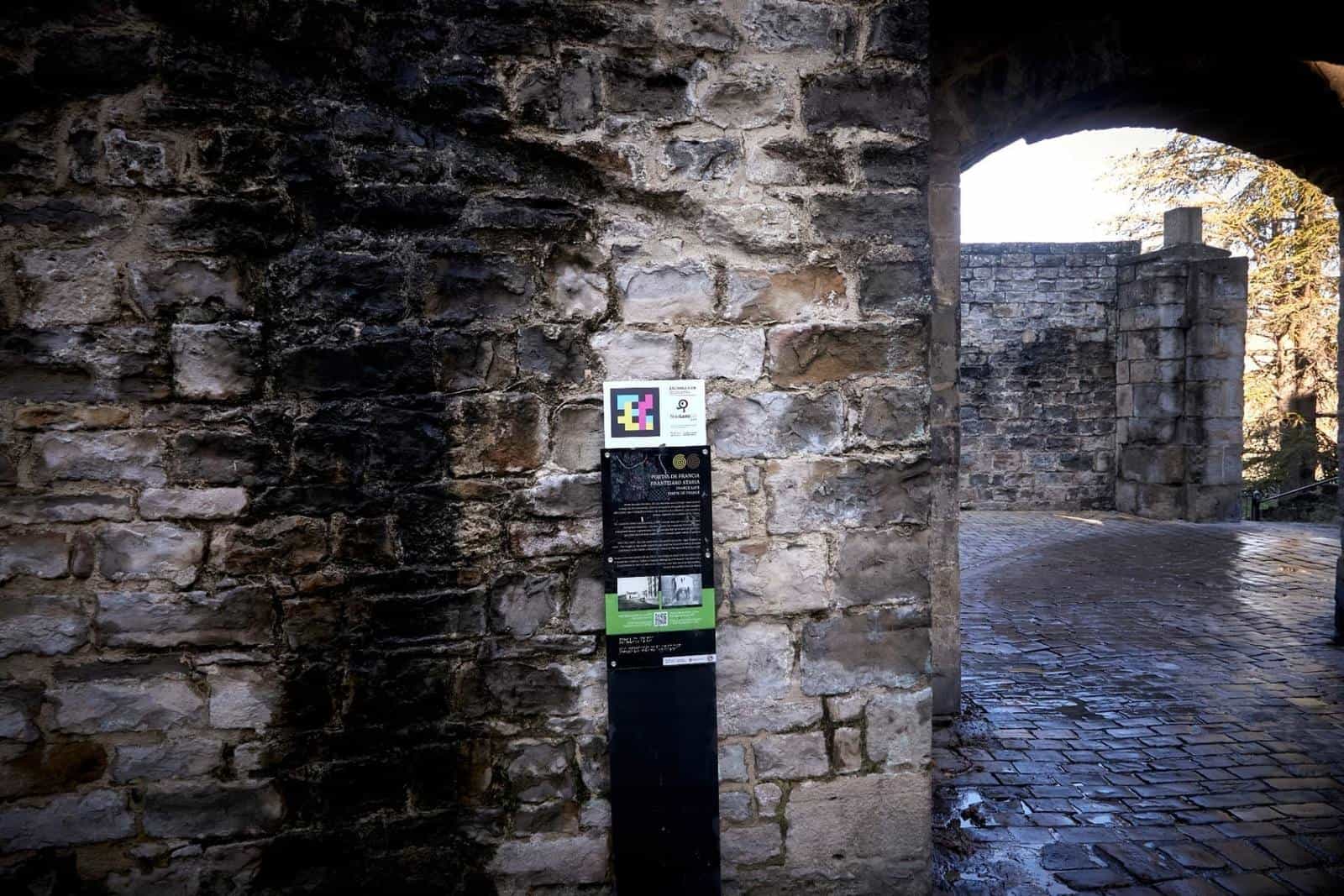
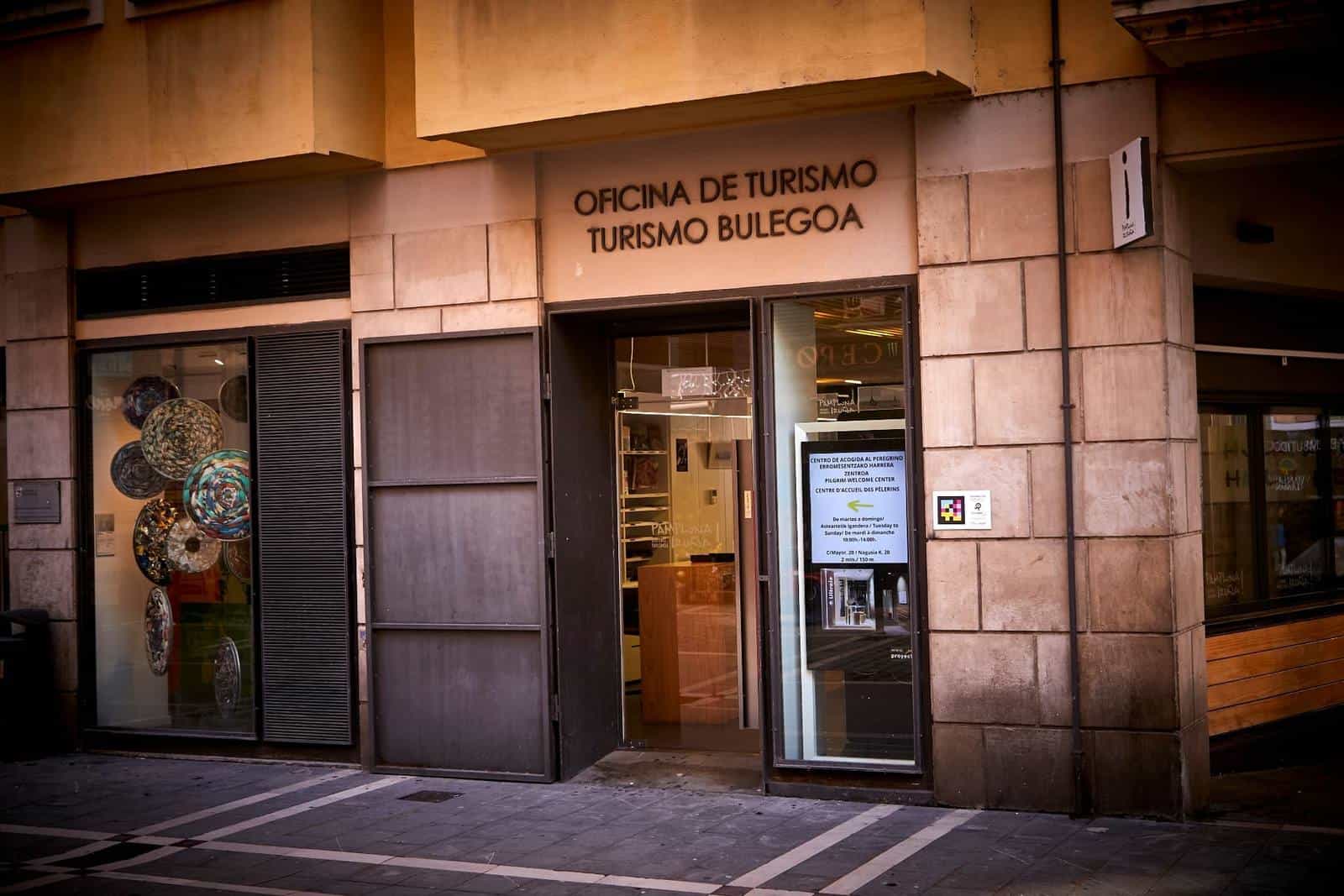
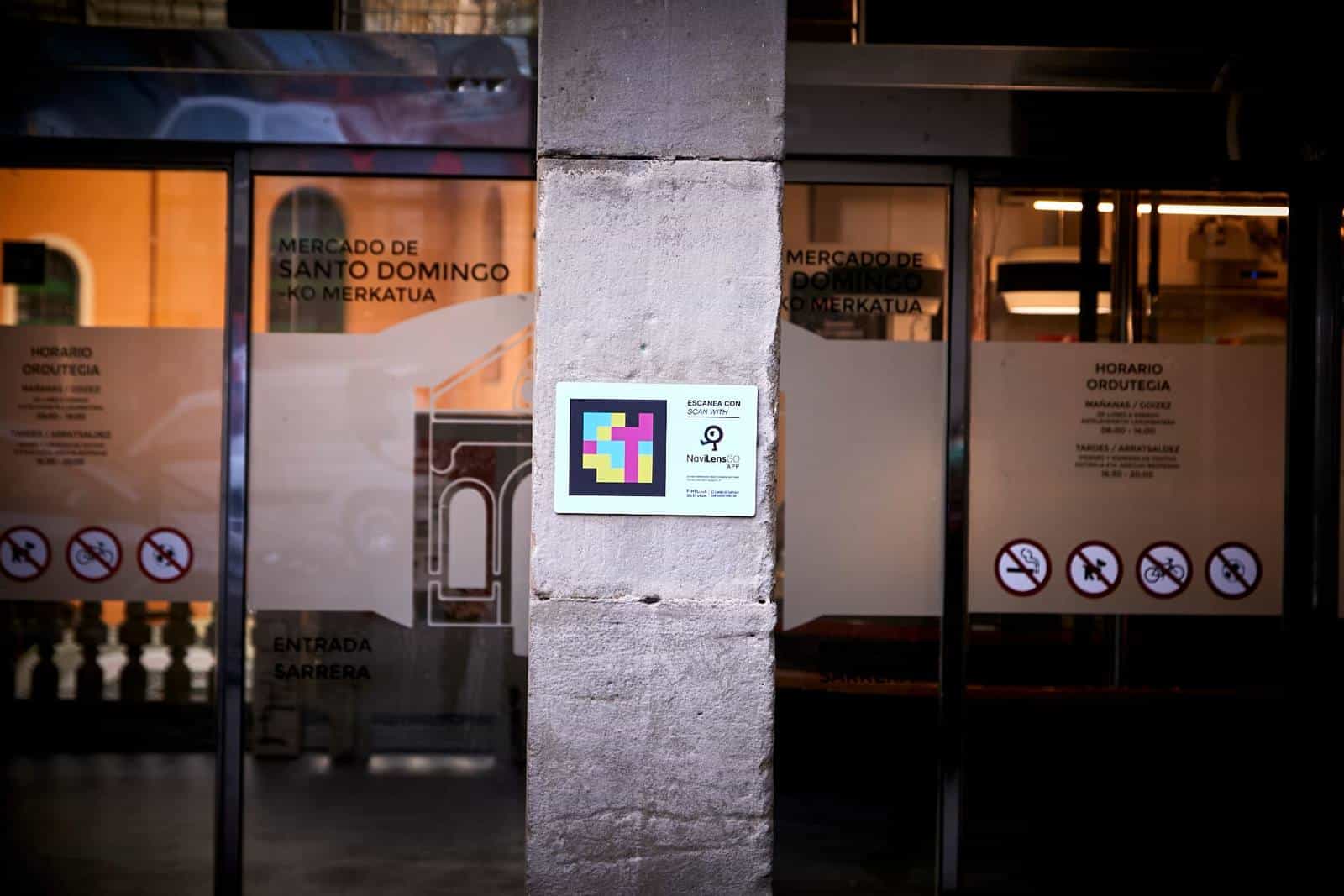
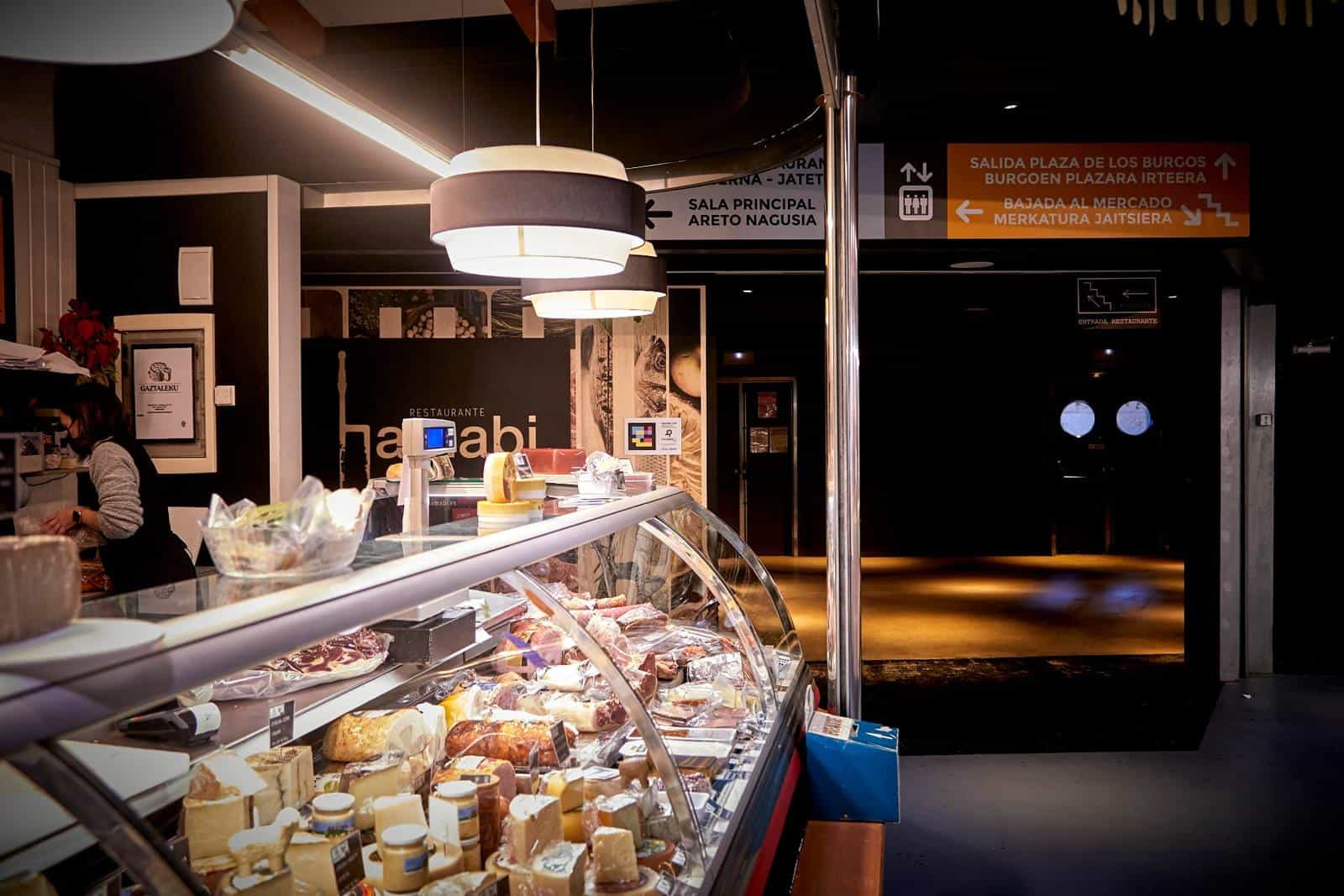
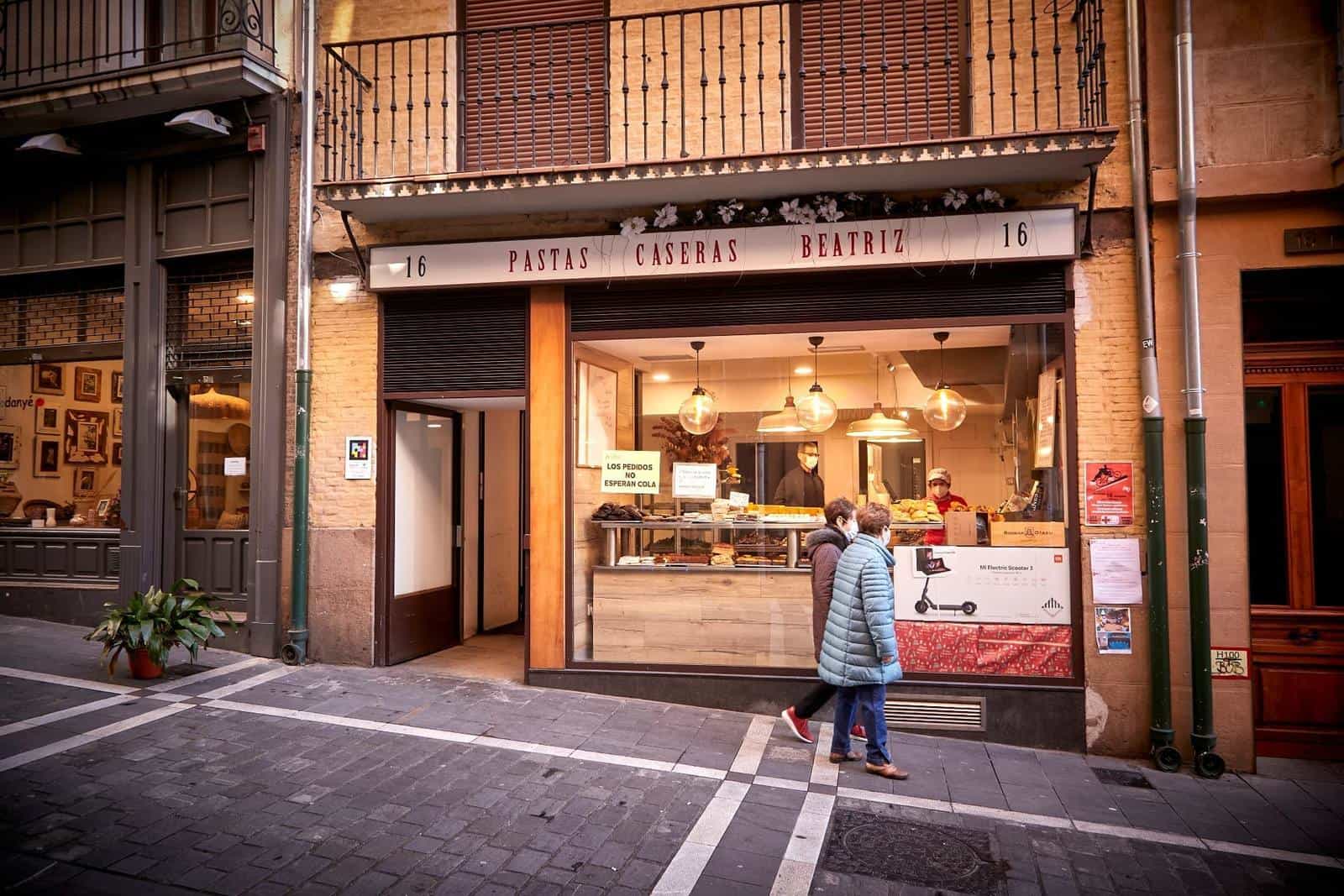
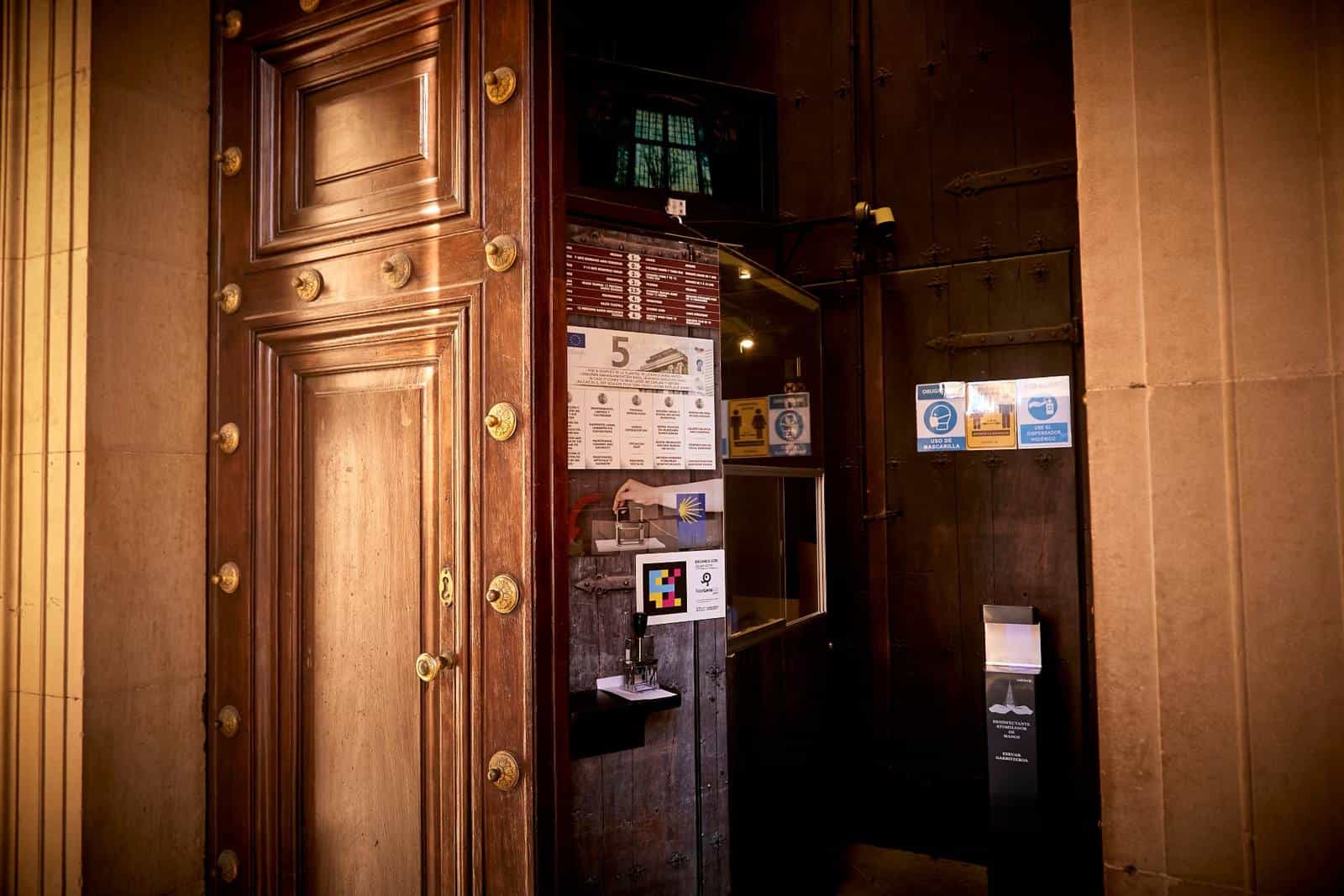
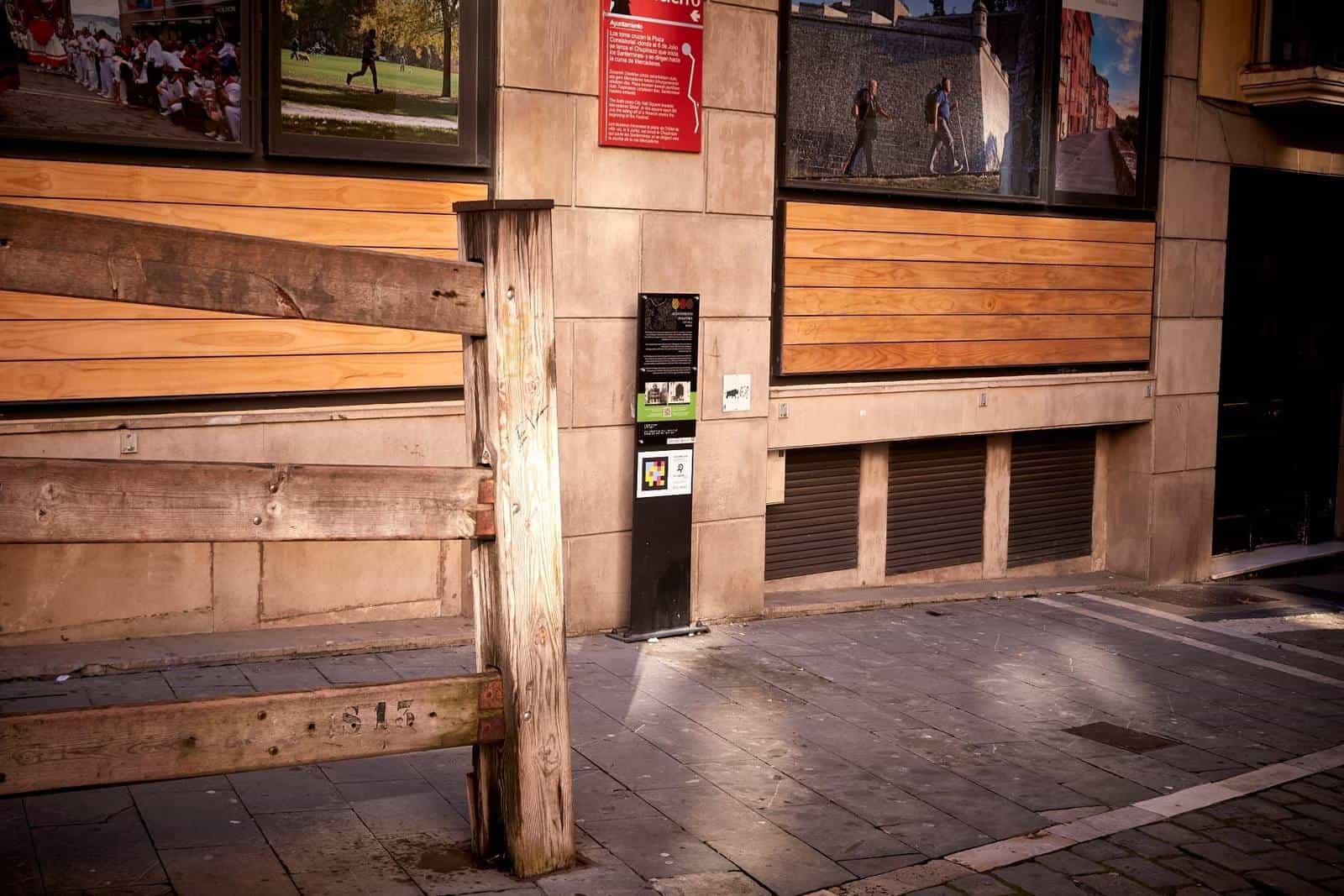
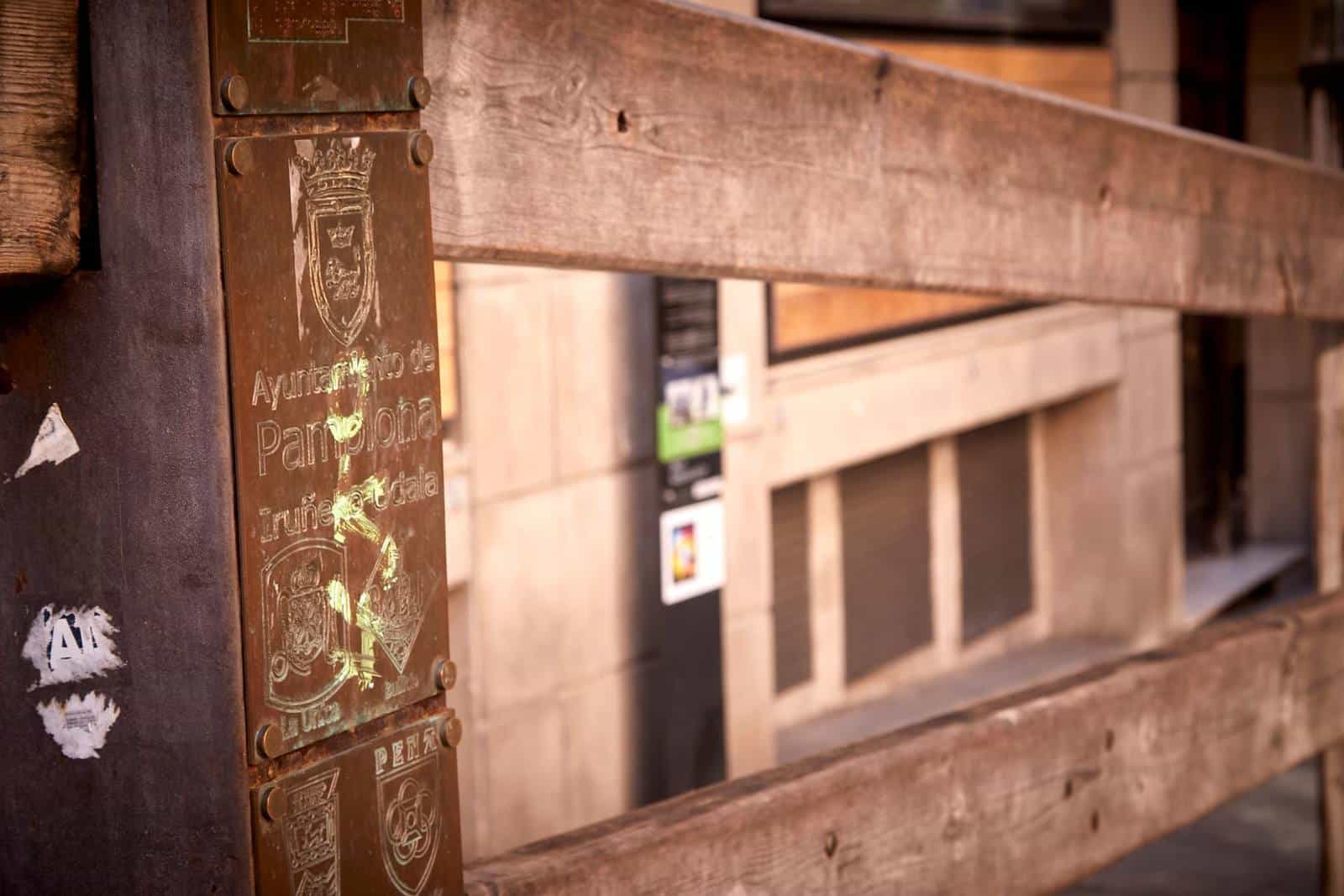
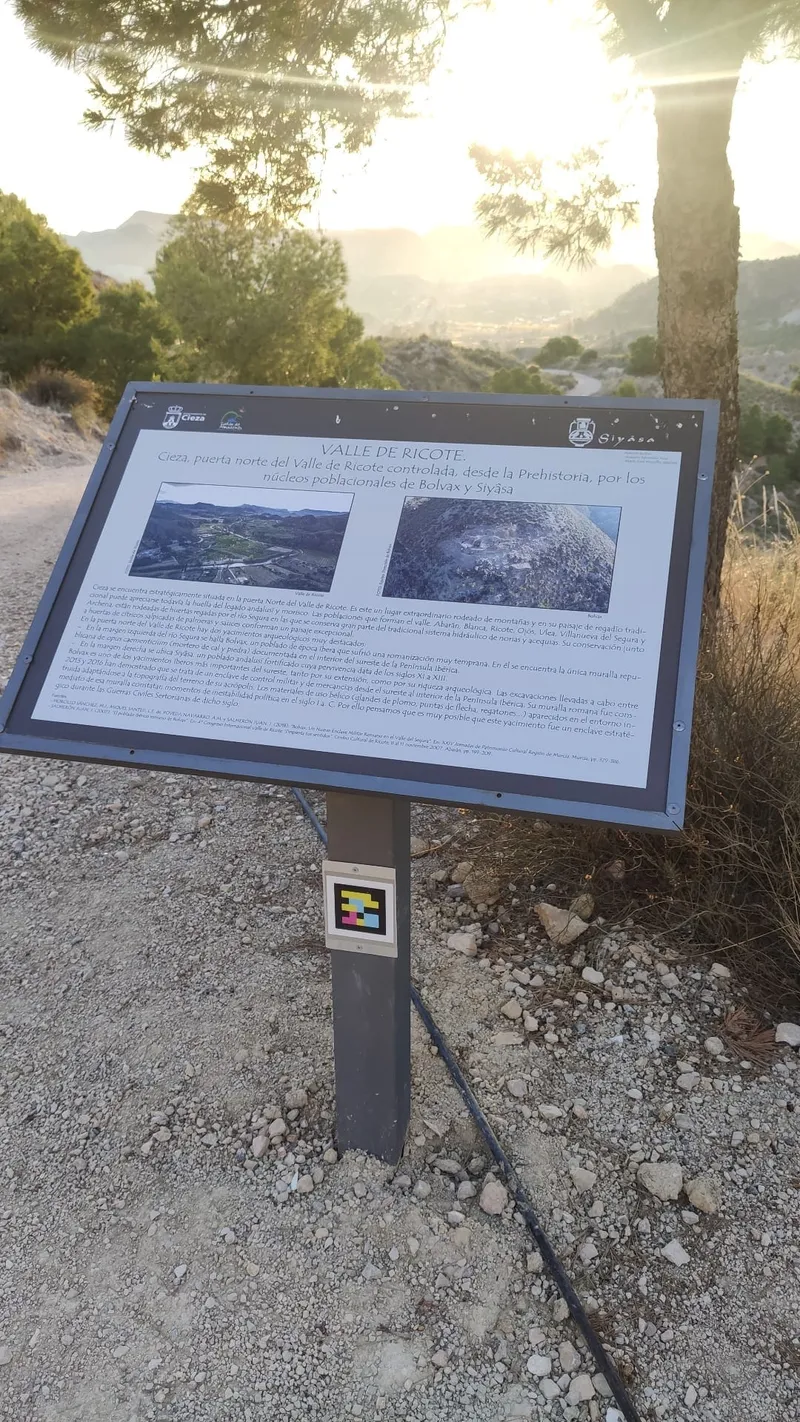
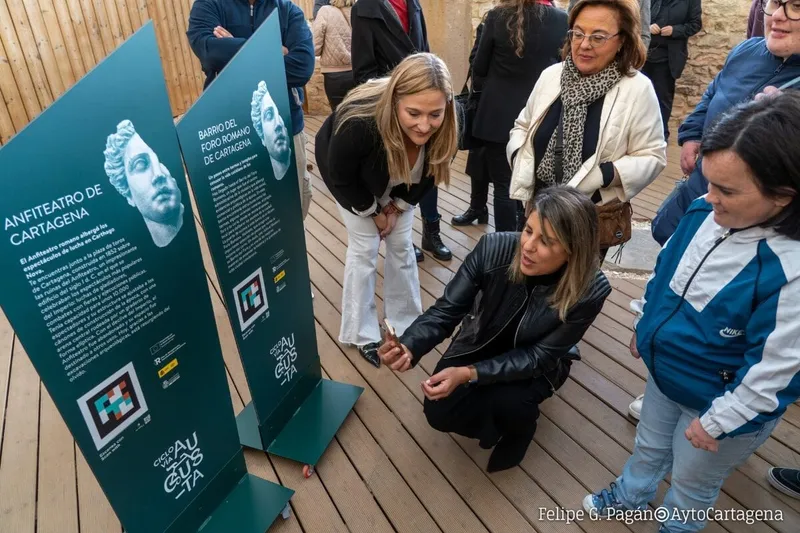
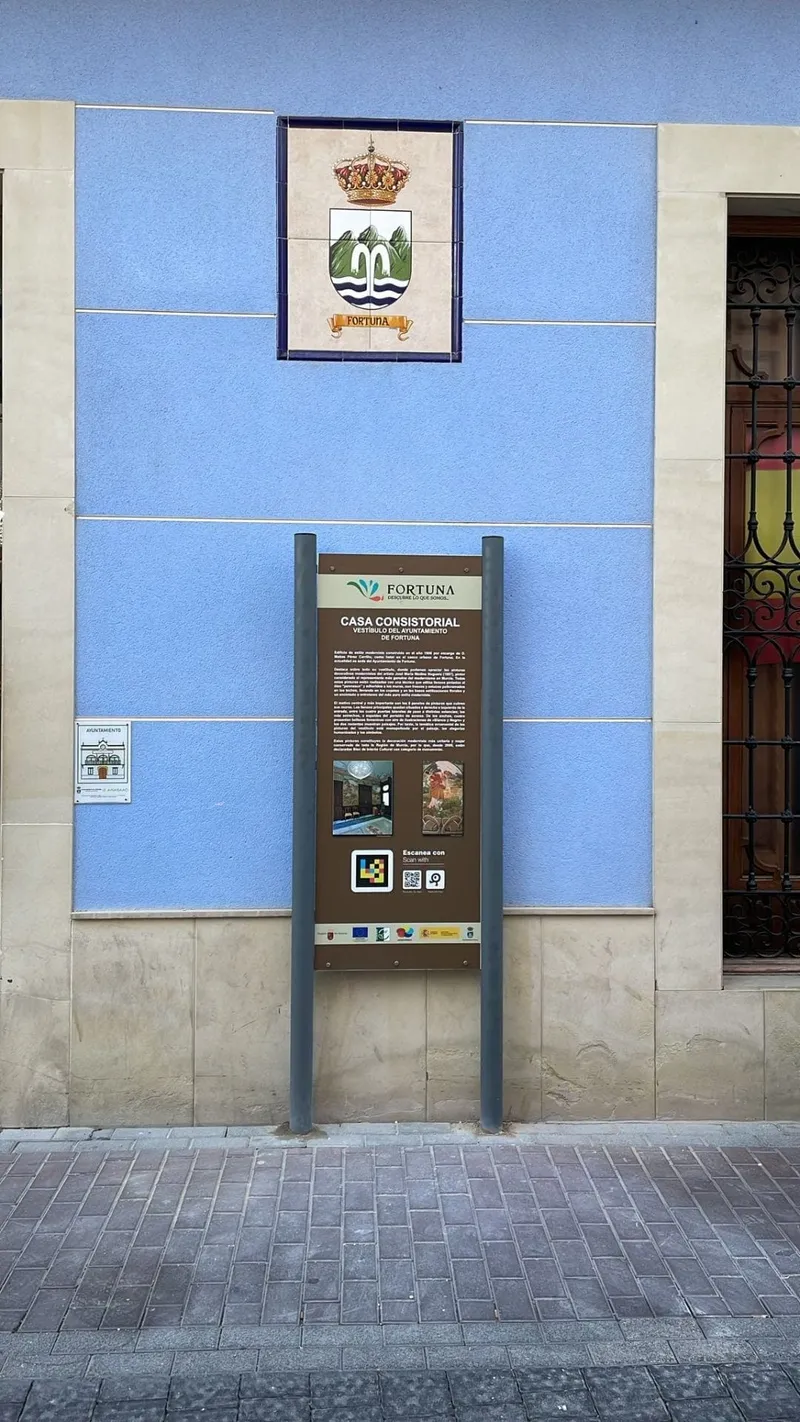
The codes are installed at phone-friendly height at every stop—the Portal de Francia wall, the hotel glass, the Ultreia shop window, the market column, the historic shop facade, the Cathedral doorway and the heritage totem of the running of the bulls route—so the pilgrim or visitor doesn't have to walk around or search for the plate. The accessible layer coexists with the Camino's signage (yellow arrow, scallop shell) and with the San Fermín bull-run signage without replacing either.
§ Why it matters
A Camino with no compulsory guide.
Autonomy
Visually impaired pilgrims experience Pamplona like everyone else: they find the hostel, the tourist office, the Cathedral or the restaurant without asking for directions at every crossing.
Multilingual
The Camino is international. The same plate is read in Spanish, Basque, English, French, German, Italian, Korean…—whichever language is set on the pilgrim's phone—without reprinting anything.
Heritage
The accessible layer does not touch the facade: a small plate is enough. The Cathedral stone, the old town walls and the historic signs all remain intact.
Press and official sources: Diario de Navarra, OkDiario Navarra, Noticias de Navarra, Pamplona City Council — Camino Route.
§ And your destination?
Your destination can also guide in 42 languages.
Tell us about your trails, visitor centers, landmarks or galleries. We’ll show you how NaviLens would make your offering accessible—with comparable cases.