Case study · MTA Bus · Bx12-SBS · NYC
From sidewalk to seat. The bus that speaks to you.
The MTA has brought NaviLens to Select Bus Service lines Bx12 (Bronx), M23 and M66 (Manhattan): codes on shelters, poles, the front and side of the bus, and right next to the LED “Stop Requested” signs on board.
3
SBS lines with NaviLens: M23, M66 and Bx12
100%
Codes at the stop and on board every bus
42
Languages the app reads the information in
$2M
US DOT SMART Grant to expand NaviLens across MTA
The client
MTA Bus Select Bus Service
The Metropolitan Transportation Authority operates the largest public transit network in the United States. Its bus division moves millions of riders every day across the five boroughs of New York City with local fleets, express service and, above all, the Select Bus Service (SBS) lines on its trunk corridors.
As part of its accessibility plan, MTA has brought NaviLens to three key SBS lines — Bx12-SBS (Pelham Bay – Inwood, via Fordham Road), M23-SBS and M66 — deploying codes both at stops and on board the buses.
§ The challenge
Boarding the right bus shouldn't depend on being able to read the LED.
- 01
Finding the stop before the bus arrives
In the Bronx, the Bx12-SBS runs along corridors like Fordham Road with several back-to-back stops, kiosks, shelters and advertising. For a blind rider, reaching the right stop is already half the battle.
- 02
Knowing which bus is at the curb
Several lines share the same stop and the LED signs on the bus front are unreadable for low-vision riders. Boarding the wrong one means crossing the whole neighborhood before being able to correct course.
- 03
Getting off at the right stop
Once on board, the next stop has to be heard in time, the request placed, and the rider needs confirmation it was acknowledged. Onboard PA isn't always clear, and the “Stop Requested” LED depends on sight.
§ The solution
Codes at every link of the trip.
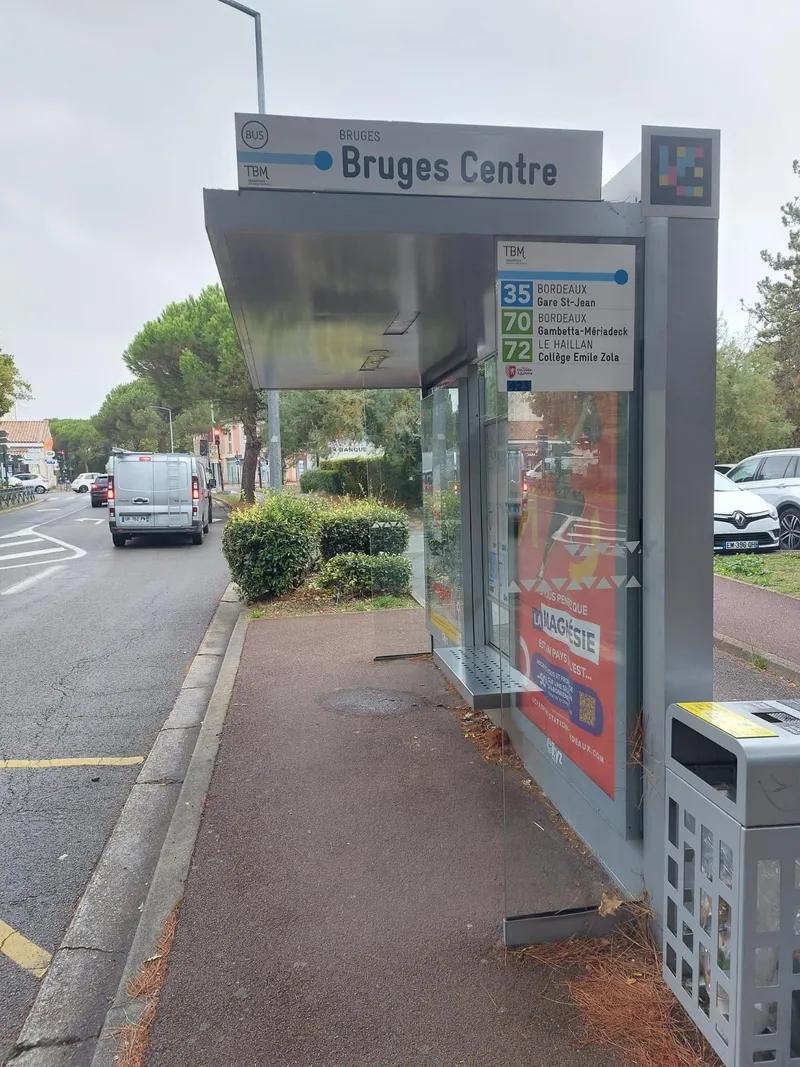
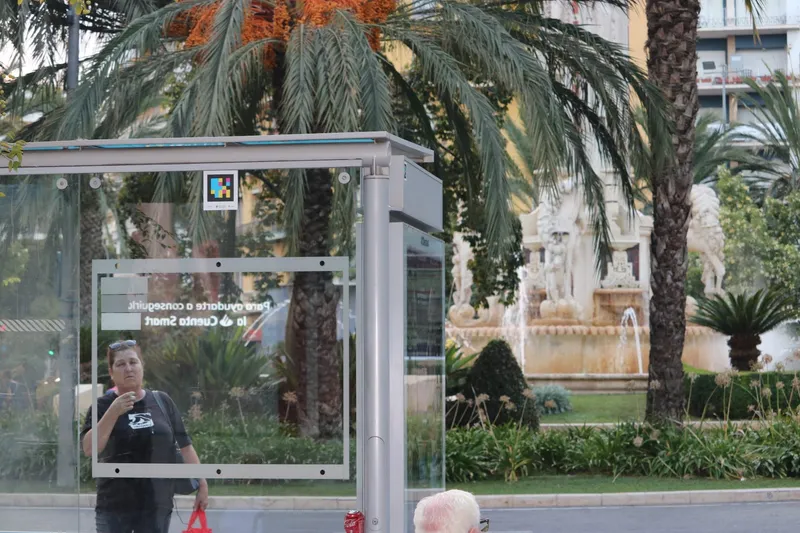
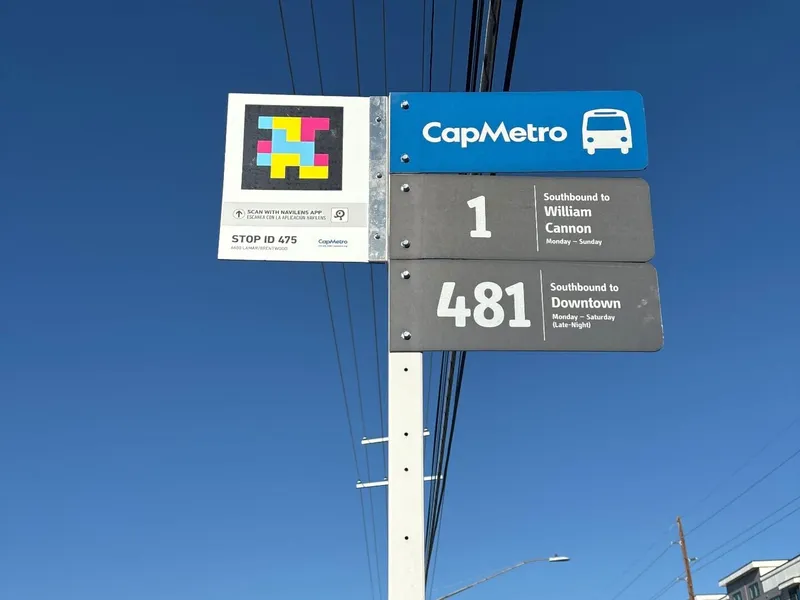
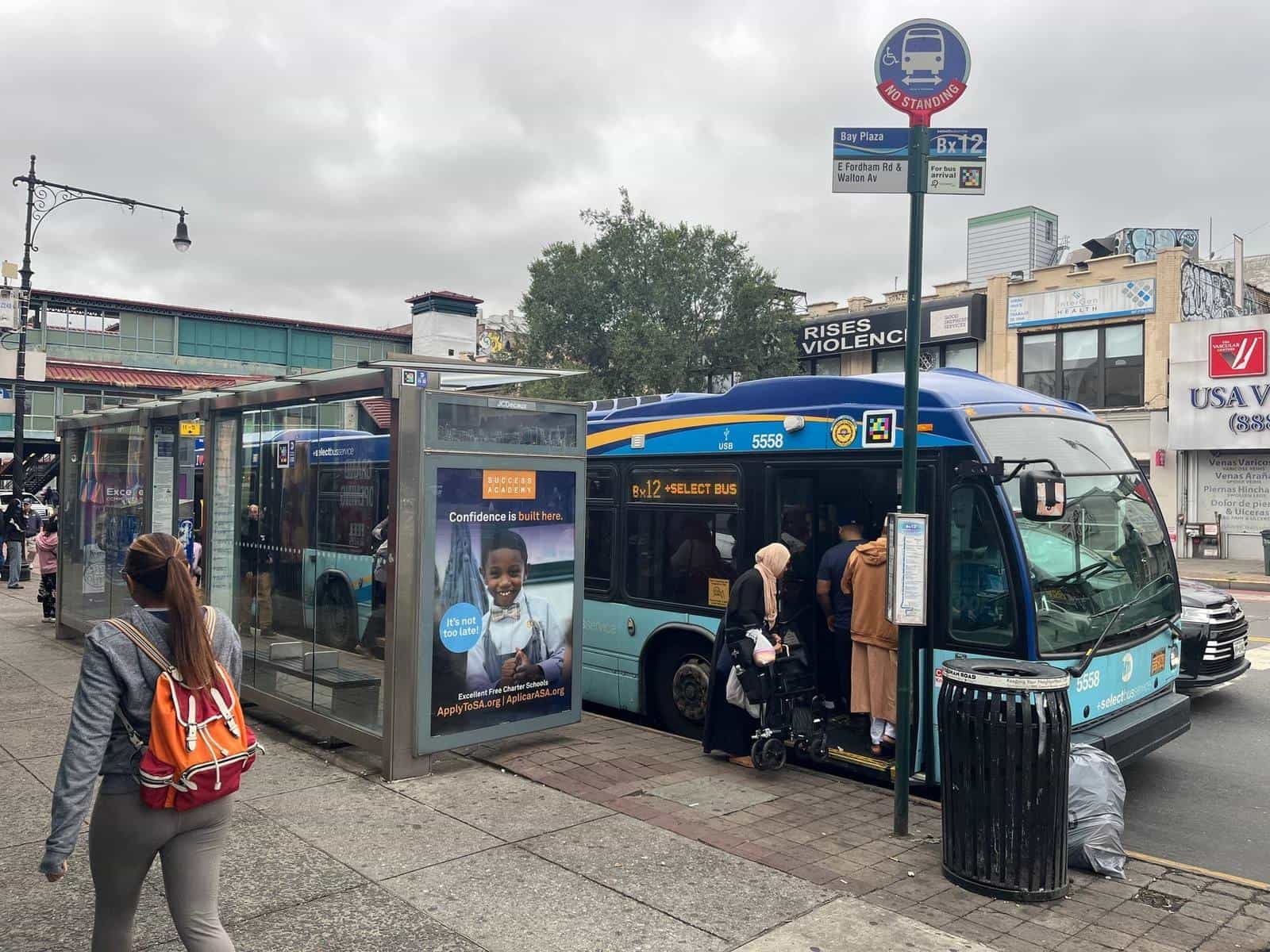
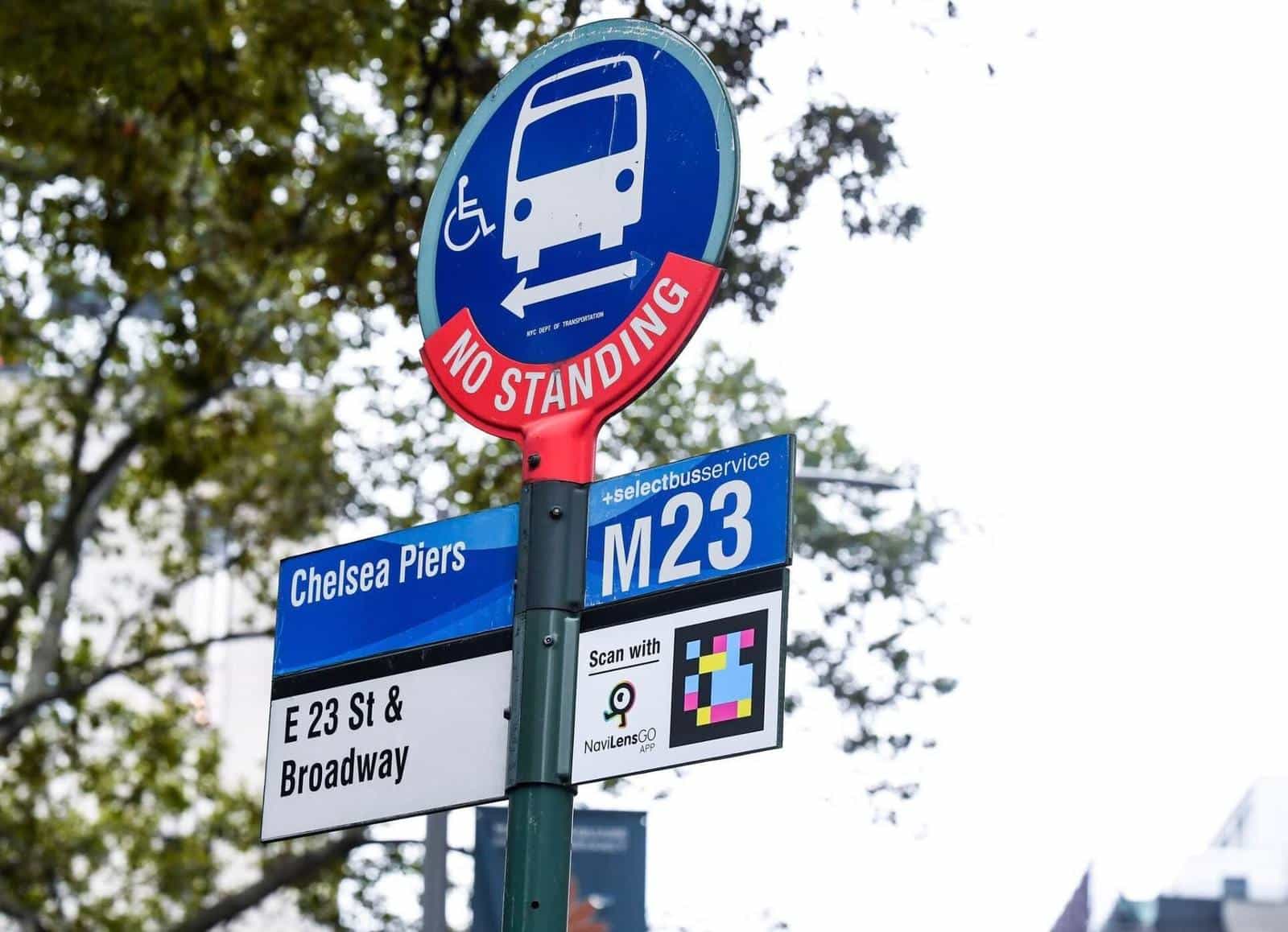
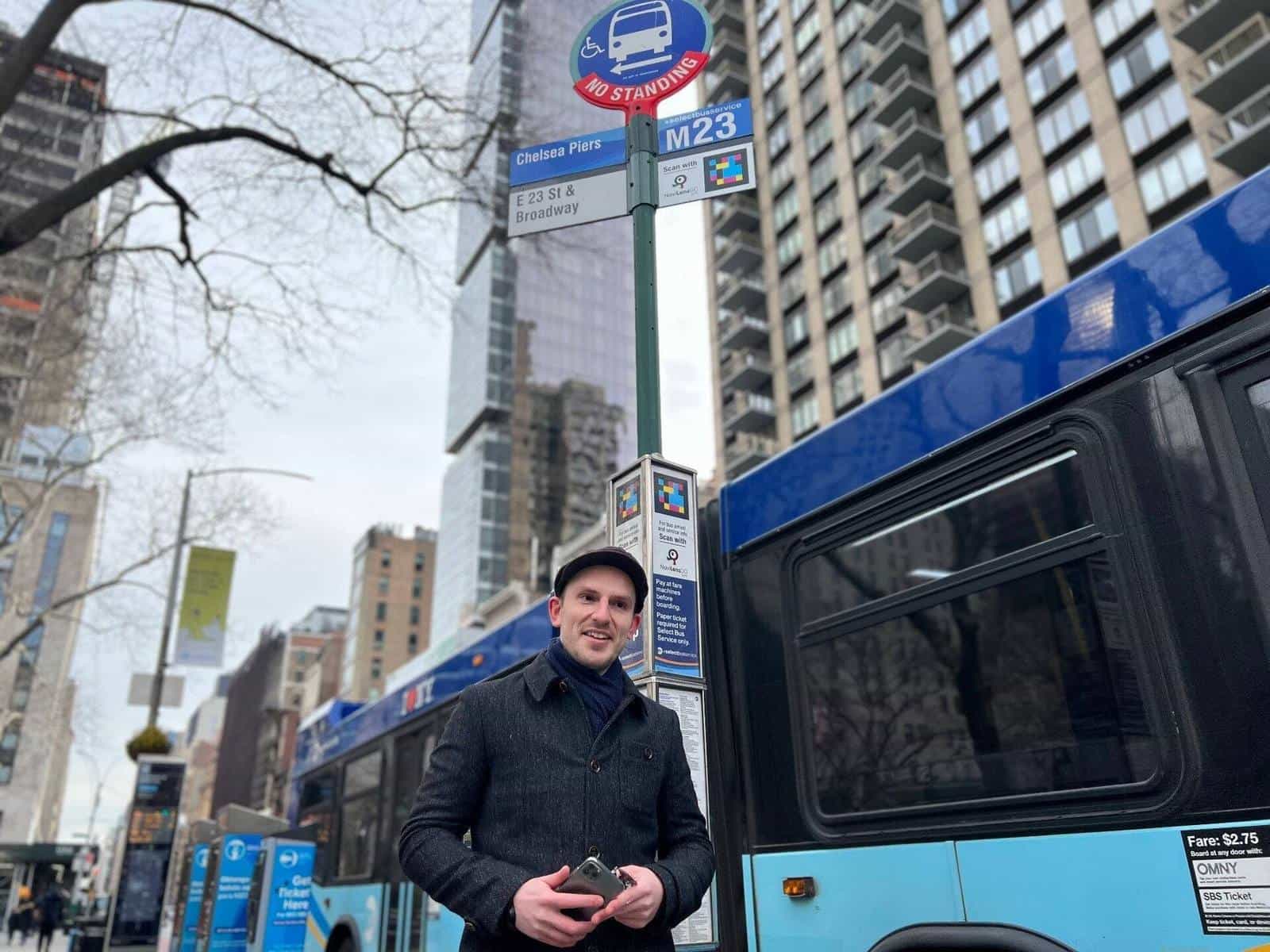
At the stop, NaviLens is on the “No Standing” pole and on the shelter, next to the “For bus arrival” sign. The app reads aloud which line stops there and when the next bus is due.
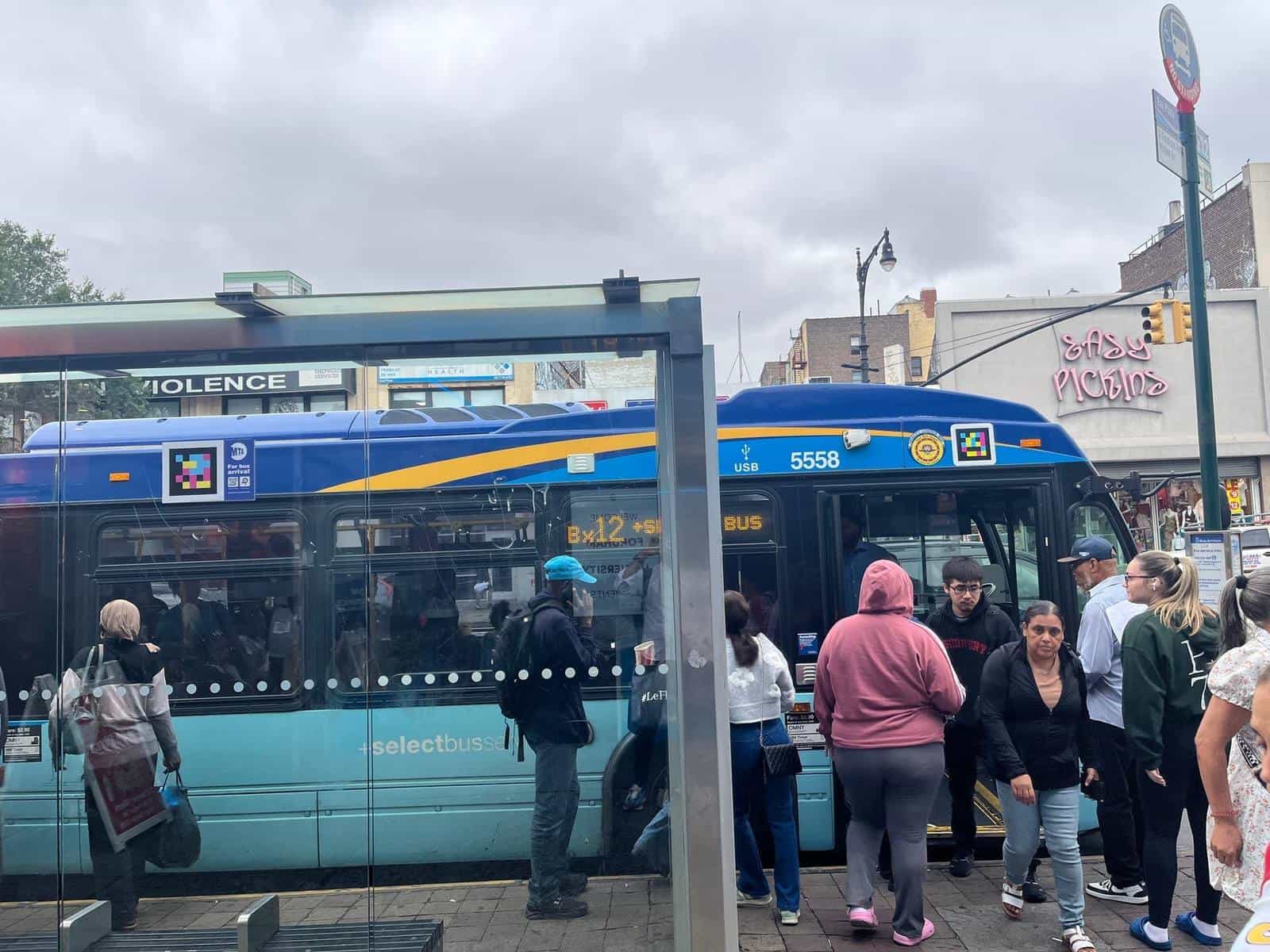
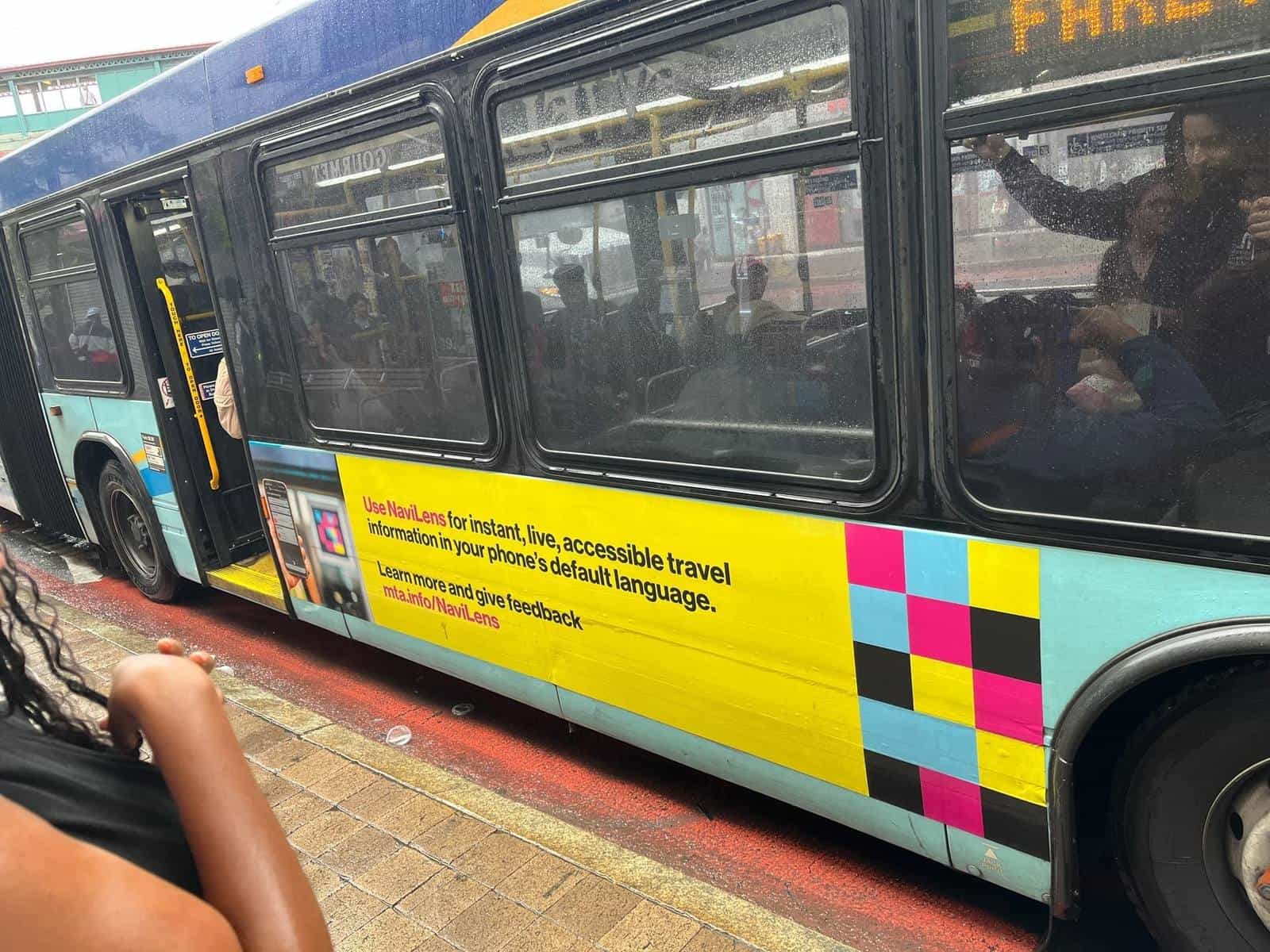
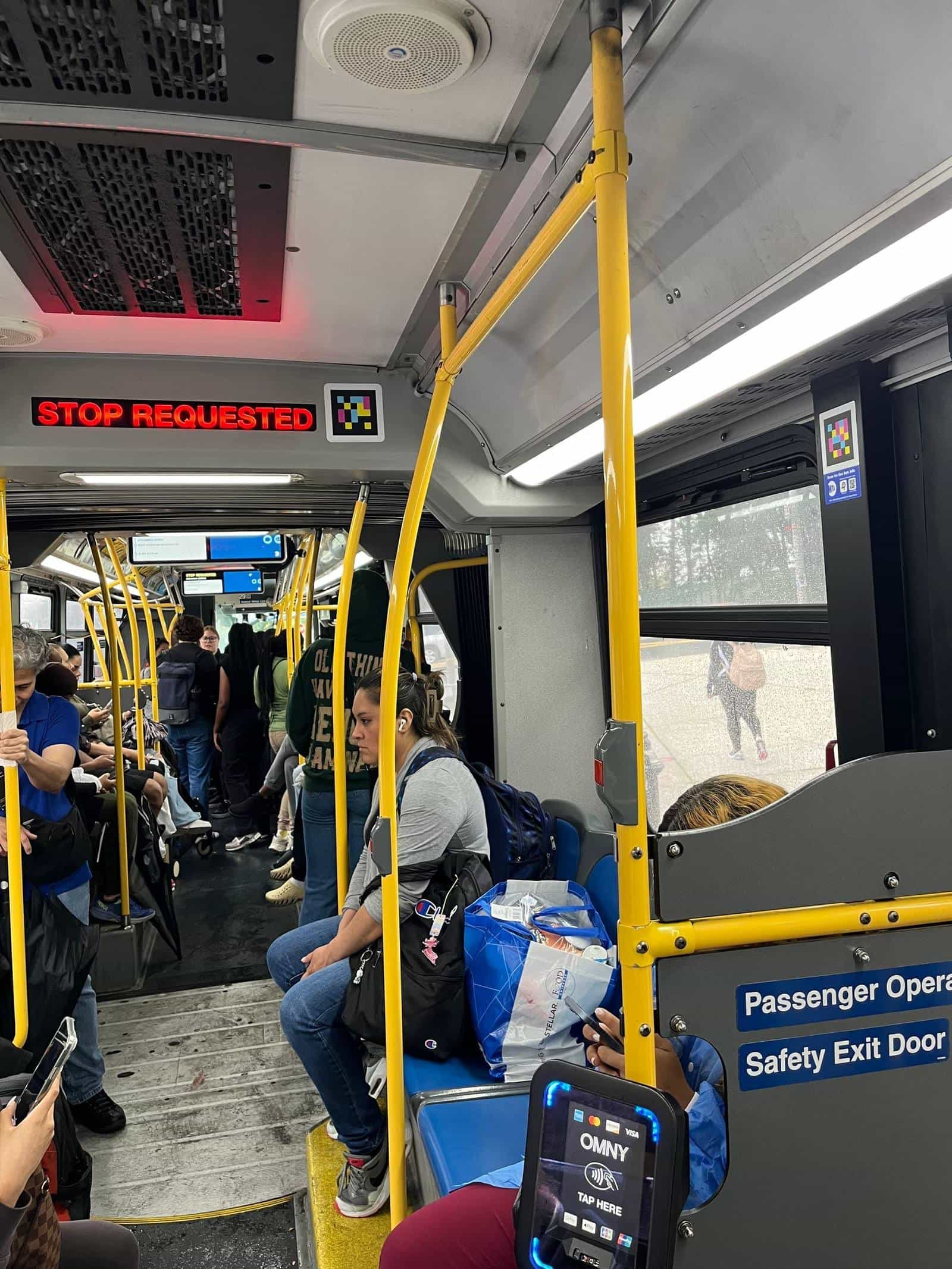
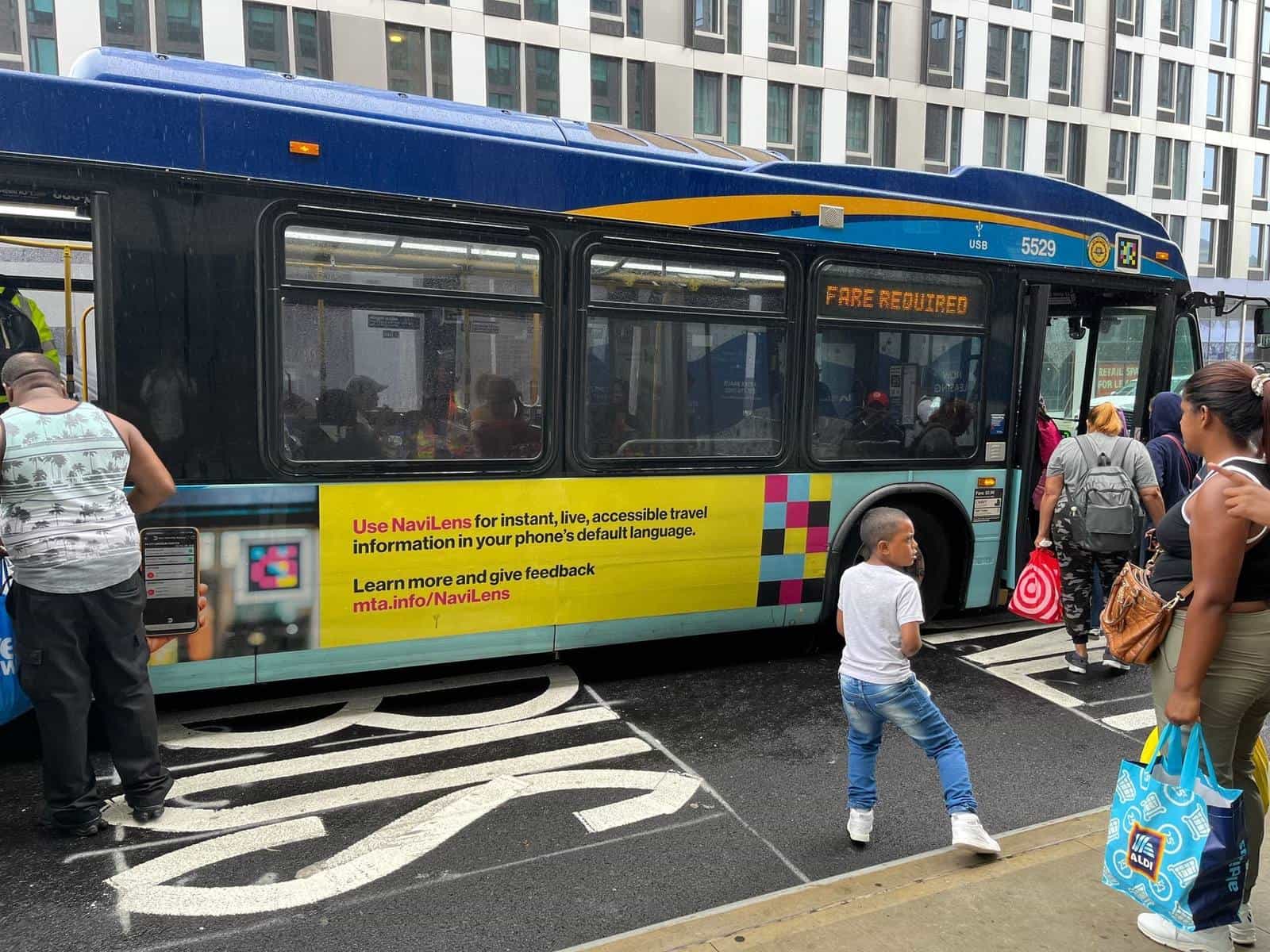
On the bus, codes are placed on the front, on the side and on board next to the “Stop Requested” LED — to confirm to a blind passenger that the stop has been requested and which one is next.
§ Rollout
From the shelter to the “Stop Requested” sign.
§ Timeline
From the 23rd Street pilot to three full SBS lines.
- Oct 2020
Manhattan pilot: 23rd Street
MTA Bus Company announces the NaviLens pilot (Transit Tech Lab 2020 finalist) to help blind and low-vision riders locate stops and check upcoming arrivals along 23rd Street.
- Jul 2023
Disability Pride Month: expansion to more stops and lines
MTA unveils the expansion of innovative accessibility solutions, including additional NaviLens deployments at bus stops in Manhattan and the Bronx with state funding.
- 2024
US DOT SMART Grant — $2M for Bx12-SBS, M23-SBS and M66
MTA receives $2M from the SMART Grant program. With that funding NaviLens reaches every stop and every bus across the three SBS lines, plus the 6 stations and trains of the 6 line.
- Jan 2026
Official US DOT datasets — Inclusive Wayfinding Through NaviLens
The U.S. Department of Transportation publishes the official datasets of the MTA project under the SMART Grant, providing public, federally traceable backing for the rollout (authored by MTA / Philipson, Ramsaywack, Singh).
- Today
Bx12-SBS: from the bus to the “Stop Requested” sign
On the Bx12-SBS, codes are on the “No Standing” pole at the stop, on the front and side of the bus, next to the OMNY panel and, inside, next to the LED next-stop signs — riders use the same code at every step of the trip.
§ What they said
What MTA and the New York press had to say.
“Through the SMART Grant, NaviLens is rolling out at all 6 subway stations, on all 6 line subway cars, and on all M23-SBS, M66 and Bx12-SBS bus stops and buses.”
“NaviLens App – Transit Tech Lab 2020 Finalist – Navigates Users to Bus Stops and Tracks Bus Arrivals. Pilot Taking Place at Bus Stops Along 23rd Street in Manhattan.”
“It speaks to the customer — low vision and blind customers who are using the code to help get wayfinding navigation, both on the sidewalks to find the bus stop or an entrance to the subway and throughout the subway system.”
§ Results
Wayfinding by voice, in the rider's language, at every step of the bus trip.
Sidewalk → bus
Codes on the shelter, pole, front and side of the bus
On board
Codes next to the “Stop Requested” LED signs
42 languages
Audio comes out in the rider's phone language
§ MTA · New York
This page is part of the MTA rollout in New York City.
The full story, from Jay St-MetroTech to the rest of the network, lives in the parent case. The other pages in the family:
- MTA · 14 St-Union Square — 4 5 6 N Q R W L with NaviLens
- MTA Subway — stations and cars with NaviLens
- MTA NYCT — subway, bus and street under one NaviLens code
- MTA Bronx bus stops — shelters and poles with NaviLens
- Metro-North · White Plains — NaviLens pilot
§ And your network?
Your next station can also speak.
Tell us about your network, your pain points and the KPIs you want to move. We’ll show you how NaviLens would fit—with comparable cases.